The interaction between T cell receptors (TCRs) and the MHC-antigen peptide complex leads to changes in T cells at both the molecular and cellular levels. The core TCR complex consists of two TCR chains and six differentiation cluster 3 (CD3) chains. Several other components include helper receptors, kinases, and ligands. The human genome expresses four known TCR genes: TCRα, TCRβ, TCRγ, and TCRδ, which form two distinct heterodimers: TCRα/TCRβ or TCRγ/TCRδ. The α chain of the TCR is generated through recombination of variable (V) and junctional (J) gene segments, while the β chain includes diversity (D) segments in addition to the V and J segments. This somatic recombination of gene segments, coupled with imprecise processing at the junctions, produces a diverse TCR repertoire, enabling T cells to recognize a wide range of antigens while maintaining self-tolerance. The α-β T cell receptor is an antigen-specific receptor, crucial for immune responses, and is present on the cell surface of T lymphocytes. Recognizing the peptide-major histocompatibility (MH) (pMH) complex displayed by antigen-presenting cells (APCs) is a prerequisite for T cells to generate highly efficient adaptive immunity against pathogens.

(Data source: Shah K, et al. Signal Transduct Target Ther. 2021)
TRBV9, a key variable region gene segment of the TCR β chain, belongs to the TCR β chain variable region gene family. During TCR β chain assembly, the TRBV9 gene segment recombines with specific TRBJ (linker region) and TRBC (constant region) genes to form a β chain with unique antigen-binding capabilities. TRBV9, together with its corresponding TRAV (α chain variable region) segment, determines the antigen specificity of the TCR, particularly its CDR3 region, which directly participates in pMHC recognition. Studies have shown that TRBV9 plays a role in autoimmune diseases such as ankylosing spondylitis.

(Data source: Britanova OV, et al. Nat Med. 2023)
TCR signaling pathways and regulation
When the TCR binds to pMHC, the TCR complex recruits LCK molecules that bind to the co-receptor. LCK phosphorylates ZAP-70 and interacts with it via its SH2 domain, promoting the phosphorylation of other tyrosine residues on ITAM. ZAP-70 phosphorylates LAT, and LAT recruits numerous signaling molecules to form the LAT signaling complex. The LAT signaling complex propagates signaling pathways to three main pathways: the calcium signaling pathway, the mitogen-activated protein kinase (MAPK) kinase pathway, and the nuclear factor NF-κB (NF-κB) pathway.
Ca²⁺ - NFAT pathway: After PLCγ1 is activated, it hydrolyzes PIP2 to produce IP3 and DAG. IP3 induces the endoplasmic reticulum to release Ca²⁺, which activates calcineurin and promotes the translocation of transcription factor NFAT into the nucleus.
The RAS-MAPK-ERK-AP1 pathway: DAG activates RASGRP1, which in turn activates the RAS-RAF-MEK-ERK cascade, ultimately inducing the synthesis of AP-1 (Fos/Jun) transcription factor.
NF-κB pathway: DAG activates PKCθ, forming the CBM complex (CARMA1-BCL10-MALT1), which in turn activates the IKK complex, leading to NF-κB inhibiting protein degradation and releasing NF-κB into the nucleus.

Defects in TCR signaling can lead to immunodeficiency. Conversely, overactivation can lead to autoimmune diseases. TCR signaling transduction is tightly regulated through multiple mechanisms involving various enzymes and non-enzymatic proteins. Mutations in any of these mediators can cause dysregulation of TCR signaling, resulting in a variety of diseases.
Inappropriate activation of T cells can be prevented by the termination of TCR signaling, which is mediated by certain proteins that negatively regulate TCR signaling. PAG/Csk, SHP-1, DGKs (diacylglycerol kinases), and CBL family E3 ubiquitin ligases act as negative regulators to prevent excessive T cell activation or autoimmune responses.
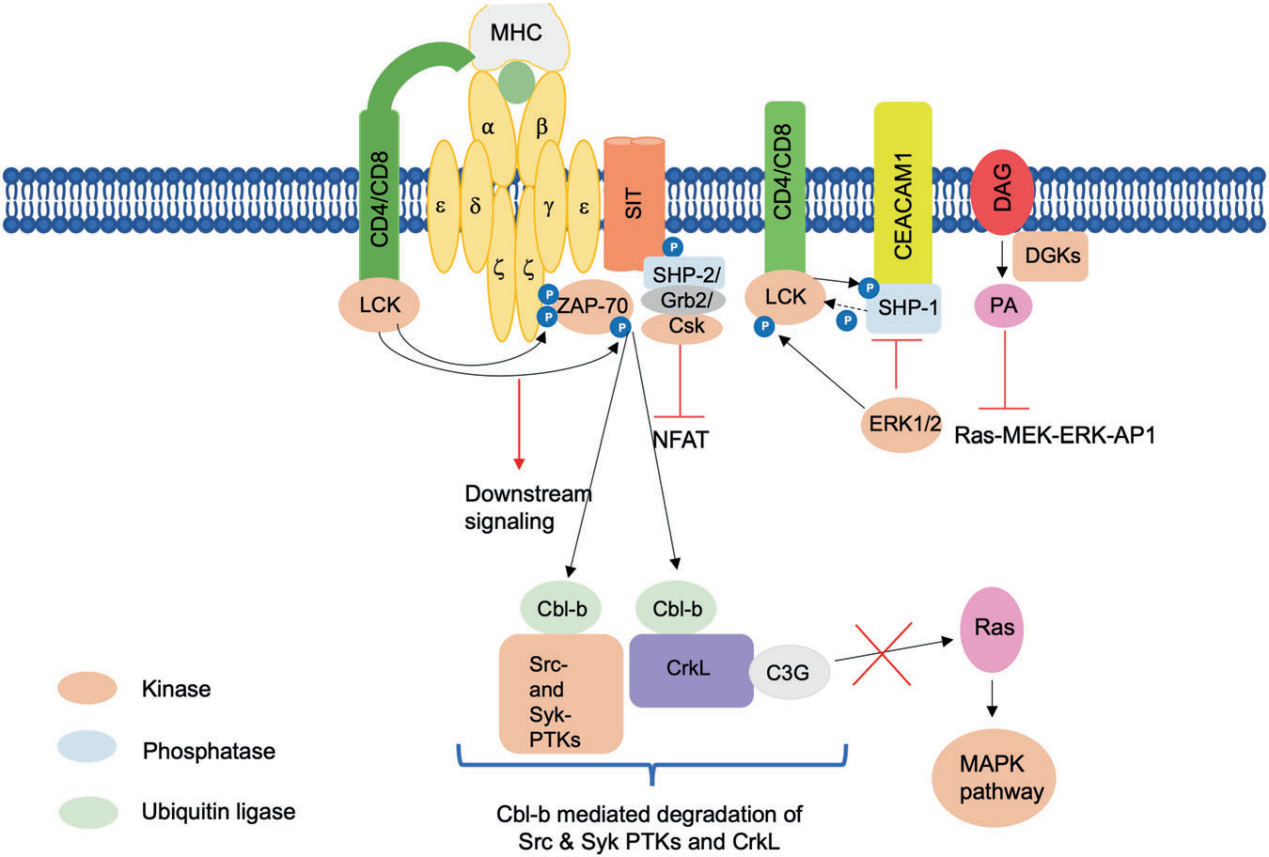
(Data source: Shah K, et al. Signal Transduct Target Ther. 2021)
The role of TRBV9 in ankylosing spondylitis and targeted therapy
In the peripheral blood of patients with ankylosing spondylitis, there is a characteristic enrichment of the CD8+ T cell TCRβ CDR3 sequence compared with healthy HLA-B*27+ donors, and the content of this sequence in the synovial fluid of patients is also higher than that in peripheral blood. Furthermore, this sequence was more widely expressed in the synovial tissue of HLA-B*27+ patients with reactive arthritis (an inflammatory immune response triggered by infection that may ultimately lead to ankylosing spondylitis). These findings provide strong evidence that TRBV9+ CD8+ T cell clones carrying this characteristic CDR3 sequence drive autoimmune responses in ankylosing spondylitis and other HLA-B*27-related autoimmune spondyloarthropathy, including psoriatic arthritis, acute anterior uveitis, juvenile idiopathic arthritis, and Crohn's disease.
Treatment with anti-TRBV9 cytotoxic antibodies can completely eliminate TRBV9+ T cells through antibody-dependent cytotoxicity mediated by NK cells and complement proteins, as well as antibody-dependent phagocytosis mediated by macrophages (such as hepatic Kupffer cells). Anti-TRBV9 treatment can eliminate TRBV9+ T cell clones, including autoimmune ones, but does not systemically alter any branch of the T-cell immune system.

(Data source: Um J, et al. Curr Rheumatol Rep. 2026)
Seniprutug (BCD-180) is a monoclonal antibody targeting the TRBV9 segment of the TCRβ chain, developed by Biocad CJSC. This intervention resulted in rapid depletion of TRBV9+CD8 T cells in peripheral blood while preserving the remaining T cell lineage. A phase II clinical trial in 260 HLA-B*27-positive patients with active radiographic axial spondylitis further evaluated the efficacy of Seniprutug. At 24 weeks, the safety and immunogenicity profiles were not significantly different from the placebo group. Pharmacokinetic analysis confirmed a sustained reduction in TRBV9+ T cells, indicating that target activation was associated with clinical efficacy. These data suggest that TRBV9+ T cells may be a potential therapeutic target for HLA-B*27-associated spondylitis.
CDR209 is a T-cell binder that targets TRBV9 for the treatment of autoimmune diseases. It was developed by CDR-Life AG and is currently in the drug discovery stage.
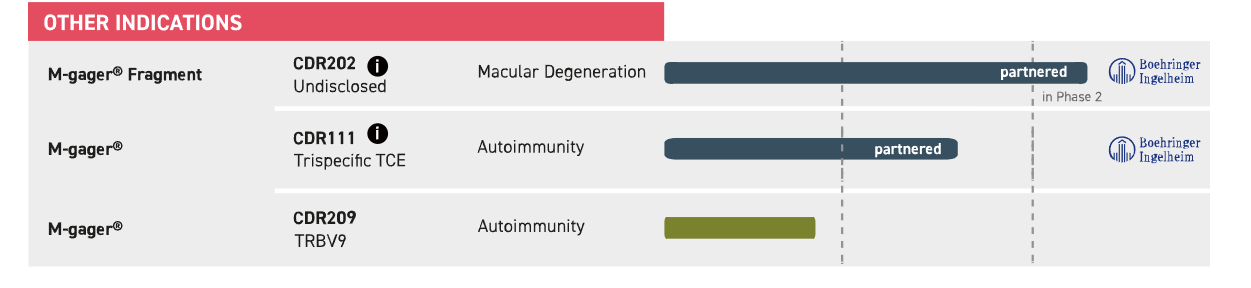
(Data source: CDR-Life AG official website)