KIR (cytotoxic immunoglobulin-like receptors) are receptors for natural killer lymphocytes (NK cells), and their genes are located on chromosome 19 q13.4. They interact with major histocompatibility complex class I molecules and transmit signals that activate or inhibit cellular effector and immunomodulatory functions. They are involved in the regulation of self-tolerance in the adaptive immune system. KIR3DL2 is a framework gene within the KIR locus.
The killer cell immunoglobulin-like receptor (KIR3DL2), also known as CD158K or NKAT4, is a receptor on natural killer cells and T cells targeting MHC class I molecules. KIR3DL2 binds to HLA-A3 and HLA-A11 in a peptide-dependent manner. When bound to the peptide-free HLA-F open conformation, it negatively regulates the effector function of NK cells and T cells. It also acts as an HLA-F receptor on astrocytes. Through interaction with HLA-F, it may protect motor neurons from astrocyte-induced toxicity.
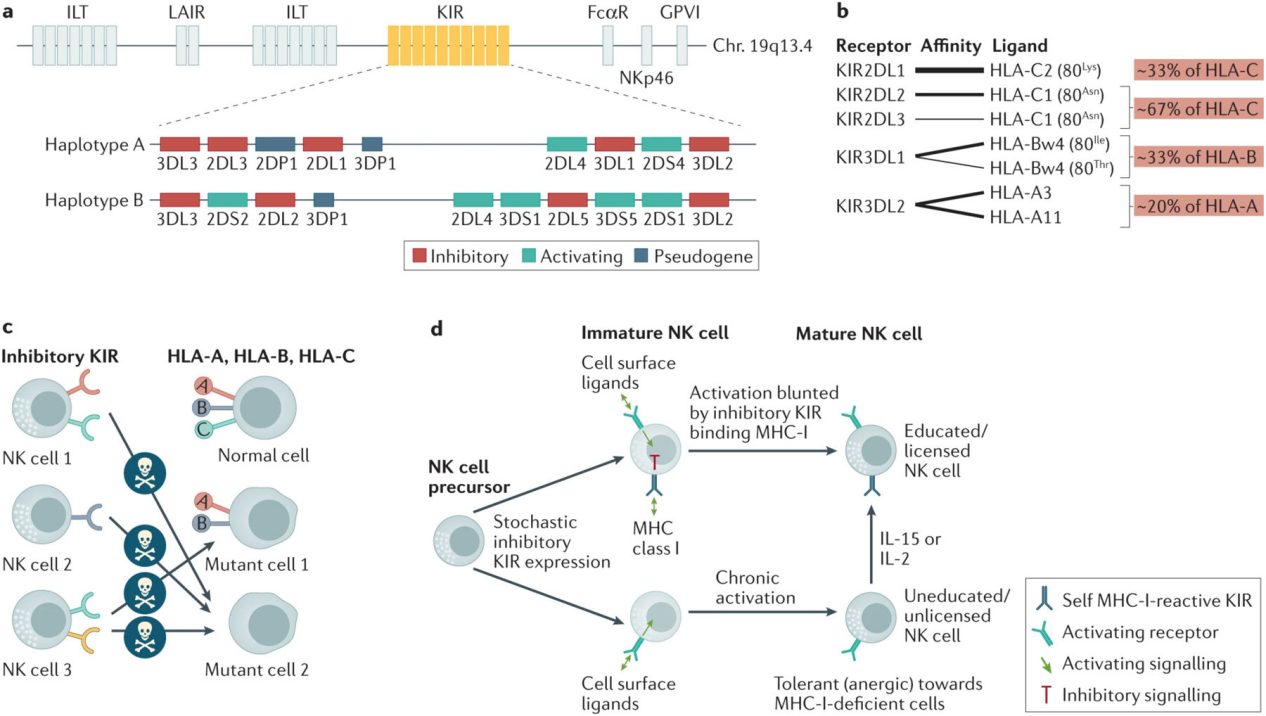
(Data source: Maskalenko NA) et al. Nat Rev Drug Discov. 2022)
Structure and ligands of KIR3DL2
The KIR3DL2 gene is located in the leukocyte receptor complex on human chromosome 19q13.4. It is a single-channel type I membrane protein composed of 455 amino acids, primarily consisting of an extracellular region, a transmembrane region, and a cytoplasmic tail region.
Extracellular region: Contains three immunoglobulin (Ig)-like domains, namely D0 (type D0, belonging to the Ig C2 fold), D1, and D2 (both C2 type Ig-like domains), arranged from distal to proximal to form the ligand-binding domain. The D0 domain plays a crucial role in receptor-ligand interactions.
Transmembrane region: A single hydrophobic α-helix that anchors the receptor to the cell membrane.
Cytoplasmic tail region: A typical "long-tail" (L-type) structure in the KIR family, containing two immunoreceptor tyrosine inhibitory motifs (ITIMs). Its conserved sequence is (I/L/V/S/T)xYxx(L/V), and it is the core functional domain for receptor signal transmission of inhibitory signals.

(Data source: Alphafold)
The role of KIR3DL2 in diseases
KIR3DL2 is associated with a variety of diseases, including ankylosing spondylitis and cutaneous T-cell lymphomas such as Sézary syndrome, CD30+ cutaneous lymphoma, and transformed mycosis fungoides.
ankylosing spondylitis (SpA), the abnormal interaction between KIR3DL2 and HLA-B27 is one of the core mechanisms of the disease. The homodimer or free heavy chain formed by HLA-B27 can specifically bind to KIR3DL2. This binding does not suppress the immune response, but instead allows the differentiation of Th17 cells and the abnormal proliferation of CD4+ T cells, leading to the secretion of large amounts of pro-inflammatory factors (such as IL-17), driving chronic inflammation of the spine and sacroiliac joint.
In CTCL subtypes such as Sézary syndrome and mycosis fungoides, malignant T cells often highly express KIR3DL2. This has two functions.
Immune escape and tumor survival: Tumor cells highly express KIR3DL2, which may inhibit the killing activity of their own and surrounding immune cells through autocrine or paracrine mechanisms, while helping tumor cells resist apoptosis and maintain a high tumor burden.
Therapeutic targets: Humanized monoclonal antibodies targeting KIR3DL2 (such as Lacutamab/IPH4102) have shown clinical potential. These antibodies can directly induce apoptosis in KIR3DL2-positive tumor cells through antibody-dependent cell-mediated cytotoxicity (ADCC) or delivery of CpG oligonucleotides via drug-loaded nanoparticles.
In addition, the decreased expression of KIR3DL2 on NK cells in HCC tumor tissues from recurrent patients indicates insufficient intratumoral NK cell reserves, with most NK cells in a state of depletion and a significantly reduced tumor cell clearance capacity. Therefore, this increases the likelihood of tumor recurrence and progression.
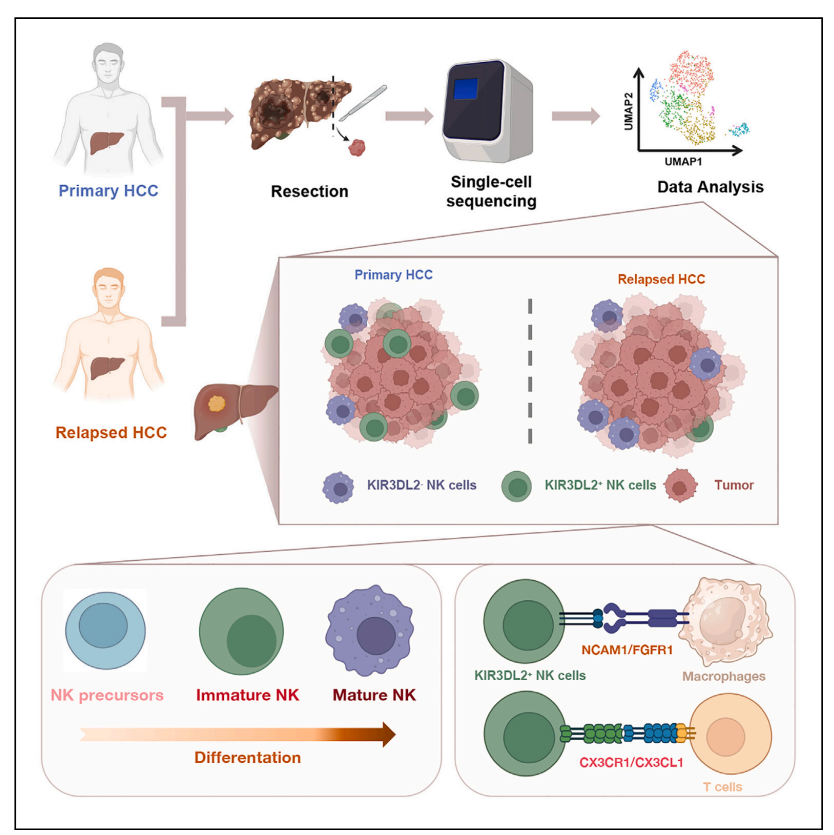
(Data source: Zhu J, et al. iScience. 2024)
KIR3DL2 targeted therapy
Lacutamab (IPH4102) is a first-in-class humanized anti-KIR3DL2 cytotoxic inducible antibody currently in clinical trials for the treatment of cutaneous T-cell lymphoma (CTCL, an orphan disease) and peripheral T-cell lymphoma (PTCL). This antibody has received Fast Track designation from the U.S. Food and Drug Administration (FDA), PRIME designation from the European Medicines Agency (EMA) (for Sézary syndrome), and orphan drug designation from the U.S. and EU (for CTCL). It has also received Breakthrough Therapy designation from the FDA for relapsed or refractory Sézary syndrome. TELLOMAK (NCT03902184) is a global, open-label, multi-cohort Phase II clinical trial in patients with Sézary syndrome and mycosis fungoides (MF) in the U.S. and Europe.
On August 1, 2026, Innate Pharma announced that following a strategic collaboration with Sobi, it plans to initiate a confirmatory Phase III study of lacutamab TELLOMAK-3 for cutaneous T-cell lymphoma (CTCL), a key step toward accelerated approval of the drug for Sézary syndrome.
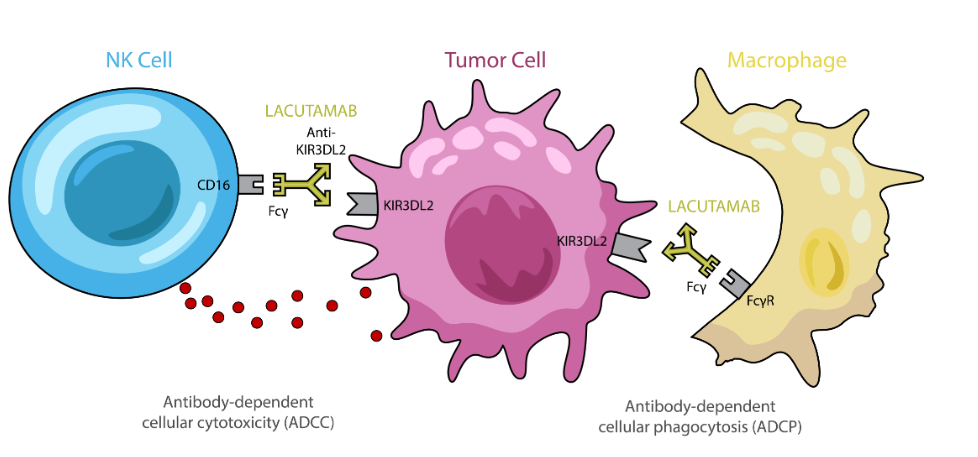
(Data source: Innate Pharma official website)