Balanced nucleoside transporters (ENTs) are bidirectional carriers that regulate the inflow and outflow of substrates. Human ENT homologs (hENTs) are classified into four groups: hENT-1 (SLC29A1), hENT-2 (SLC29A2), hENT-3 (SLC29A3), and hENT-4 (SLC29A4).
Balanced nucleoside transporter 2 (SLC29A2), also known as DER12, ENT2, or HNP36, is a bidirectional transporter embedded in biological membranes and widely distributed in most tissues and cell types. Besides transporting various nucleoside analogues (primarily used in anticancer therapy), ENT2 also mediates the uptake of purine and pyrimidine nucleosides and nucleobases. Because high expression of ENT2 is associated with advanced stages of various cancers, its role as a potential therapeutic target has attracted considerable attention.

(Data source: Randazzo O, et al. Cancers (Basel). 2020)
SLC29A2 expression distribution
SLC29A2 is widely distributed in various tissues and cells, and this gene is expressed in a variety of tissues including skeletal muscle, liver, lung, brain, kidney, heart, pancreas, and placenta. It is mainly expressed in muscle cells, stromal cells, and trophoblasts, and is also expressed in nerve cells and glial cells.
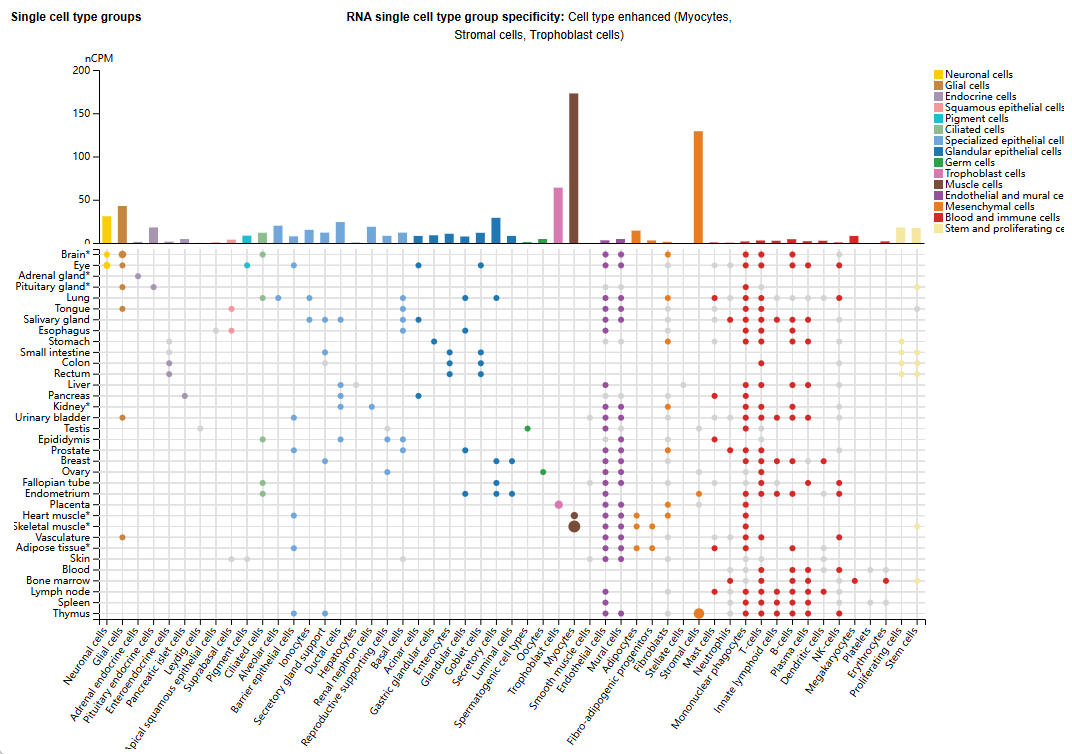
(Data source: uniprot)
SLC29A2 Structure
SLC29A2 is an 11-transmembrane protein composed of 456 amino acids, consisting of an N-terminal intracellular region and a C-terminal extracellular region. The transmembrane helices assemble to form a central substrate pore. The entire protein is predominantly α-helical with almost no β-sheet. Belonging to the SLC superfamily of transport proteins, its core transmembrane bundle exhibits the typical pseudo-symmetry characteristic of the SLC family. TM3-TM6 are key regions for substrate and inhibitor recognition. The intracellular region contains phosphorylation modification sites, mediating non-ion-dependent bidirectional equilibrium transport of nucleosides/nucleobases via an alternating opening mechanism.

(Data source: protter)

(Data source: Chen M, et al. Nat Commun. 2025)
Functions of SLC29A2
Balanced nucleoside transporter 2 (Ent2) is a key transporter of adenosine and inosine. Its deficiency leads to increased reactivity of astrocytes both in vitro and in vivo, affecting their morphology and molecular profile. After Ent2 knockout, extracellular inosine cannot be properly transported into astrocytes, resulting in intracellular inosine accumulation. Increased intracellular inosine further leads to the accumulation of upstream purine metabolites, causing an imbalance in the adenosine, AMP, and ADP purine metabolic network. Decreased activity of the inosine-degrading enzyme PNP (purine nucleoside phosphorylase) further amplifies the accumulation of inosine due to impaired inosine degradation and insufficient raw materials for the TCA cycle, resulting in reduced mitochondrial ATP production and cellular energy metabolism defects. Ultimately, this leads to increased astrocyte reactivity (glial activation).
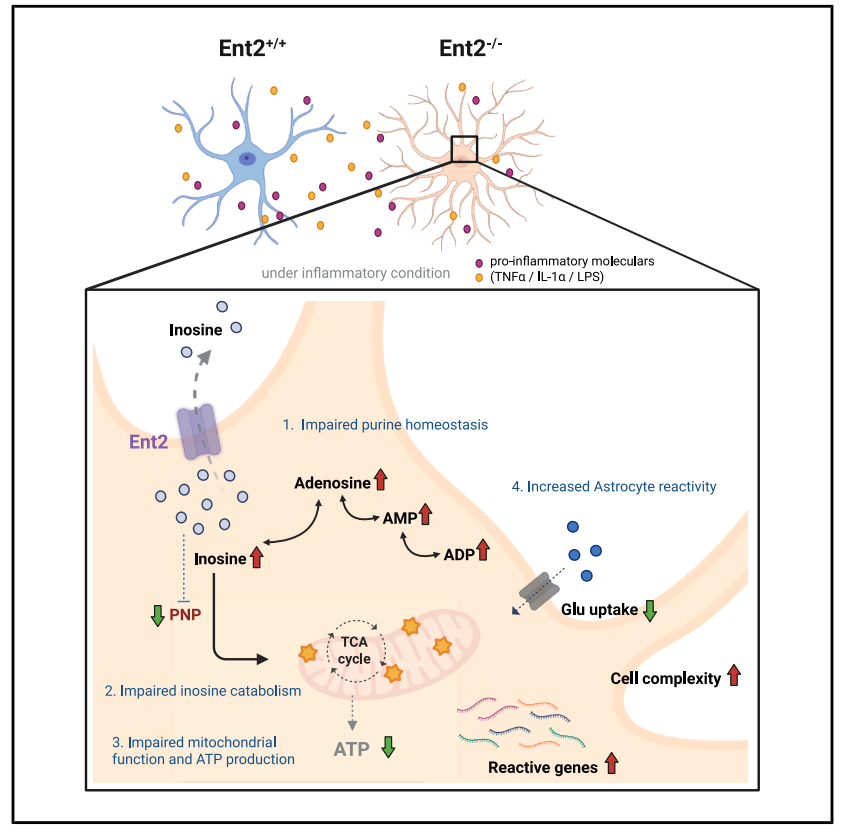
(Data source: Chang YG, et al. Cell Rep. 2025)
Targeted therapy for SLC29A2
GMAB-7001, developed by Gennao Bio, is an oligonucleotide-based anti-inflammatory drug (AOC) targeting SLC29A2. Preclinical data have shown its unique therapeutic potential. In a mouse model of pancreatic cancer, GMAB-7001 significantly enhanced lymphocyte infiltration in the tumor microenvironment, including multiple key immune cell subsets such as CD45+, CD8+, CD4+, and CD19+ cells, indicating its ability to activate anti-tumor immune responses. Furthermore, the drug exhibits higher central nervous system (CNS) penetration, effectively reducing intracranial tumor burden by 50% and inhibiting spinal metastasis formation, demonstrating significant potential for treating brain tumors and metastatic lesions . Targeting ENT2 in AOC is an innovative strategy that differs from mainstream approaches. By utilizing the function of membrane transport proteins rather than the properties of endocytic receptors, it provides a novel solution for oligonucleotide delivery.
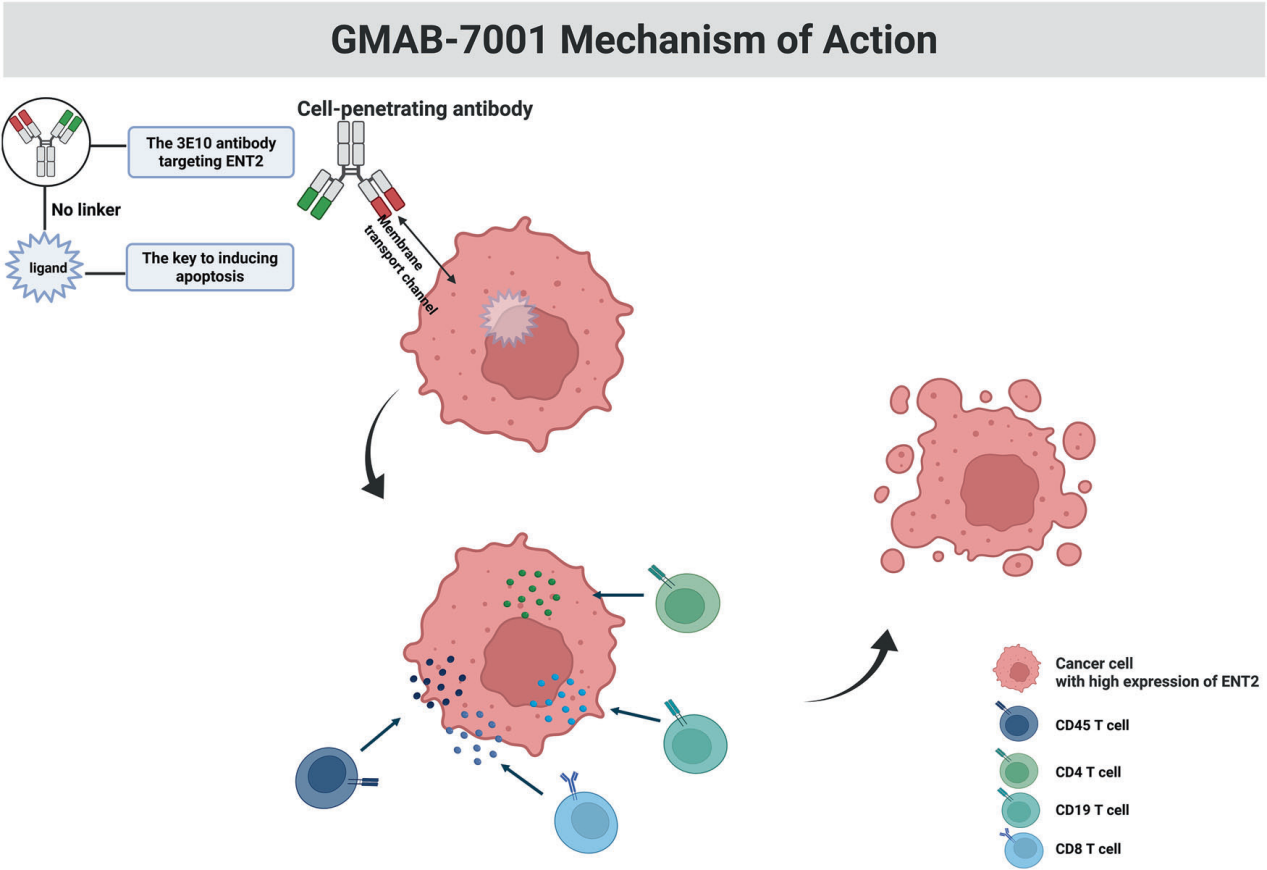
(Data source: Fan W, et al. Gene Ther. 2026)