Slitrk proteins belong to a family of transmembrane proteins rich in leucine repeats and share structural similarities with the Slits and myosin receptor kinase families, which regulate nervous system development. Slitrks are highly expressed in the developing nervous system of vertebrates, regulating neurite growth and enhancing synapse formation; however, the expression and function of Slitrk protein members vary. SLITRK6 regulates the formation of excitatory and inhibitory synapses through transsynaptic adhesion with LAR receptor proteins tyrosine phosphatases (PTPs) PTPRD and PTPRS.
SLITRK6 is a neurotrophic factor that is essential for normal hearing and vision.

(Data source: Puranik N, et al. Biomolecules. 2024)
SLITRK6 expression distribution
SLITRK6 is primarily expressed in the central nervous system, sensory organs (inner ear and eyes), and certain peripheral tissues. Unlike other slitrks that are mainly expressed in brain tissue, Slitrk6 exhibits a unique expression pattern in a variety of organs, including sensory (ear sac, retina, tongue, central nervous system, and epidermis) and non-sensory (limb buds, maxillary process, pharyngeal arch, cochlea, lungs, gastrointestinal tract, etc.). Only a small subset of these organs express Slitrk6. Its expression is confined to several parts of the central nervous system, including the dorsal thalamus, cerebellum, and medulla oblongata. Slitrk6 is expressed in the thalamus and is closely associated with the Gbx2-expressing prefrontal cortex (PRC2).
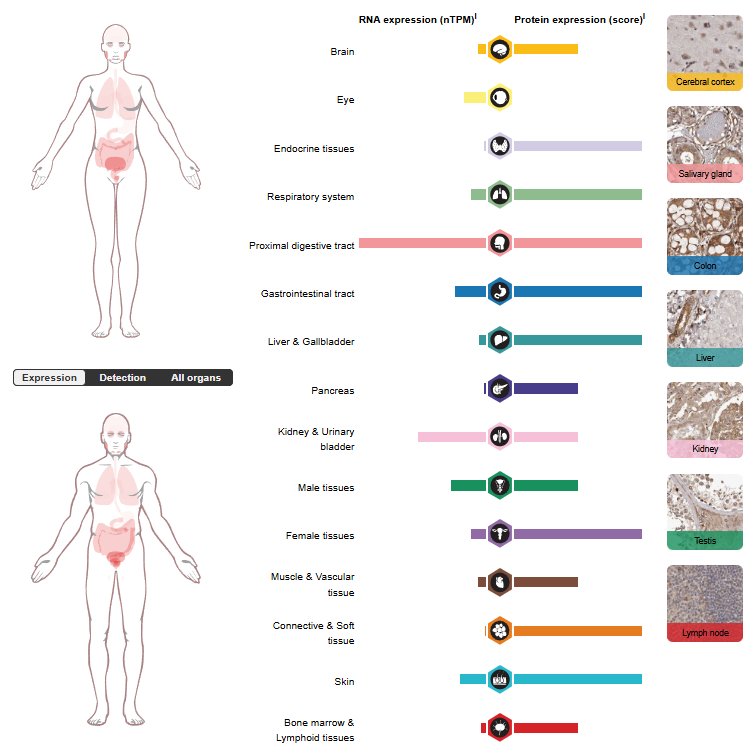
(Data source: uniprot)
SLITRK6 Structure
SLITRK6 is a type I single-transmembrane protein whose molecular structure mainly consists of an extracellular region, a transmembrane region, and an intracellular region. The extracellular region contains multiple leucine-rich repeats (LRRs), as well as N-terminal and C-terminal LRR domains (LRRNT and LRRCT). These LRR domains form a horseshoe-shaped supercoil structure, a key region mediating protein-protein interactions and ligand binding. The intracellular region's C-terminal region is homologous to the neurotrophic factor receptor Trk and contains a conserved tyrosine residue, suggesting its potential function in intracellular signal transduction.
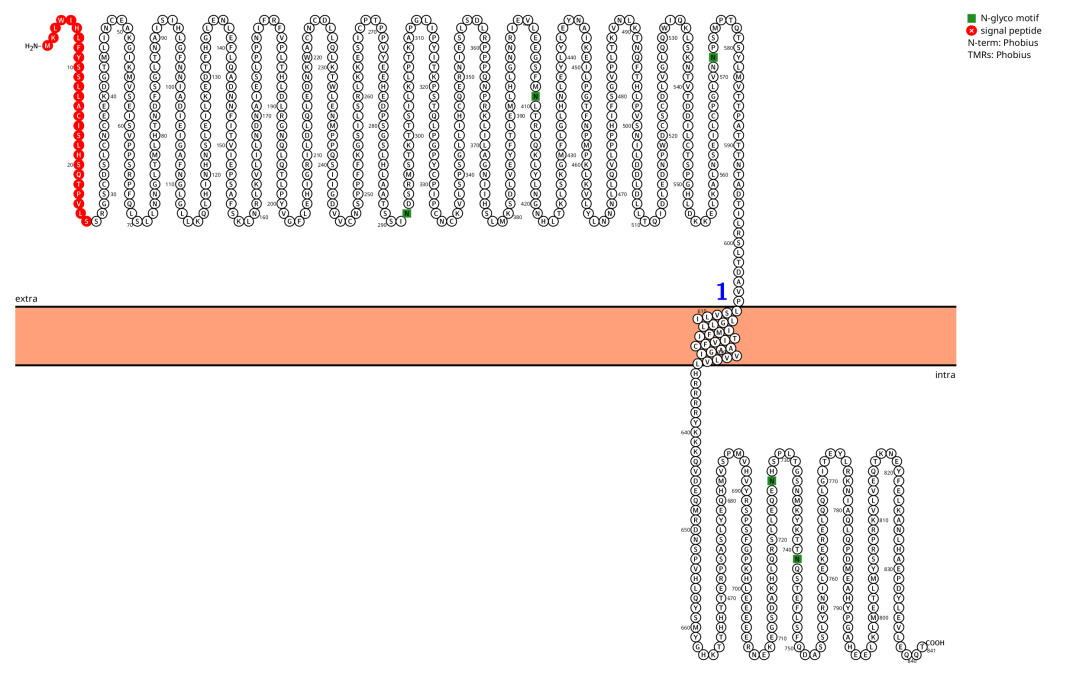
(Data source: protter)
The role of SLITRK6 in disease
In the tumor microenvironment, SLITRK6 promotes tumor cell proliferation and survival by activating the classical PI3K/AKT/mTOR signaling pathway. SLITRK6 expression is significantly upregulated in lung adenocarcinoma (LUAD) tissues. In vitro and in vivo experiments show that knockdown of SLITRK6 inhibits LUAD cell growth and colony formation. SLITRK6 directly regulates glycolysis in LUAD cells, suggesting that its effect on LUAD cell growth may primarily depend on its regulation of the Warburg effect in LUAD cells. The PI3K/AKT/mTOR signaling pathway regulates cell proliferation, differentiation, cytoskeleton remodeling, and cell metabolism, thereby promoting cancer cell survival. Activation of the PI3K/AKT/mTOR signaling pathway mediated by molecular abnormalities plays a crucial role in supporting tumorigenesis and enhancing resistance to anticancer therapies. Studies have shown that the PI3K/AKT/mTOR signaling pathway plays a key role in promoting glycolysis and lactate production, thereby influencing the metabolic reprogramming of cancer cells. Knocking down SLITRK6 reduced the phosphorylation levels of AKT and mTOR, thereby inhibiting glycolysis in LUAD cells. The inhibitory effect of SLITRK6 knockdown on the Warburg effect in cancer cells led to a slowdown in LUAD cell growth.


(Data source: Yu F, et al. Apoptosis. 2023)
SLITRK6 targeted therapy
Sirtratumab vedotin (ASG-15ME) is an ADC targeting SLITRK6 that delivers MMAE to SLITRK6-expressing cells via a specific antibody- and protease-cleavable linker. In a phase I dose-escalation study (NCT01963052), 42 evaluable patients received 0.5 mg/kg of sirtratumab vedotin, which was considered effective; the objective response rate (ORR) was 33%, including 5 out of 12 patients (42%) who failed CPIs and 4 out of 11 patients (36%) with liver metastases.
PRO-1106 is an ADC targeting SLITRK6, originally developed by ProfoundBio and later acquired by Genmab. It is used to treat metastatic urothelial carcinoma, bladder urothelial carcinoma, and solid tumors, and is currently in Phase 1 clinical trials. A major advantage of PRO-1106 is that its antibody binding ability is stronger than that of Sirtratumab, resulting in better tumor-suppressing activity.
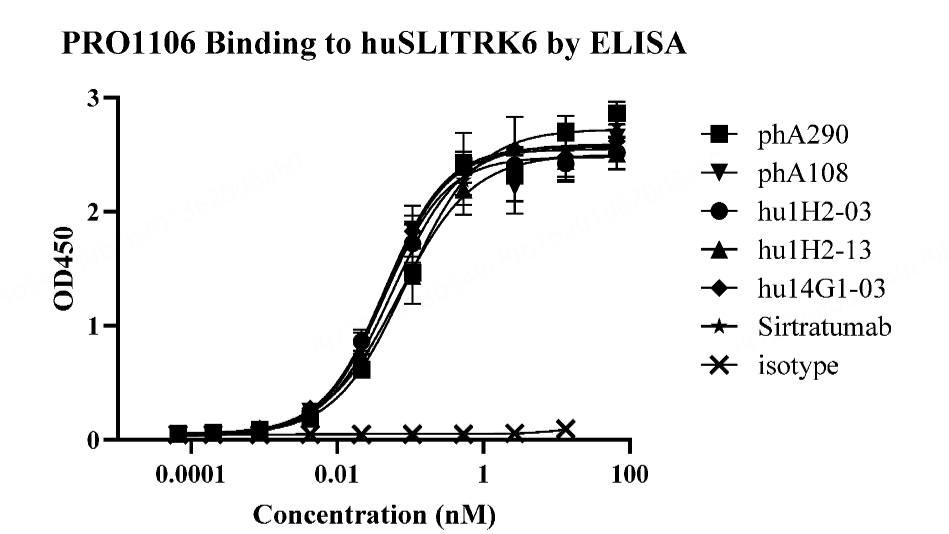
(Data source: WO2025149661A1 patent)