Platelet-derived growth factor receptor β (PDGFRB), as a cell surface receptor for homodimers PGFFB and PDGFD, and heterodimers formed by PDGFA and PDGFB, plays a crucial role in regulating embryonic development, cell proliferation, survival, differentiation, chemotaxis, and migration. PDGFRB is a type III receptor tyrosine kinase (RTK) with a characteristic kinase insert fragment that regulates important cellular functions. Dysregulation of PDGFRβ is associated with cardiovascular disease and fibrotic diseases.
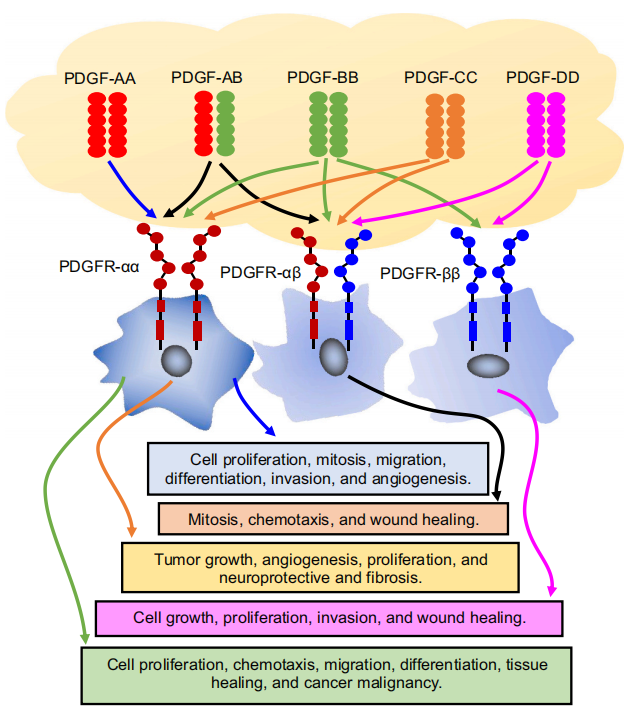
(Data source: Zou X, et al. Int J Biol Macromol. 2022)
PDGFRB expression distribution
PDGFRB is mainly expressed in monocytes, phagocytes, secretory cells, adipocytes, myocytes, and erythrocytes. It is highly expressed in a variety of tumor cells, such as glioblastoma, osteosarcoma, and various soft tissue sarcomas, where overexpression or activating mutations of PDGFRB are found.
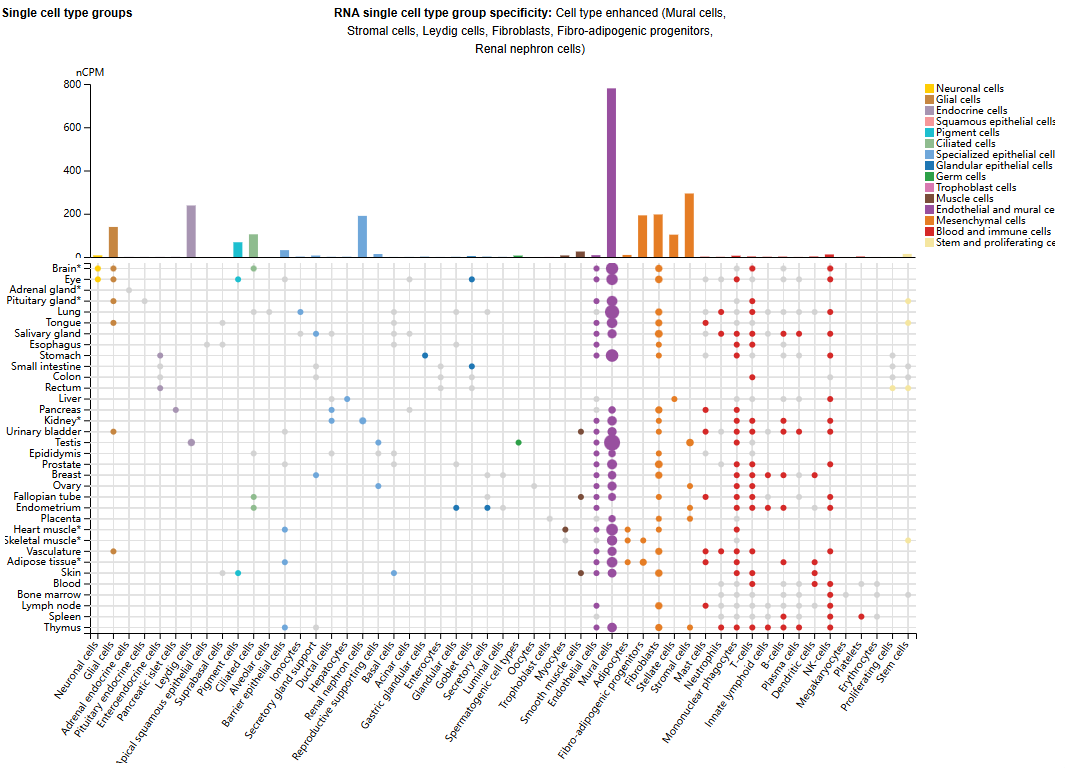
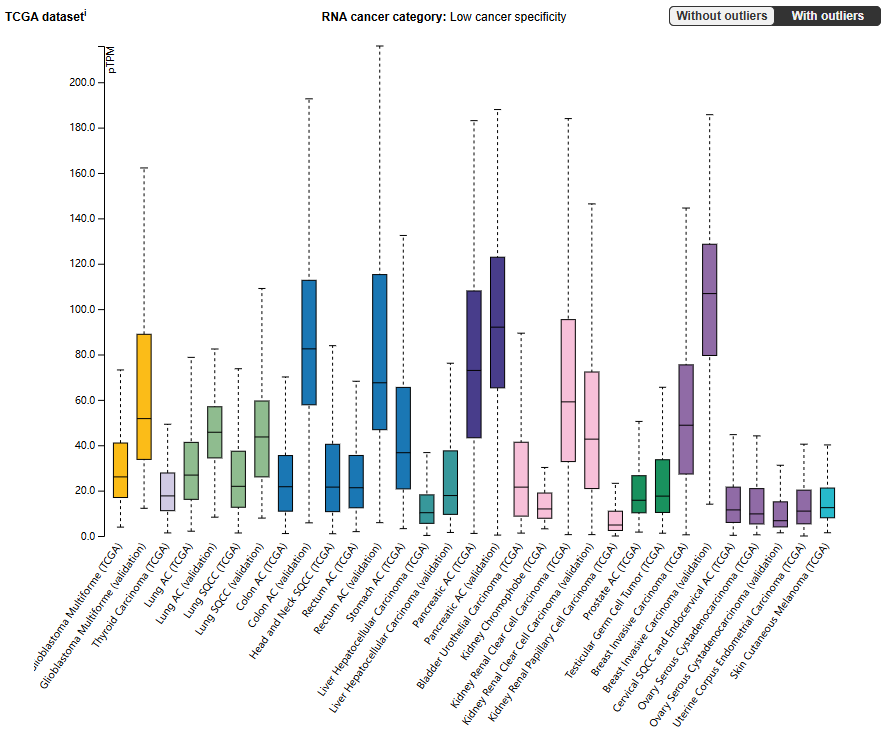
(Data source: uniprot)
Structure of PDGFRB
PDGFRB is a single transmembrane glycoprotein containing 1106 amino acids in total. Its structure is divided into three core regions: the extracellular domain, the transmembrane domain, and the intracellular domain.
Extracellular ligand binding domain: Contains 5 immunoglobulin-like (Ig-like) domains (amino acids 33-524), which are responsible for specifically recognizing and binding PDGF family ligands, including homodimers PDGF-BB and PDGF-DD, and heterodimers PDGF-AB.
Transmembrane region: A single α-helix structure that anchors the receptor to the cell membrane.
Intracellular signal transduction domains include a juxtamembrane regulatory domain, a tyrosine kinase domain (amino acids 600-962) divided into N-terminal and C-terminal subregions by a kinase insertion region, and a C-terminal regulatory tail. Asp826 within the kinase domain is the core catalytic active site, while the two conserved cysteine residues Cys822 and Cys940 are essential for maintaining kinase catalytic activity. The C-terminal tail contains several key tyrosine phosphorylation sites, including Tyr740 (PI3K binding site), Tyr770 (RasGAP binding site), and Tyr1021 (PLCγ binding site), which primarily recruit downstream signaling molecules.

(Data source: Zhang Y, Acta Biochim Biophys Sin (Shanghai). 2024)
PDGFRB signaling pathway and regulation
Cell surface receptors, including low-density lipoprotein receptor-associated protein (LRP), integrins, and CD44, have been reported to regulate PDGF/PDGFR signaling. LRP1, as a physiological regulator of PDGF signaling, forms a signaling complex with PDGFRβ in endoplasmic reticulum vesicles of mouse embryonic fibroblasts, regulating the activation of the PDGF-BB-mediated MAPK/ERK pathway. Studies have found that integrins are important regulators of PDGFR. Enhanced binding of PDGFRβ to integrin β1 leads to PDGFRβ accumulation on the cell membrane, increasing PDGF-BB binding and ultimately promoting PDGF-dependent cell migration and proliferation. Furthermore, integrin α11 regulates the PDGFRβ/JNK signaling pathway in a PDGF-BB-dependent manner, promoting CAF invasion and CAF-induced breast cancer cell invasion. CD44 can interact with RTKs such as PDGFRβ and epidermal growth factor receptor EGFR. In foreskin fibroblasts, CD44, upon binding to its ligand hyaluronic acid, promotes the aggregation of tyrosine phosphatase to PDGFR, thereby negatively regulating PDGF-BB/PDGFRβ signaling by disrupting receptor structure. Furthermore, heparin sulfate biosynthesizer Ext1 may enhance heparin sulfate-mediated PDGF signaling, thereby promoting tumor cell proliferation and invasion.


(Data source: Zou X, et al. Int J Biol Macromol. 2022)
PDGFRB in tumor occurrence and development
The tumor-stimulating effect of paracrine PDGF signaling was first proposed in mouse studies of PDGF-BB-expressing, PDGFR-negative melanoma cells. Corresponding histological analysis showed that this growth advantage was associated with increased angiogenesis and recruitment of tumor-supporting fibroblasts. Subsequent studies of PDGFR-negative malignant cells in other tumor models (such as skin, breast, and lung cancer) have also demonstrated pro-tumor effects mediated by different PDGF ligands, which are associated with increased fibroblast recruitment.
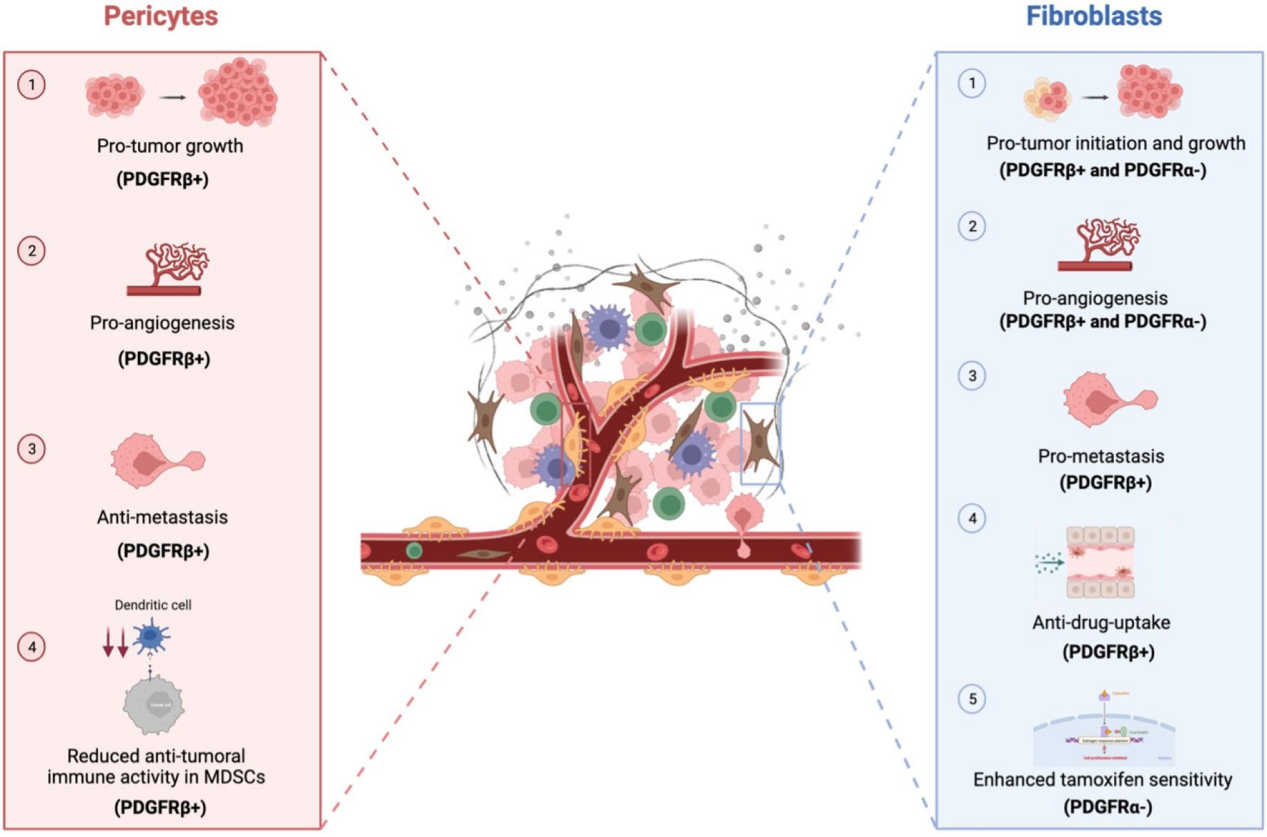
(Data source: Strell C, et al. Cancer Metastasis Rev. 2024)
Targeted therapy for PDGFRB
Rinucumab is a monoclonal antibody targeting PDGFRB, developed by Regeneron for the treatment of wet age-related macular degeneration, and is currently in Phase 2 clinical trials. On September 30, 2016, Regeneron Pharmaceuticals announced the results of the Phase II CAPELLA trial (NCT02418754), in which the combination of aflibercept and rinucumab failed to meet the primary endpoint.