Influenza A virus is a negative-sense RNA virus belonging to the Orthomyxoviridae family. Their genome consists of eight single-stranded negative-sense RNA segments encoding 10 essential proteins. Hemagglutinin (HA) is the most important and abundant surface glycoprotein of influenza viruses, with 18 different hemagglutinins (H1-H18) and 11 different neuraminidase (NA)(N1-N11) subtypes identified or detected. Highly conserved protective epitopes of HA are concentrated in five regions of HA: the hydrophobic groove, the receptor binding site, the closed epitope region at the HA monomer interface, the fusion peptide region, and the residual esterase subdomain. The conserved protective epitopes of influenza virus hemagglutinin (HA) are crucial for designing universal influenza vaccines and novel targeted therapeutics.
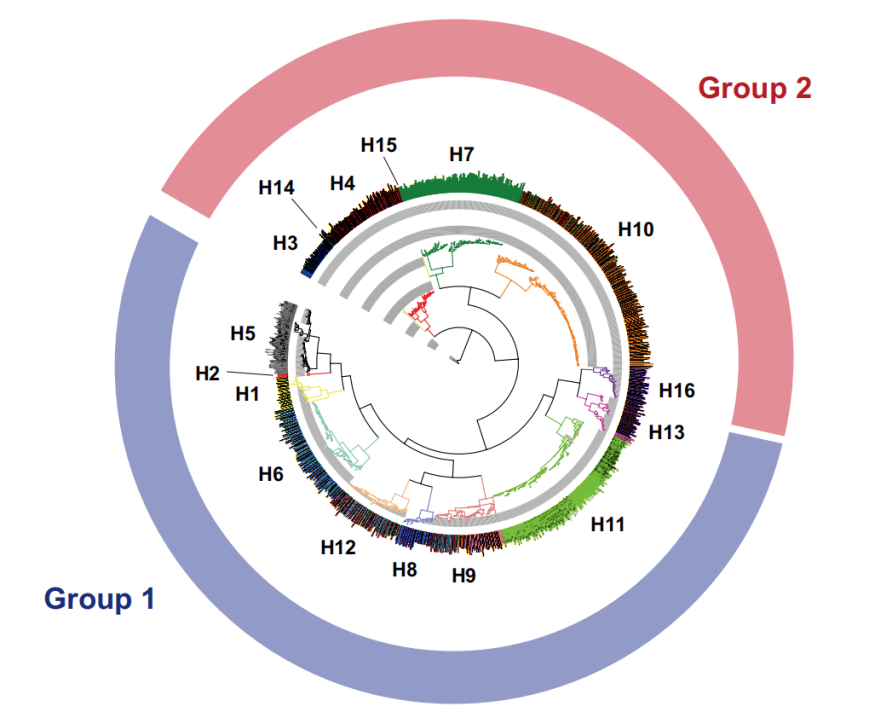
(Data source: Fukuyama H, et al. Immunol Rev. 2020)
The structure of HA and its receptor
Mature HA is a trimer composed of three identical monomeric subunits. Each HA monomer is synthesized in the endoplasmic reticulum as an immature single polypeptide chain (HA0), which is then cleaved by host cell proteases at cleavage sites into two subunits, HA1 and HA2, linked by a single sulfur bond. Each HA monomeric subunit is divided into a head domain and a stem domain. The globular head domain, composed of HA1, located distal to the membrane, contains a receptor-binding (RB) subdomain and a residual esterase (VE) subdomain. The proximal stem domain is mainly composed of HA2 and contains some HA1 residues, as well as an F' subdomain, an F subdomain, and a fusion peptide subdomain. The head domain mediates viral binding to host cell surface receptors, while the stem domain mediates viral genome entry into the cytoplasm via membrane fusion.
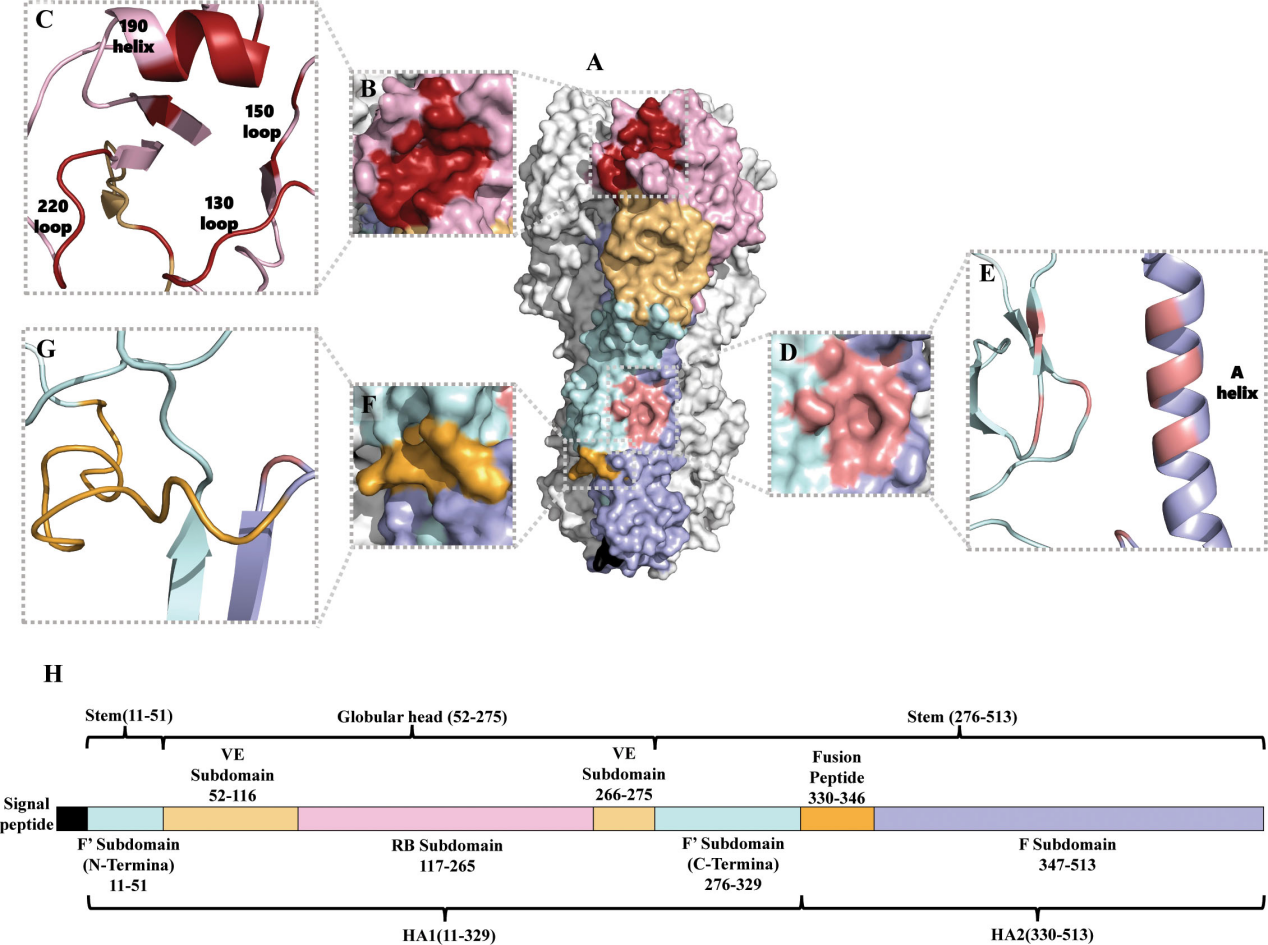
(Data source: Jiao C, et al. Front Immunol. 2023)
The role of HA in immune cells
Immunoprevalent head-specific LLCs and sub-immunoprevalent stem-specific memory B cells. The head region of the HA virus contains epitopes that are immunopreferential during infection or vaccination, while the stem region is sub-preferential. Antibodies targeting the head region have relatively high affinity and are usually species-specific. Immunoprevalent head-specific B cells can differentiate into LLCs; in contrast, sub-preferential stem-specific B cells develop into memory B cells, which may cross-react to other viral strains.
Three mechanisms for generating stem cell-specific memory B cells: Stem cell-specific B cells enter the memory B cell pool. When an individual is infected or vaccinated, antibodies targeting the head region are preferentially induced and continuously produced. Pre-existing head-specific antibodies can mask HA head epitopes in subsequent infections, allowing unmasked stem cell-specific B cells to respond and form memory cells. Because many HIV and influenza bnAbs can bind to self-antigens, these antibodies are thought to originate from a pool of B cells with low affinity for self-antigens. Ultimately, these B cells undergo SHM (selective hypermutation) to trigger reprogramming that recognizes the HA stem region. These activated B cells can then enter the memory pool.
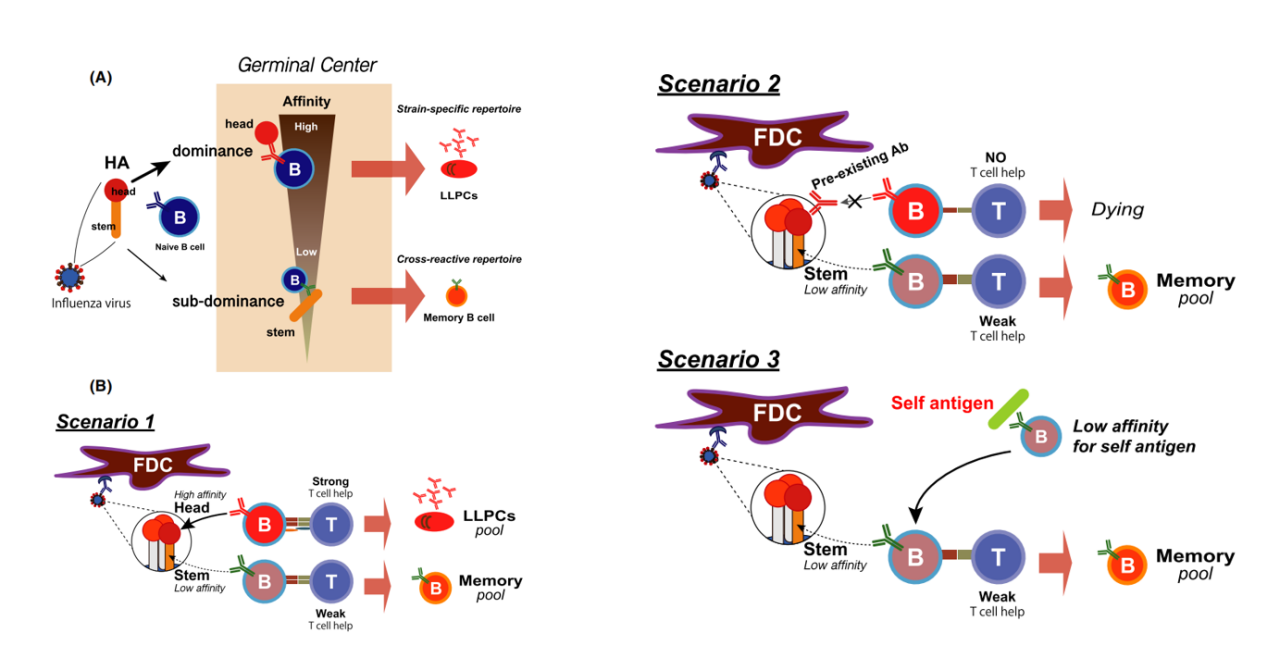
(Data source: Fukuyama H, Immunol Rev. 2020)
Targeted therapy for HA
Antibodies have two main protective functions: first, they directly target the virus, preventing viral entry into host cells by blocking the interaction or membrane fusion between the virus and host cells. Recent studies have also shown that some antibodies can inhibit the activity of viral neuraminidase, an enzyme crucial for viral budding. Furthermore, after viral infection, viral envelope proteins expressed on the surface of infected cells are encapsulated by antibodies to form immune complexes. Effector cells (such as NK cells) can recognize these antibody-coated infected cells via their Fc receptors and subsequently eliminate them through antibody-dependent cytotoxicity.
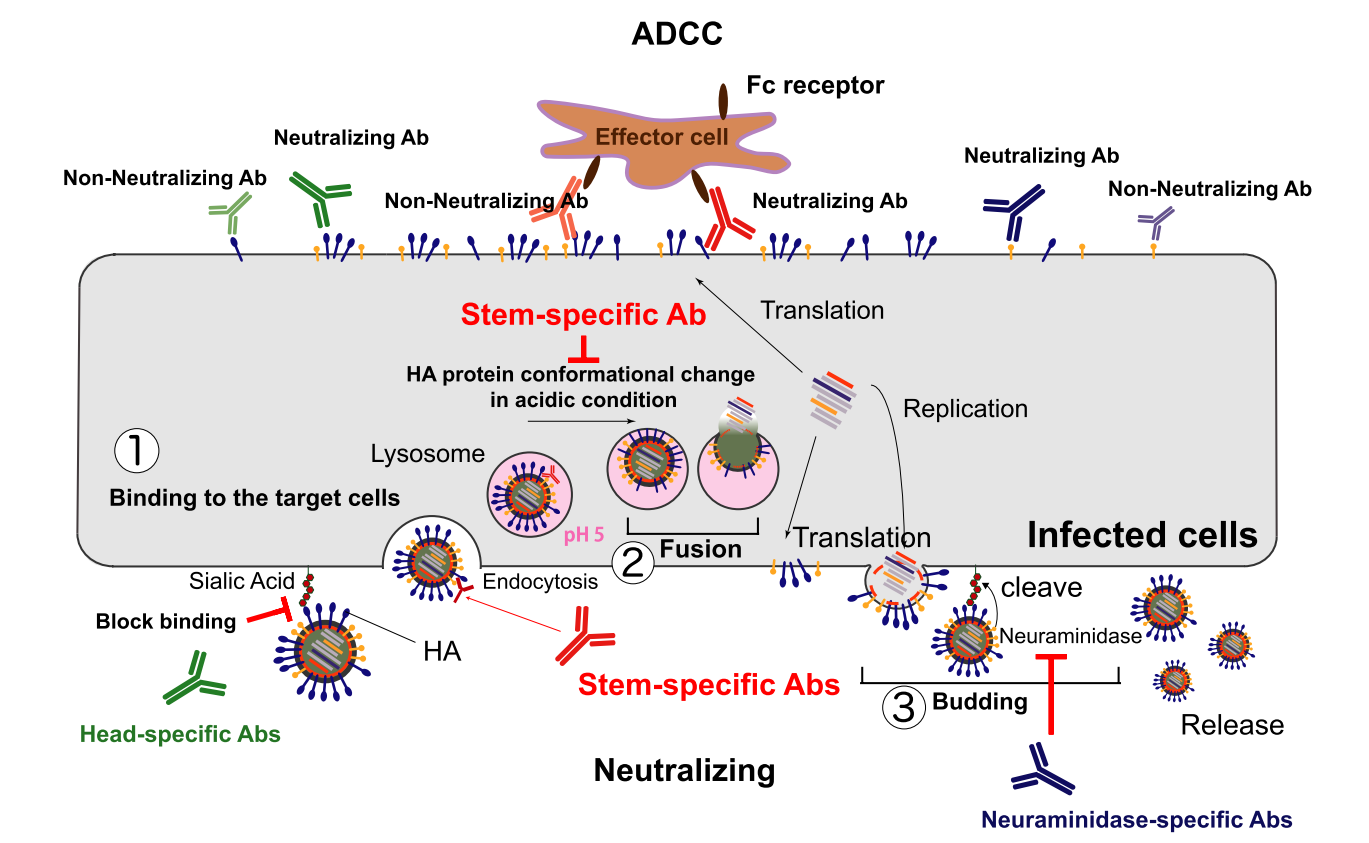
(Data source: Fukuyama H, Immunol Rev. 2020)
Firivumab (CT-P22, CT120) is a human IgG1 monoclonal antibody targeting hemagglutinin HA of influenza A virus. It exhibits neutralizing activity against multiple strains, including H1N1, H5N1, H6N1, H6N2, H8N4, H8N8, H9N2, and H12N7. Furthermore, this antibody has been shown to protect mice from H1N1 virus infection.
MEDI-8852 targets the conserved stem region of HA. It contacts the fusion domain of HA and interacts with three regions of HA2 (a central hydrophobic groove, the fusion peptide, and the A-helix, as well as specific residues of the HA1 component within the fusion domain). This inhibits viral fusion with the host cell membrane and clears virus-infected cells through Fcγ receptor-mediated effector functions. Currently, MEDI-8852 is in Phase Ib/IIa and IIb clinical development, primarily evaluating its efficacy and safety as monotherapy or in combination with oseltamivir for treating adult patients with influenza A (such as H1N1) infection.

(Data source: Kallewaard NL, et al. Cell. 2016)
The effectiveness of MEDI8852 is limited to influenza A virus. In contrast, the neuraminidase (NA) inhibitor zanamivir binds to the neuraminidase active site in both influenza A and B viruses, inhibiting their activity and preventing viral release. However, due to its small molecular weight, zanamivir has a short half-life, requiring repeated administration at high concentrations. An antibody-drug conjugate (ADC) was developed by covalently linking the neuraminidase inhibitor zanamivir to the HA stem-specific monoclonal antibody MEDI8852. This MEDI8852-zanamivir conjugate targets both HA and NA and exhibits enhanced antibody-dependent cytotoxicity (ADCC) compared to MEDI8852 alone. This conjugate protected mice from lethal doses (10 times the LD50) of influenza A and B virus infection at doses similar to those required for broad-spectrum neutralizing anti-NA antibodies and provided robust and durable protection against lethal influenza A and B virus infection in mice. It also has the advantage of simultaneously targeting both NA (influenza A and B) and HA (influenza A).
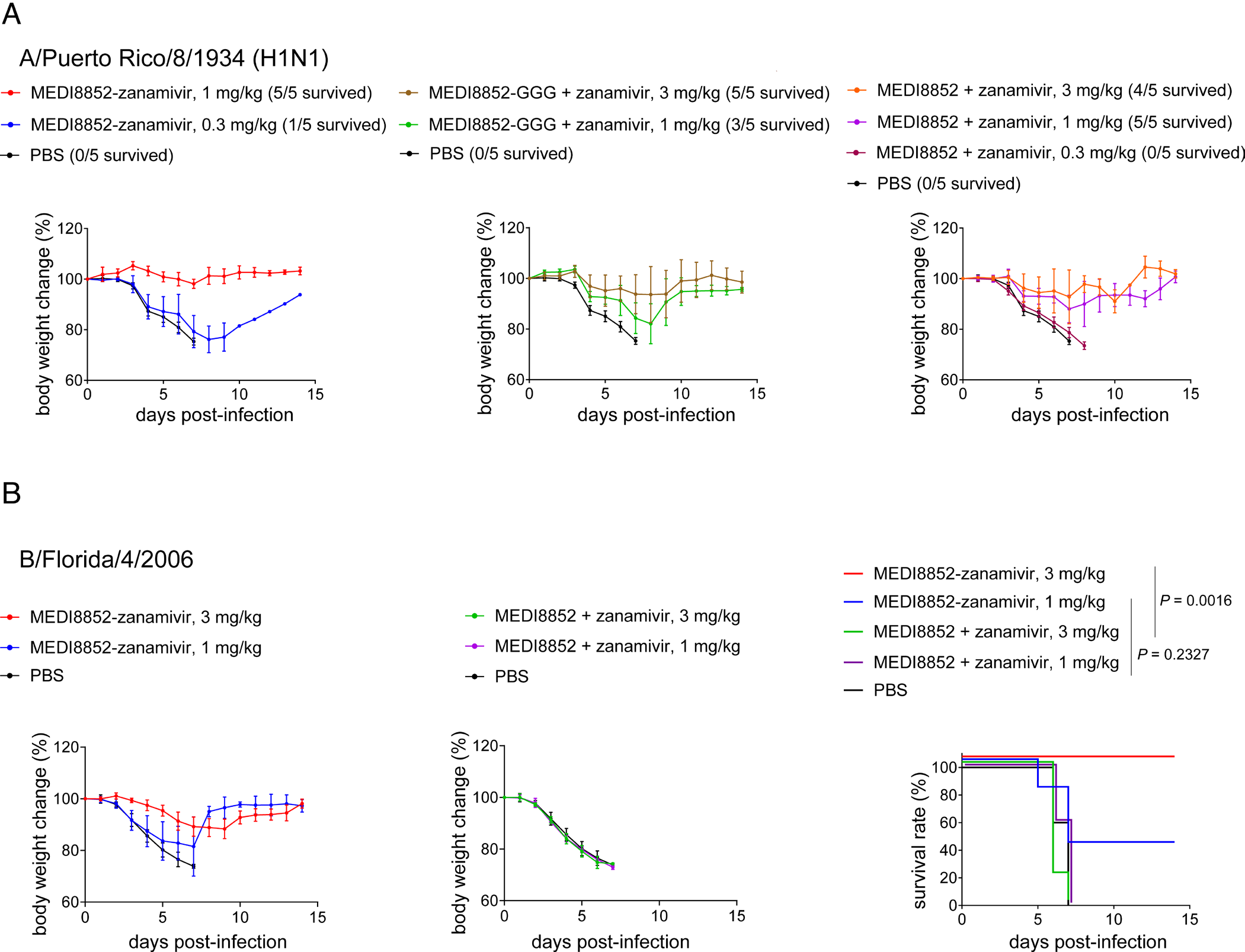
(Data source: Liu X, et al. Proc Natl Acad Sci USA. 2025)