Clostridium difficile is a Gram-positive, spore-forming bacterium that infects the intestines of humans and animals. Toxin A (TcdA) and Toxin B (TcdB) are the main toxins mediating the pathology of Clostridium difficile infection (CDI). They bind to receptors on intestinal cells, disrupting cellular function and triggering inflammatory responses and diarrhea. The importance of TcdA and TcdB in causing cellular damage through disrupting cell function highlights their role in CDI pathology, making it crucial to target these toxins in therapeutic interventions.
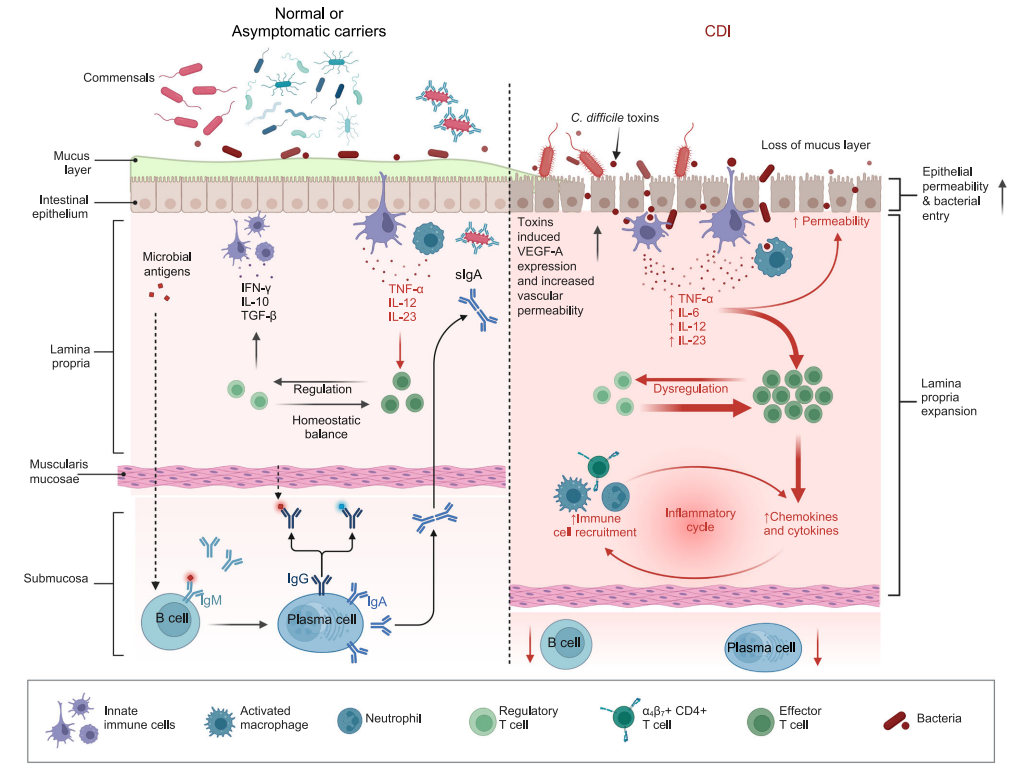
(Data source: Wang L, et al. Imeta. 2024)
TcdA and TcdB belong to the Clostridium difficile toxins (LCTs) family, a group of homologous, high-molecular-weight proteins that further include the α-toxins of C. sordellii (TcsL and TcsH), C. novyi (Tcnα), and the cytotoxins of C. perfringens (TpeL). Compared to TcdB, TcdA is less toxic and less important in inducing host inflammation and innate immune responses.
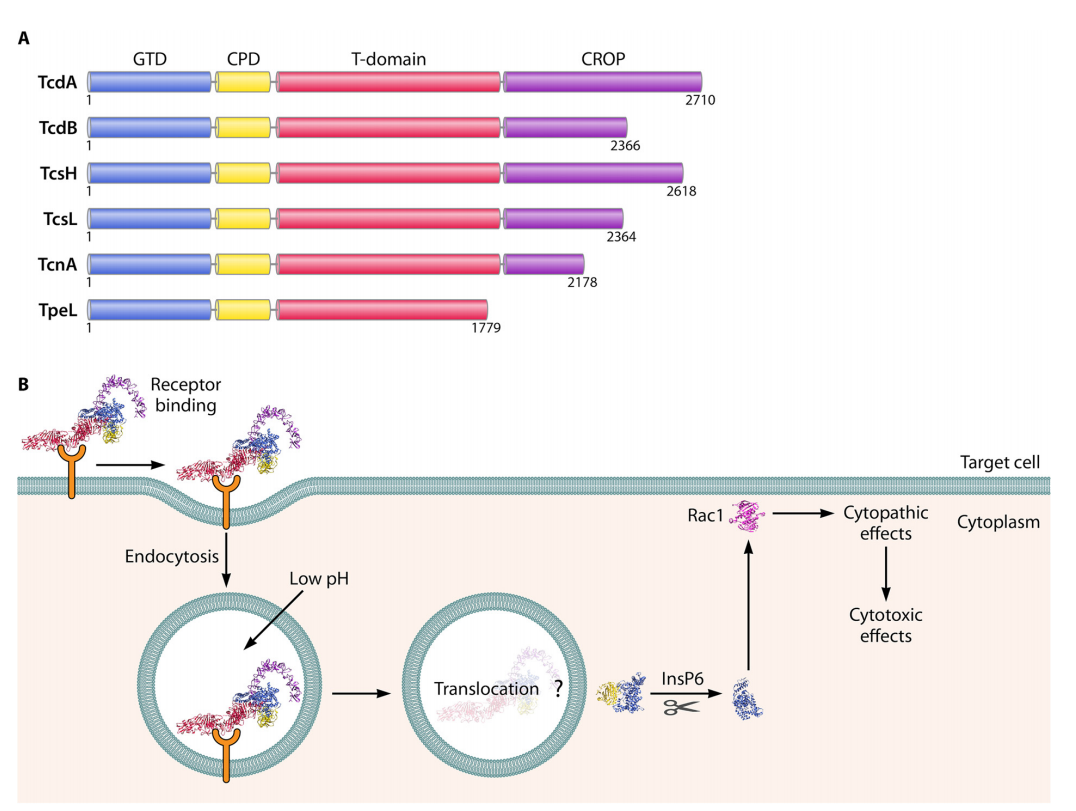
(Data source: Orrell KE, et al. Microbiol Mol Biol Rev. 2021)
The structure of Toxin A and Toxin B
The TcdA and TcdB genes are located in a 19.6-kb chromosomal region , and are 308 kDa and 270 kDa proteins, respectively. TcdA and TcdB share approximately 63% sequence homology. These toxins comprise four domains: a glycosyltransferase domain (GTD), an autoprotease domain (APD), a delivery domain, and a combinatorial repeat oligopeptide domain (CROP).
The CROP domain, located at the C-terminus of the toxin, binds to carbohydrate molecules and proteins on the surface of colonic epithelial cells; the delivery domain helps transport the toxin into the cytoplasm of the target cell; the APD cleaves the GTD to separate it from the rest of the toxin; the GTD utilizes uridine diphosphate glucose (UDP-glucose) to glycosylate Rho family GTPases present in intestinal epithelial cells. Glycosylation of these Rho family GTPases disrupts transcription, cell cycle progression, apoptosis, and cytoskeleton regulation, leading to cytopathological and cytotoxic effects.

(Data source: Sarma S, et al. Commun Biol. 2023)
The role of Toxin A and Toxin B in intestinal inflammation
Toxins act on colonic epithelial cells and immune cells, inducing inflammation and tissue damage. TcdA and TcdB disrupt tight junctions, inducing epithelial cell death and causing direct damage to the colonic epithelium. Furthermore, toxins stimulate epithelial cells to release inflammatory mediators, recruiting neutrophils to the colonic mucosa. TcdA and TcdB can also enter the lamina propria after epithelial barrier disruption, directly stimulating macrophages, dendritic cells, and mast cells to release inflammatory mediators, further promoting inflammation and neutrophil recruitment. Poisoning also leads to enteroneurin activation and increased substance P (SP) production. SP can induce mast cell degranulation and stimulate lamina propria macrophages to release inflammatory cytokines. Prolonged intestinal inflammation can amplify tissue damage, promoting neutrophil infiltration into the lumen, a key clinical feature of pseudomembranous colitis. The binary toxin CDT expressed by some Clostridium difficile strains can also induce cytopathic effects, leading to disruption of tight junctions. Furthermore, CDT can suppress the protective host eosinophil response in the colon and synergize with TcdA and TcdB to increase the production of pro-inflammatory cytokines by innate immune cells. Finally, CDT also enhances the virulence of Clostridium difficile by inducing the formation of microtubule-based cell processes (increasing bacterial adhesion).
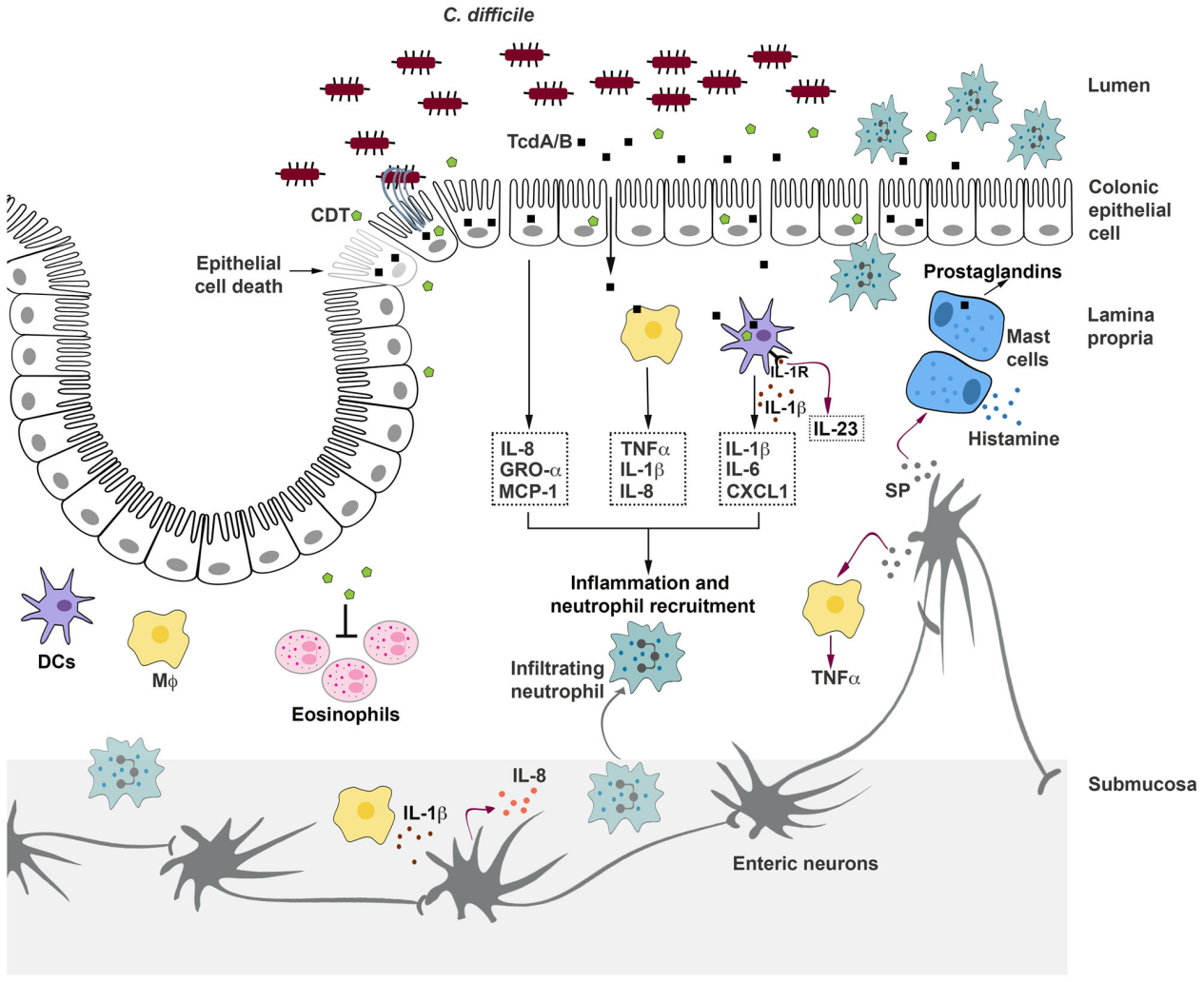
(Data source: Chandrasekaran R, et al. FEMS Microbiol Rev. 2017)
Targeted therapy of Toxin A and Toxin B
Actoxumab and Bezlotoxumab (BEZ) are human monoclonal antibodies, both developed by Merck, capable of binding to and neutralizing TcdA and TcdB. BEZ targets TcdB, thereby neutralizing its harmful effects on human cells.
Bezlotoxumab is a fully human IgG1 monoclonal antibody targeting the TcdB CROPS domain. It binds to two adjacent epitopes and blocks the interaction between TcdB and CSPG4. TcdB neutralizing activity is mediated through an allosteric mechanism, as Bezlotoxumab induces a conformational change in TcdB, thereby masking the CSPG4 binding site. Bezlotoxumab was developed using hybridoma technology and administered via a single intravenous infusion to transgenic human immunoglobulin mice immunized with TcdA and TcdB toxoids and a recombinant C-terminal TcdB fragment during antimicrobial therapy.
Actoxumab is another monoclonal antibody targeting TcdA, used only in the MODIFY-I study. In in vitro cell survival assays, Actoxumab alone completely neutralized TcdA in the culture supernatants of various clinical isolates. However, in the MODIFY-I study, due to insufficient efficacy, the Actoxumab group was terminated early after interim analysis and was not initiated in the MODIFY-II study. In both trials, the proportion of recurrent Clostridium difficile infection (CDI) in patients treated with bezlotoxumab was lower than that in the placebo group during the three-month follow-up period (MODIFY-I: 17% vs. 28%; MODIFY-II: 16% vs. 26%; p < 0.001 for both). The combined use of Actoxumab and Bezlotoxumab showed similar efficacy (MODIFY-I: 16% vs. 28% (placebo); MODIFY-II: 15% vs. 26% (placebo); both p < 0.001), while Actoxumab alone was ineffective (26% vs. 28% (placebo); p = 0.64).

(Data source: Bratkovič T, et al. Gut Microbes. 2024)

(Data source: Giacobbe DR, et al. Infect Dis Ther. 2020)