Staphylococcus aureus is a Gram-positive bacterium widely found in nature, causing invasive diseases such as skin and soft tissue infections, sepsis, and pneumonia. The hemolysin family includes four main types: α, β, γ, and δ. Hemolysin (HLA), also known as α-toxin, is an important toxin produced by Staphylococcus aureus. It binds to the membranes of eukaryotic cells (especially erythrocytes), forming pores that lead to hemolysis, releasing low-molecular-weight substances, and ultimately causing osmotic erythrocyte lysis. α-Hemolysin, as a potent pore-forming toxin, is primarily responsible for acute tissue necrosis. β-Hemolysin, through its unique sphingomyelinase activity, plays a crucial role in immune evasion.

(Data source: Jiang W, et al. Microb Pathog. 2026)
HLA structure and receptors
HLA, encoded by the HLA gene, is a 33 kDa water-soluble monomer secreted by bacteria, composed of β-sheet-rich domains. Upon contact with the host cell membrane, the HLA monomer undergoes a dramatic conformational rearrangement. Its N-terminal and C-terminal regions work synergistically to mediate the mutual recognition and assembly between monomers. Seven α-hemolysin monomers form a non-dissociating heptamer anterior pore.
HLA receptors are mainly divided into two categories. The first category is non-specific lipid receptors: at high HLA concentrations, HLA can directly bind to lipids in the plasma membrane (PM). The crystal structure of HLA dimers with glycerophosphatidylcholine (GPC) and diacylphosphatidylcholine (DiC3PC) complexes indicates that HLA can interact directly with lipid head groups through the gap between the edge and stem domains. The second category is the protein receptor ADAM10, where HLA monomers specifically bind to ADAM10 receptors on the surface of epithelial cells and immune cells. ADAM10 is not only a binding site but also a catalyst for HLA oligomerization.

(Data source: Chatterjee A, et al. Nat Commun. 2025)
The role of HLA in immune regulation
At the level of innate immunity, the interaction between Staphylococcus aureus and macrophages exhibits a bidirectional mechanism. In macrophages, HLA undergoes E-cadherin cleavage and oligomerization mediated by ADAM10, regulating PC/SM/LAMP1; it also induces K+ and Ca2+ion mobility; HLA can activate NF-κB and MCL-1 to achieve intracellular survival, activate the NLRP3 inflammasome to produce IL-1β/IL-18, induce pyroptosis, and trigger programmed necrosis through the RIPK1-RIPK3-MLKL pathway; it also kills Th1 and CD8+ T cells; LAMP1 activates acid sphingomyelinase (ASM) to produce sphingomyelin (SM) and ceramide, inducing barrier disruption; and it promotes the clearance of apoptotic cells by upregulating CD36.
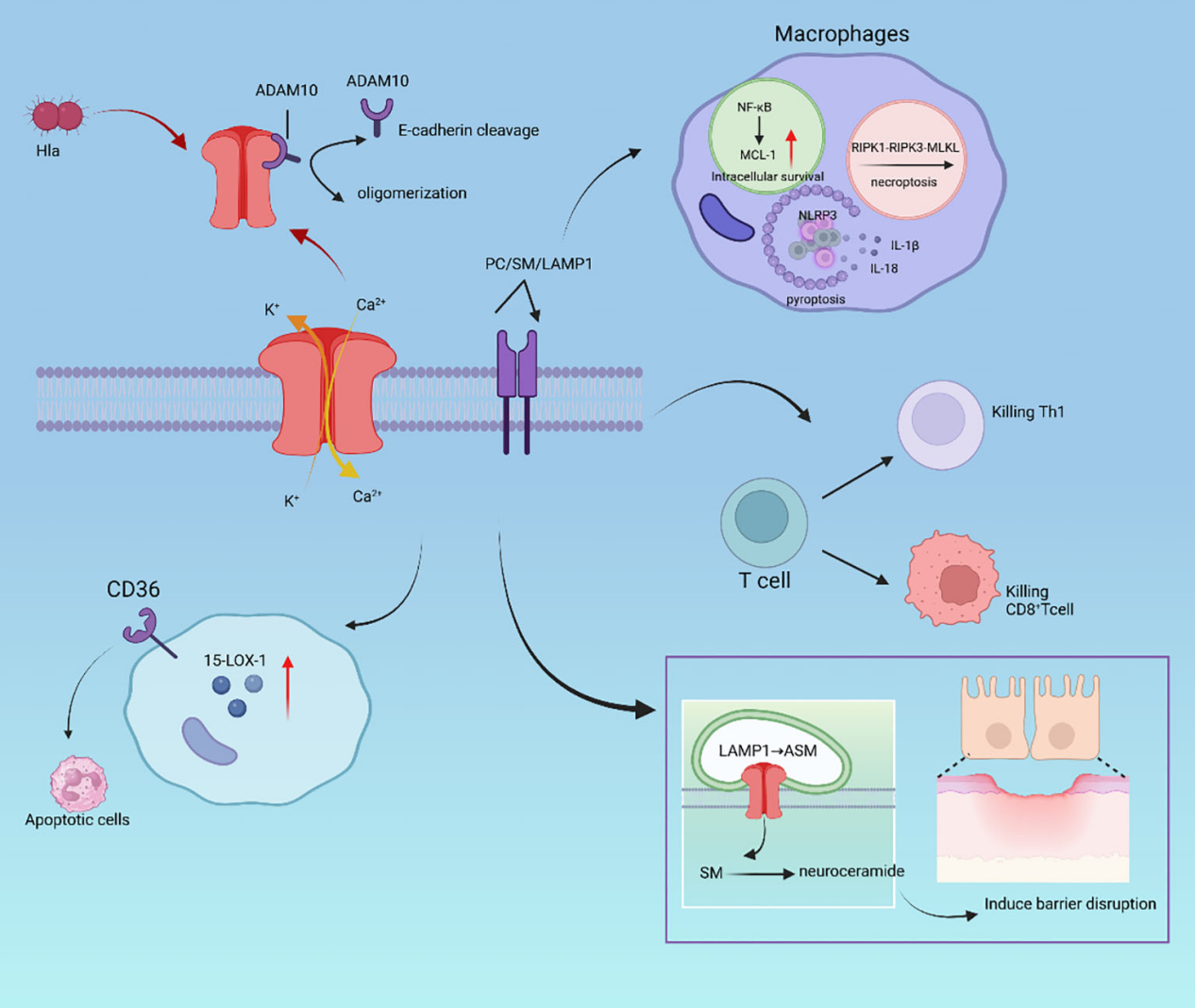
(Data source: Zhang Q, et al. Front Immunol. 2026)
HLA -targeted therapy
Many treatments for Staphylococcus aureus infections are under investigation. Antibiotics are currently the only clinically approved treatment option. Antibiotics act directly on bacteria through bacteriostatic or bactericidal mechanisms. Bacteriophages also act directly on Staphylococcus aureus, killing the bacteria. Centyrin is a small protein with the ability to neutralize bacterial exotoxins and virulence factors. Monoclonal antibodies can perform the same function as centyrin, neutralizing bacterial exotoxins and virulence factors; due to the presence of the antibody's Fc region, monoclonal antibodies can also modulate bacteria.
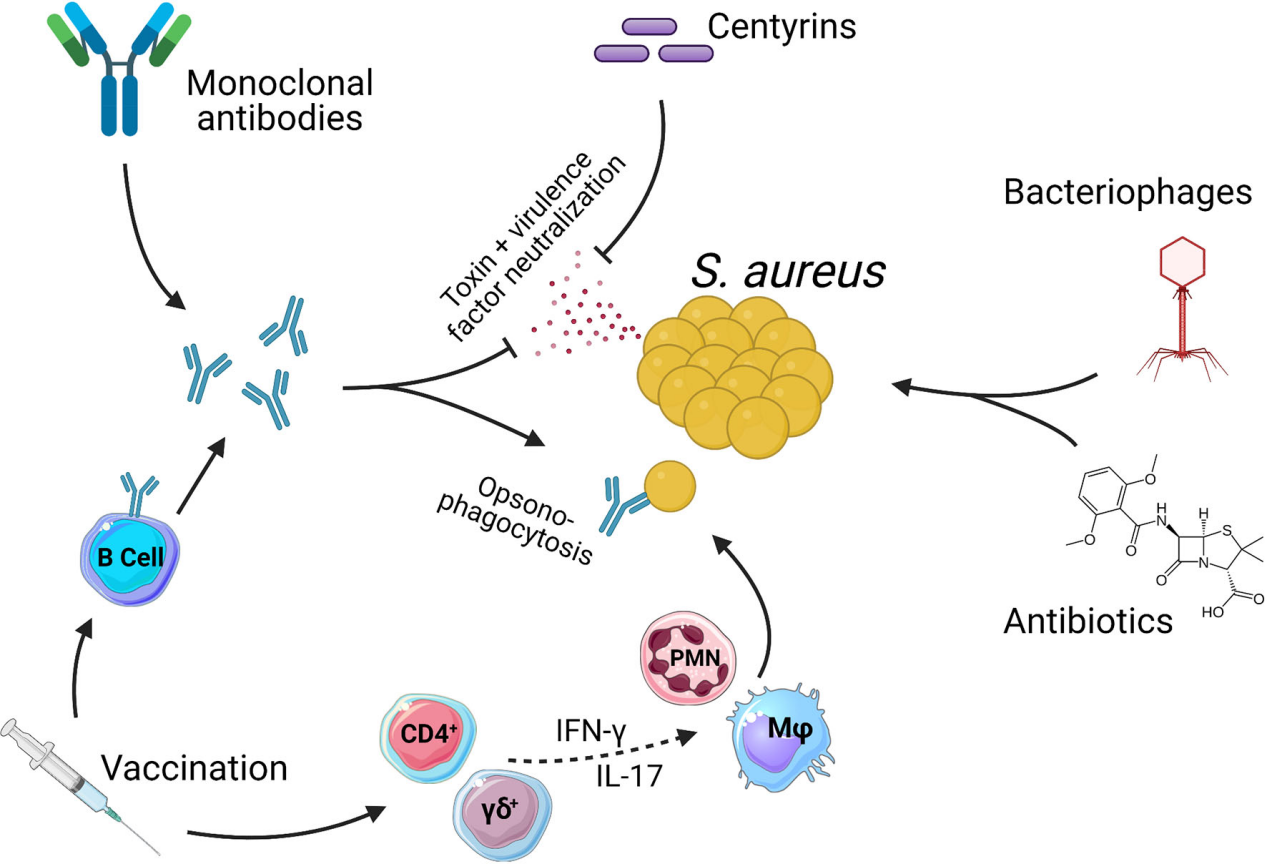
(Data source: Clegg J, et al. Front Immunol. 2021)
Tosatoxumab, an HLA-targeting monoclonal antibody, was investigated as adjunctive therapy for ventilation-associated Staphylococcus aureus pneumonia. While the Phase 3 trial results are not yet published, Aridis' first-line data reported a non-significant increase in overall clinical cure rate at day 21 (57.6% in standard treatment group vs. 68.9% in tosatoxumab+standard treatment group; P=0.23). Subgroup analyses showed increased clinical cure rates at day 21 (30.4% vs. 64.0% in tosatoxumab+standard treatment; P=0.056) and day 28 (24.1% vs. 64.0% in tosatoxumab+standard treatment; P=0.025) compared to standard antibiotic treatment alone. Although the trial did not meet its primary efficacy endpoint, the company reported that it will proceed with a second Phase 3 clinical trial.
ASN100 is a combination of two humanized monoclonal antibodies that simultaneously neutralize six major cytotoxic agents (H1N1 and five leukotoxins: HlgAB, HlgCB, LukSF-PV, LukED, and LukAB). This multi-toxin strategy effectively addresses redundancy among pore-forming toxins. In a preclinical model of rabbit pneumonia, ASN100 significantly reduced lung pathology and mortality, whether administered prophylactically or therapeutically. However, the phase II trial of ASN100 in mechanically ventilated patients failed to effectively prevent pneumonia, forcing the study to be terminated, highlighting challenges in patient selection, timing of administration, and the specificity of virulent strain-specific toxin profiles. Despite this setback, the concept of multi-toxin neutralization remains promising, and the antibody mixture and route of administration are continuously being optimized.
Suvratoxumab (MEDI4893), developed by AstraZeneca, is a human monoclonal antibody that specifically neutralizes HLA by blocking its binding to the ADAM10 receptor and preventing heptamer channel formation. It has a long half-life in human blood and has shown good tolerability. A phase 2 trial showed that suvratoxumab was effective in reducing the incidence of Staphylococcus aureus pneumonia (VAP) in mechanically ventilated patients colonized with Staphylococcus aureus, but the 31.9% efficacy margin was insufficient to meet the study's efficacy endpoint and did not reach statistical significance. The ongoing phase III SAATELLITE-2 trial is still evaluating its efficacy in preventing Staphylococcus aureus pneumonia in mechanically ventilated patients carrying this pathogen; final efficacy results have not yet been published.
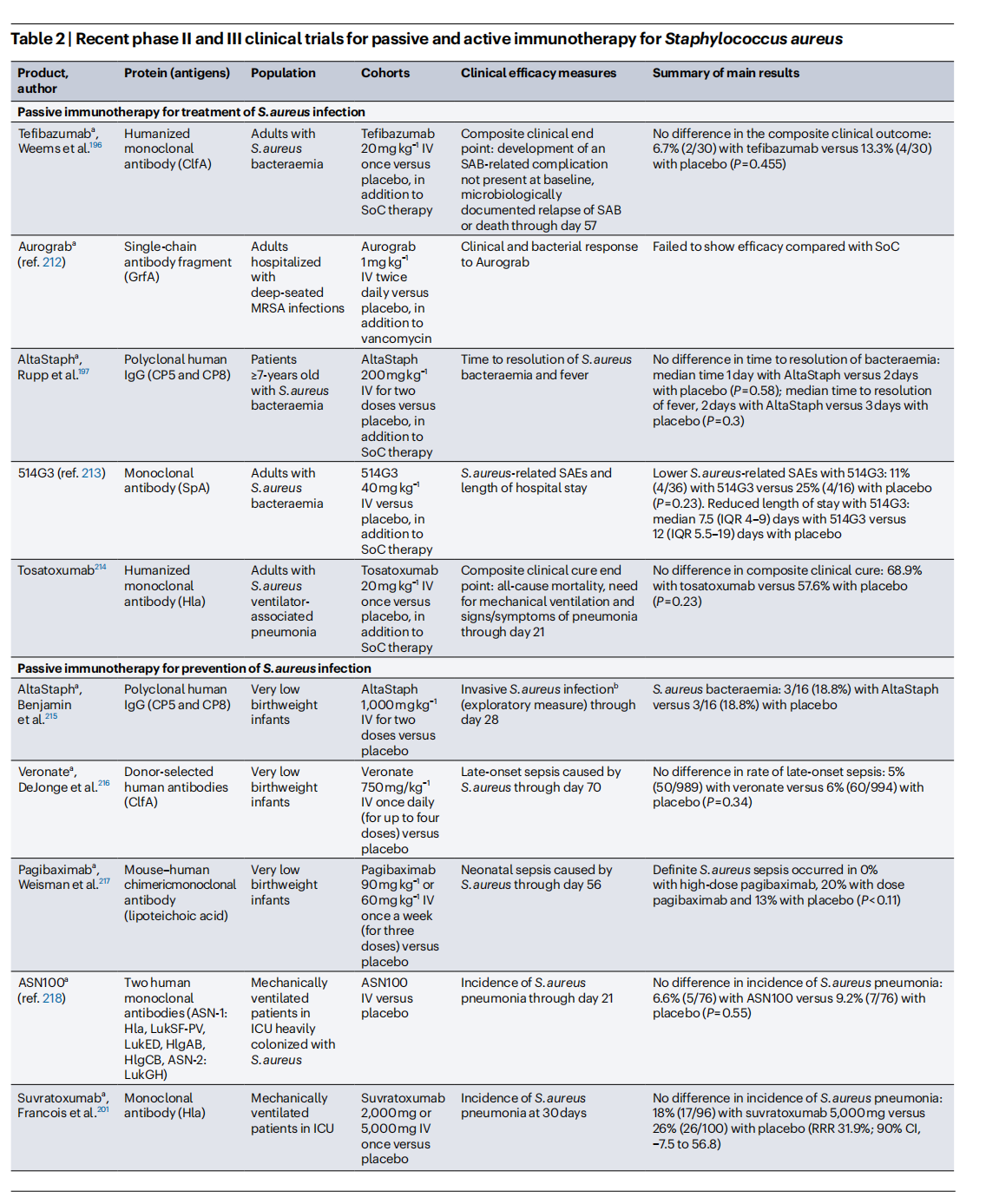
(Data source: Parsons JB, et al. Nat Rev Microbiol. 2026)