Fibroblast growth factor 16 (FGF16) belongs to the FGF9 subfamily and plays an important role in the regulation of embryonic development, cell proliferation and cell differentiation. It is required for normal cardiomyocyte proliferation and cardiac development.
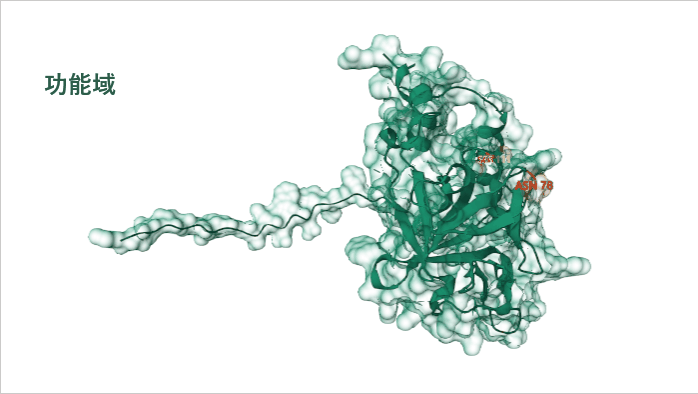
(Data source: AlphaFold)
FGF16 is composed of 207 amino acids and is a secretory extracellular protein with no conventional signal peptide. Its main functional domain is the 1-207 segment, which includes one N-glycosylation and one phosphorylation modification.

(Data source: Uniprot)
FGF16 is highly conserved among species, with minimal sequence differences.
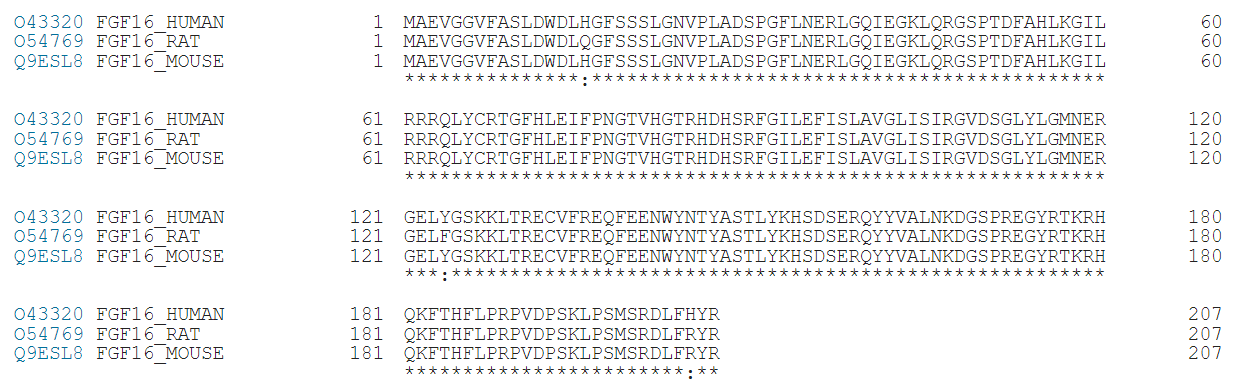
Apart from early reports on FGF16 promoting cell invasiveness in ovarian cancer and hepatocellular carcinoma, and the association of FGF16 truncation mutations with X-linked recessive hand deformity with metacarpal 4/5 fusion, there have been no subsequent in-depth research reports, and the latest related research mainly focuses on the regulation of cardiomyocytes.
Using phenotypic screening of the human secretome , researchers identified FGF16 as a regulatory factor that induces the proliferation of iPSC-derived cardiac progenitor cells. They speculated that FGF16 might be a suitable paracrine factor for inducing cardiac regeneration and repair, and subsequent related studies also confirmed this.
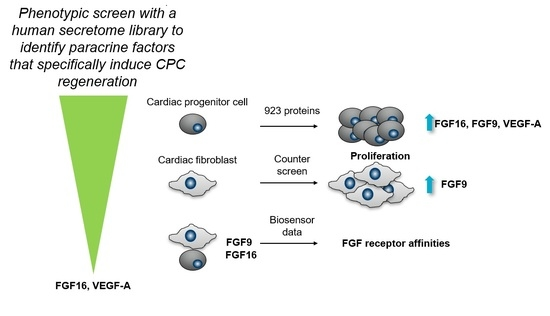
(Data source: Jennbacken K, et al. Int J Mol Sci. 2019)
The T280M mutation in the gene encoding GATA4 causes atrial septal defect (ASD), a common form of coronary heart disease. FGF16 is a direct target of wild-type GATA4. The specific mechanism of action is as follows: the T280M mutation prevents GATA4 from binding to the FGF16 promoter, resulting in impaired FGF16 transcriptional activation. Overexpression of FGF16 can rescue cell proliferation defects in GATA4 mutant cardiomyocytes. This study provides new insights into the treatment of congenital heart disease and other related diseases.

(Data source: Ye L, et al. Cardiovasc Res. 2022)
Combined analysis of methylated RNA immunoprecipitation sequencing (MeRIP-seq) and RNA-seq identified FGF16 as a downstream target of Mettl3-mediated m6A modification during postnatal heart regeneration. Mettl3 negatively regulated FGF16 mRNA expression in an m6A -Ythdf2-dependent manner, and silencing of FGF16 inhibited cardiomyocyte proliferation.

(Data source: Jiang FQ, et al. Elife. 2022)
Evidence from the literature suggests that FGF16 plays an important role in regulating cardiomyocyte number during cardiac development, making FGF16 an interesting target for further exploration.