Background
Currently, the *E. coli* expression system remains the preferred expression system due to its high yield, low cost, mature technology, short cycle time, and ease of scaling up production. However, the *E. coli* expression system suffers from problems such as the formation of incorrect folds or insoluble inclusion bodies.
Despite the availability of various soluble fusion tags, producing large quantities of soluble proteins from bacteria remains a challenge. Therefore, developing new tags is necessary. Antifreeze proteins (AFPs) possess excellent solubility and hydrophilicity, but there are currently no reports on their use as soluble fusion tags. Furthermore, there is no precedent for using inverted proteins (reverse sequences) as soluble fusion tags. Antifreeze proteins typically contain Thr and Ser, which can form hydrogen bonds with water molecules to provide ice-binding sites for their thermal hysteresis activity and other functions.
On April 2, 2022, a research team from the State Key Laboratory of Structural Chemistry, Chinese Academy of Sciences, published a study in Microb Cell Fact entitled "Retro-protein XXA is a remarkable solubilizing fusion tag for inclusion bodies." They selected the antifreeze protein AXX from Chlorella and synthesized its reverse protein XXA through the XXA gene to develop a novel soluble fusion tag. The study found that XXA not only has a stronger effect than common soluble fusion tags but also improves various inclusion bodies. Most of the tested inclusion bodies could still be purified and remained in a dissolved state after the XXA tag was removed.
Comparison of the properties and solubility of XXA and AXX
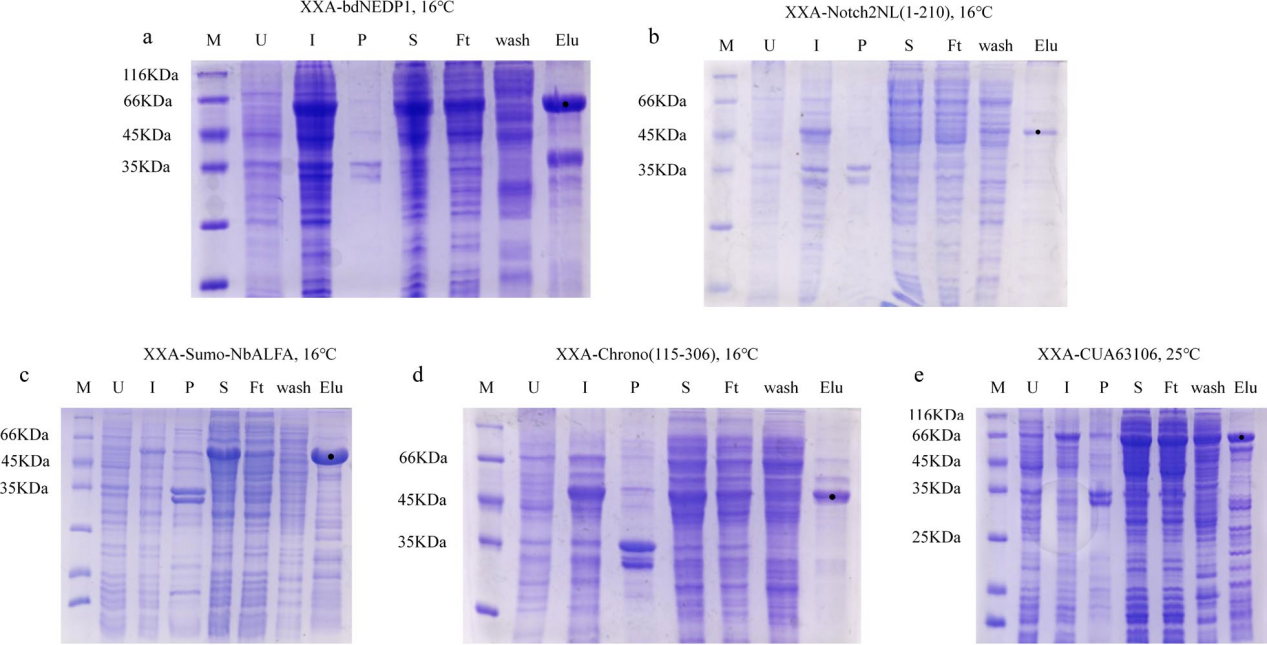
When XXA was expressed and fused, Chrono (115-306), Notch2NL (1-210), and NusA were present in soluble form in the supernatant. These data indicate that XXA significantly promotes the soluble expression of these three inclusion body proteins, and that XXA's solubility is stronger than that of GST, Trx, and NusA. However, the AXX-Chrono (115-306) fusion protein was not expressed.

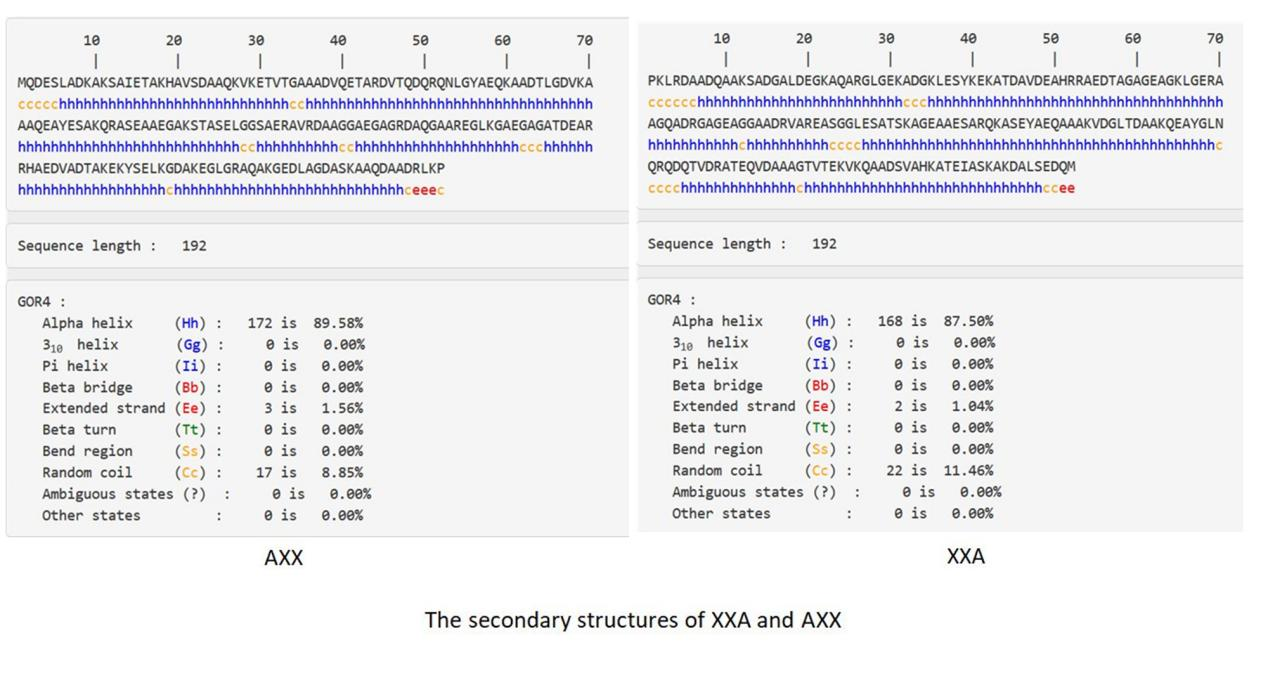
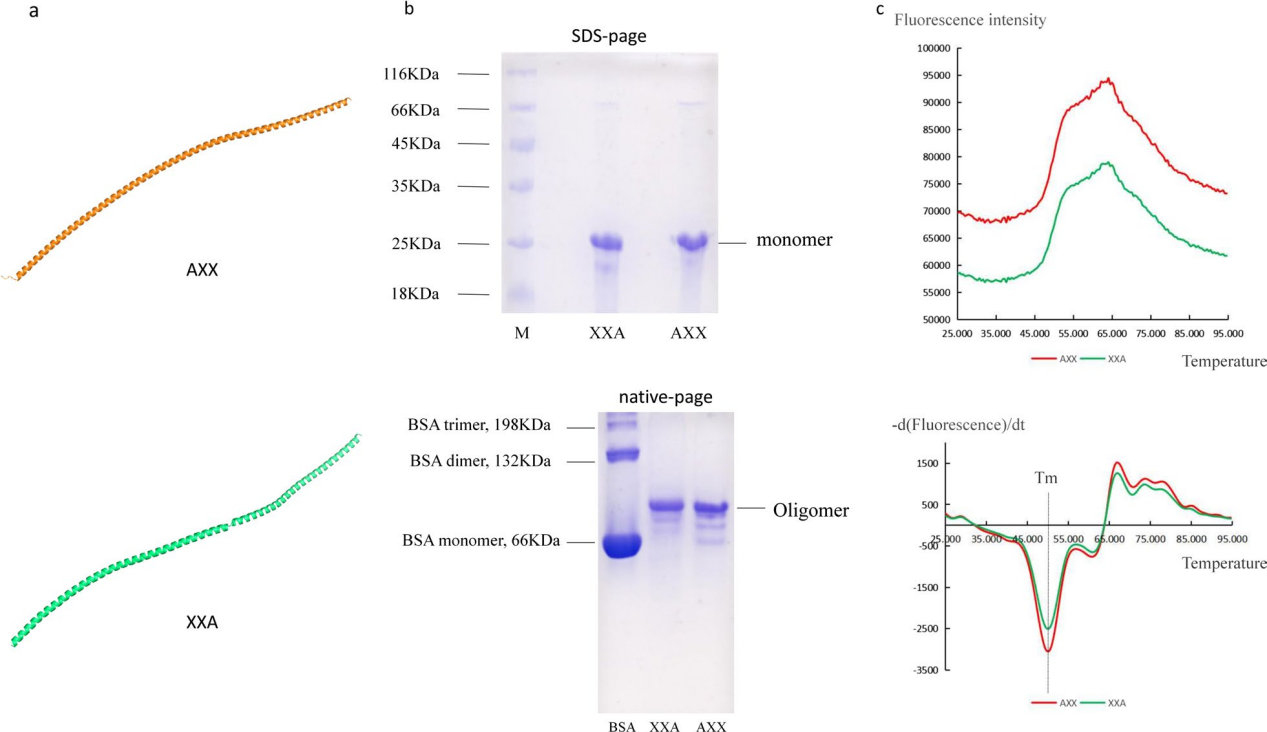
Secondary and tertiary structure predictions for AXX and XXA revealed that both proteins are composed of long α-helices. XXA and AXX exhibit the same aggregation state in solution, and both are finite oligomers, rather than monomers or disordered polymers. Thermal stability analysis showed that XXA and AXX possess high thermal stability with almost identical Tm values, but XXA degrades at a lower rate than AXX. This indicates that XXA has better stability and expression rate than AXX.
XXA may be a label that promotes fusion at both low and high temperatures
By inducing the expression of proteins NbALFA and CUA63106 tagged with SUMO, MBP and XXA at low temperature of 16℃ and high temperature of 25℃, it was found that XXA can promote the soluble expression of proteins at both 16℃ and 25℃.

XXA located at either the N-terminus or C-terminus may promote the soluble expression of heterologous proteins
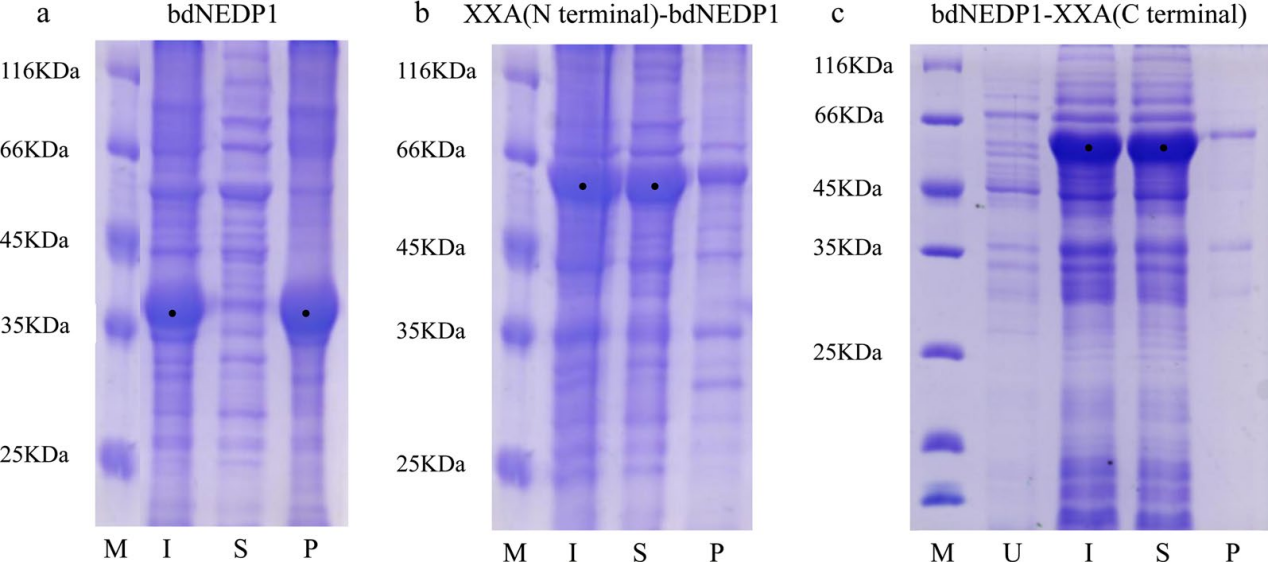
When bdNEDP1 was expressed alone, most of the protein was found in the precipitate. However, when XXA was located at the N-terminus and fused with bdNEDP1, most of the recombinant protein was expressed in a soluble form. Even when XXA was placed at the C-terminus, the product remained distributed in the supernatant. These findings suggest that XXA, as a fusion tag, not only promotes the soluble expression of bdNEDP1 but also exhibits its effect regardless of whether it is located at the N-terminus or C-terminus.
Multiple comparisons of the effects of XXA and other tags on the soluble expression of heterologous proteins
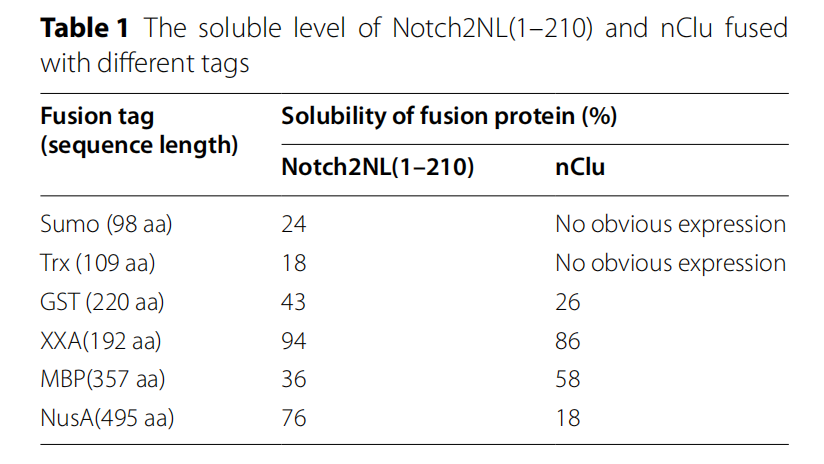
Notch2NL(1-210) and nClu were fused with Sumo, Trx, GST, XXA, MBP, and NusA, respectively, and their solubility with each fusion protein was determined. The results showed that Sumo, Trx, and MBP exhibited poor solubility for Notch2NL(1-210), with most fusion proteins remaining in precipitate form, while GST showed slightly better results. XXA and NusA showed the best fusion performance, with most fusion proteins expressed in soluble form. The two fusion proteins, Sumo-nClu and Trx-nClu, showed no significant expression. Meanwhile, GST and NusA showed poor solubility for nClu, with most fusion proteins remaining in precipitate. XXA showed the best solubility for nClu. XXA, with a sequence of only 192 amino acids, has a smaller impact on the yield of the target protein but exhibits stronger solubility than MBP and NusA. Therefore, XXA holds promise for simultaneously enhancing soluble expression and production.

After the completion of the XXA fusion process, the test package can be submitted
After the fusion of XXA and His to the surface of the body, the fusion protein can be processed using Ni 2+ and the resin, and the fusion protein can be used at a low temperature of 16°C.
Successful selection of selective protein TEV, sumo protein fusion protein HRV_3C cutting XXA fusion protein, own fusion protein successful cutting. The expression XXA does not affect the specific protein and the fusion protein is cleaved, and the soluble fusion marker is used in conjunction with the fusion protein. At the same time, the target protein remains soluble and insoluble after cutting.
The tested inclusion bodies may have functional effects after binding with XXA
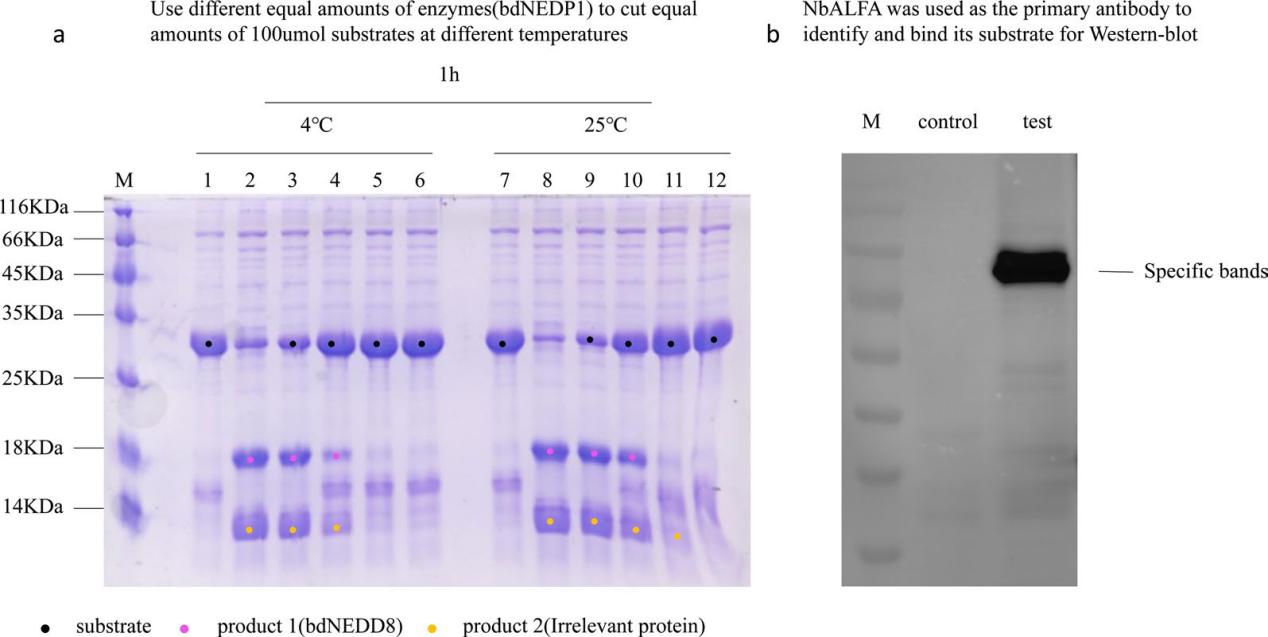
By purifying the fusion proteins XXA-bdNEDP1 and XXA-NbALFA, and testing them using enzymatic digestion and Western blot, it was found that they both had enzymatic activity at 4℃ and 25℃, indicating that the tested inclusion bodies may have functional roles after binding to XXA.
The principle and advantages of XXA solubility
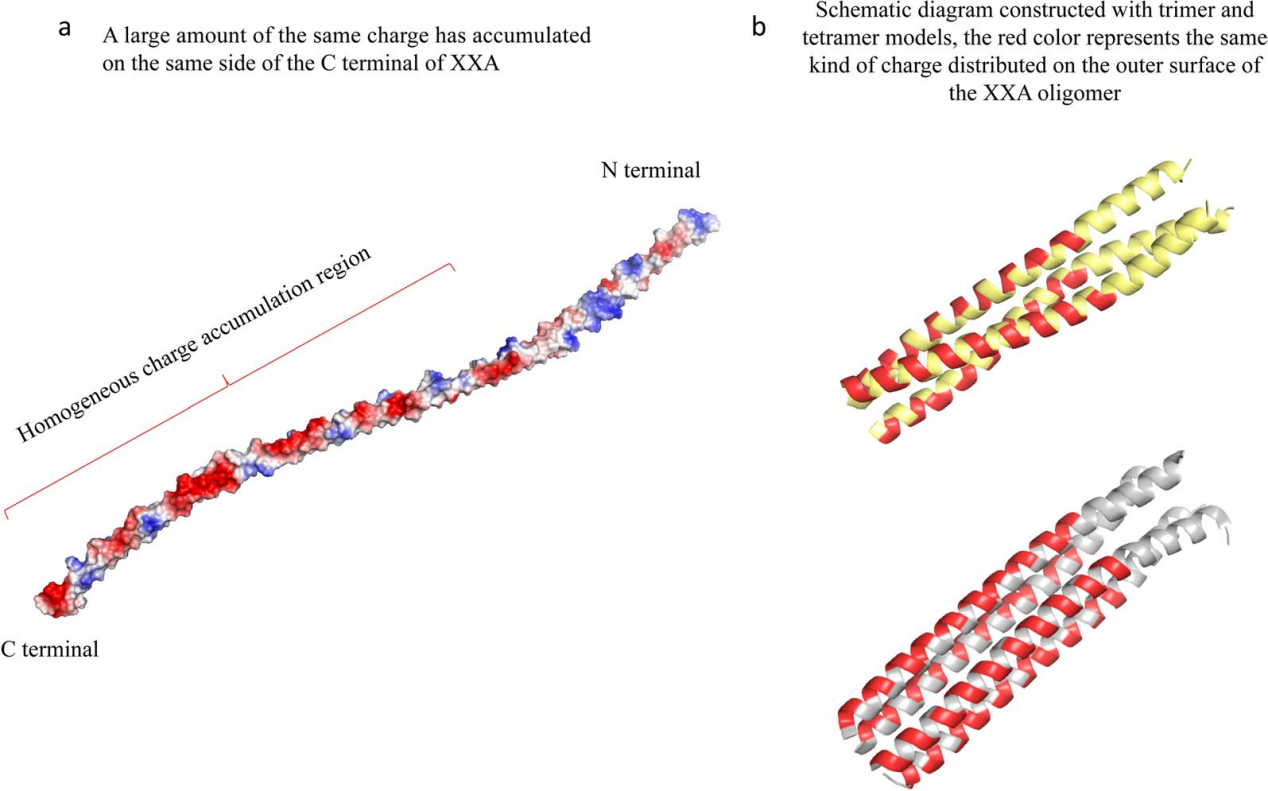
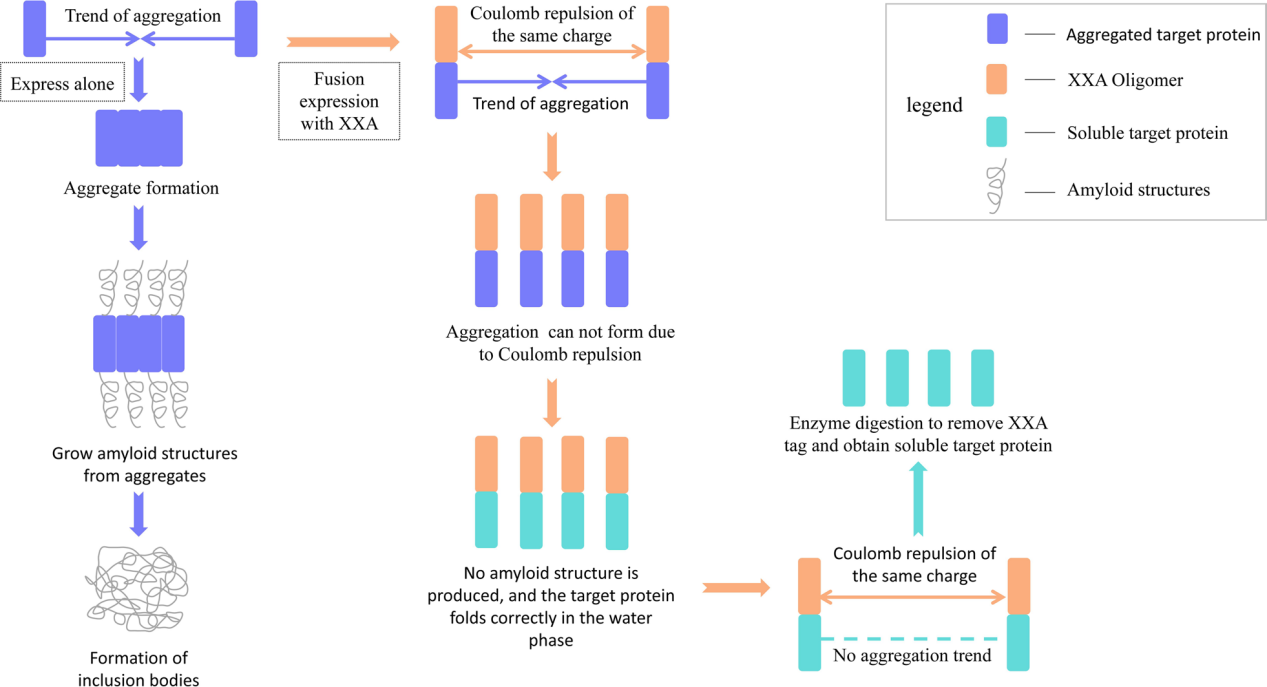
The C-terminus of the XXAXA monomer accumulates a large amount of like charge on one side, while the other side is a hydrophobic region. The structure of the XXA oligomer shows that the hydrophobic region is embedded and forms the polymer core, while the side chains of the like-charged region are distributed on the surface. Inclusion bodies are closely related to the formation of amyloid structures, which are often initially caused by protein aggregation. The large amount of like charge on the surface of the XXA oligomer is a key factor in enhancing the soluble expression of the protein. The aggregation tendency of the target inclusion body protein is inhibited by the strong Coulombic repulsion of the XXA oligomer. Therefore, the fusion proteins cannot aggregate. As a result, protein structure cannot form because the aggregation of the target protein is inhibited, and the target protein can fold correctly in the aqueous phase, thus significantly improving the soluble expression of the inclusion bodies.
In Conclusion
Artificial protein XXA is a reverse protein (reverse sequence) derived from AFPAXX. Both XXA and AXX have a full-length sequence of 192 amino acids. XXA and AXX both exhibit excellent ability to enhance the soluble expression of inclusion bodies as soluble fusion tags. However, XXA shows greater stability and better expression than AXX. XXA can significantly enhance the soluble expression of many inclusion bodies and exhibits superior solubility compared to other tags. These soluble recombinant proteins obtained by fusing with the XXA tag can be purified and retain their function and even solubility after the XXA tag is removed.
The amino acid sequence is as follows:
>AXX
MQDESLADKAKSAIETAKHAVSDAAQKVKETVTGAAADVQETARDVTQDQRQNLGYAEQKAADTLGDVKAAAQEAYESAKQRASEAAEGAKSTASELGGSAERAVRDAAGGAEGAGRDAQGAAREGLKGAEGAGATDEARRHAEDVADTAKEKYSELKGDAKEGLGRAQAKGEDLAGDASKAAQDAADRLKP
>XXA
PKLRDAADQAAKSADGALDEGKAQARGLGEKADGKLESYKEKATDAVDEAHRRAEDTAGAGEAGKLGERAAGQADRGAGEAGGAADRVAREASGGLESATSKAGEAAESARQKASEYAEQAAAKVDGLTDAAKQEAYGLNQRQDQTVDRATEQVDAAAGTVTEKVKQAADSVAHKATEIASKAKDALSEDQM