Eukaryotic mammalian expression systems play a crucial role in protein expression technology. Mammalian protein production has become the standard for the production of state-of-the-art biotherapeutics and the norm for producing protein samples for research. Protein production in mammalian cell lines offers unique advantages, generating near-wild-type transcriptional and translational environments, along with the associated chaperones, secretion, redox environments, and post-translational modifications, resulting in functionally relevant and active proteins. Proteins expressed in mammalian cells are relatively stable, allowing for long-term storage and preservation. Compared to prokaryotic expression systems, proteins produced in mammalian expression systems exhibit low levels of endotoxins.
It plays an important role in the research, development and production of functional proteins, antibody production and clinical vaccines.

(Data source: Hunter M, et al. Curr Protoc Protein Sci. 2019)
Mammalian expression system vector types
Mammalian expression system vector types are divided into two categories: non-viral vectors (plasmids) and viral vectors (adenovirus, retrovirus, adeno-associated virus), etc.
Non-viral vectors: composed of eukaryotic replication signals, promoters, transcription units and plasmid fragments, do not require packaging cells, such as pSV series, pCDNA3, etc.
Viral vectors: can be divided into two categories, integrating and free.
Integration: Integrates into the host chromosome and replicates with it, allowing for sustained expression of the exogenous gene. This type of vector has low safety and may integrate into the gene coding region, leading to insertional mutagenesis. Examples include retroviral and lentiviral vectors.
Episomal: Non-integration, high biosafety, transient expression. For example, adenoviral vectors.
Comparison of Commonly Used Cell Lines in Mammalian Expression Systems
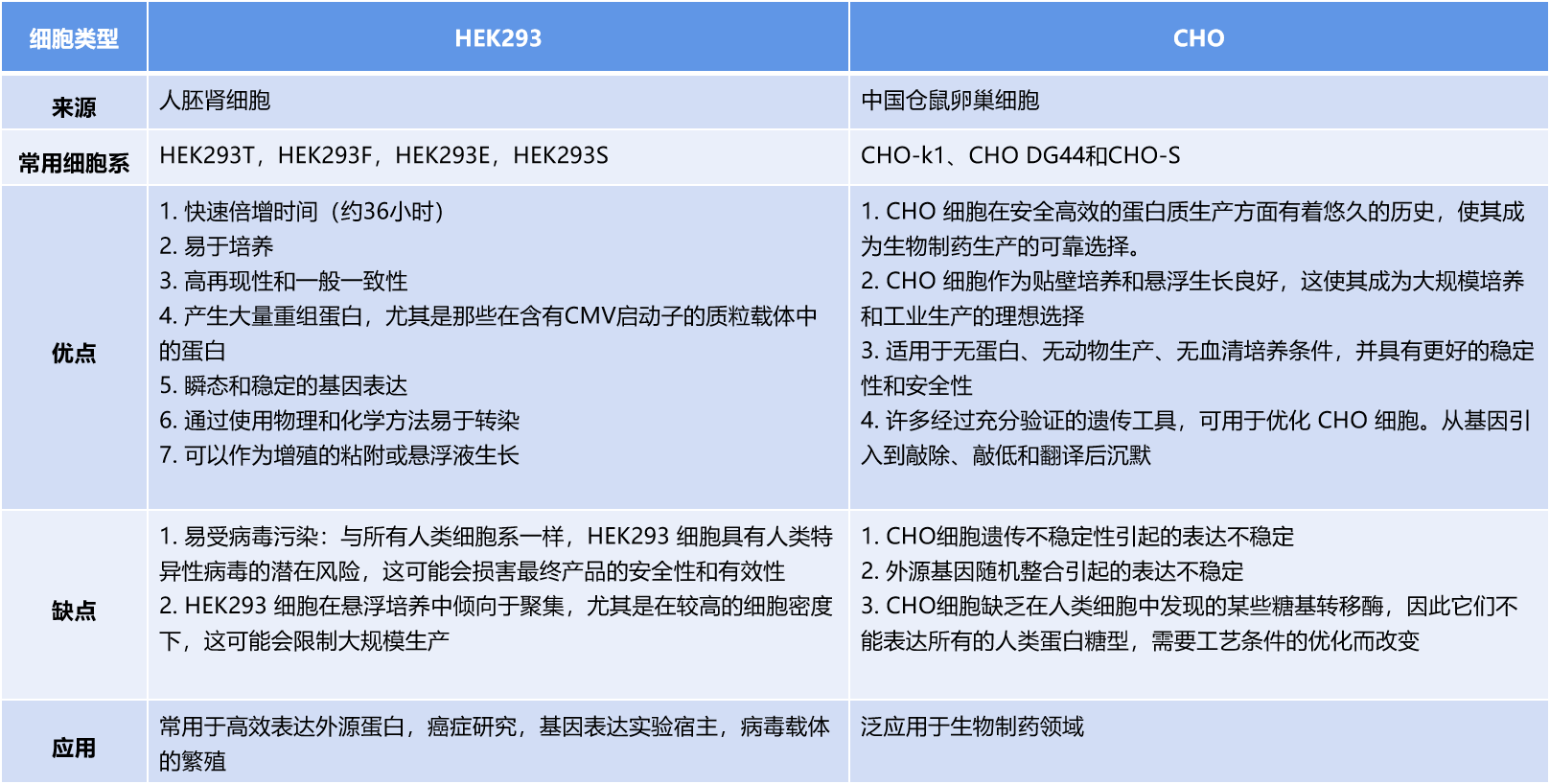
In research and industrial settings, the most commonly used mammalian cell lines for protein production are Chinese hamster ovary (CHO) cells and human embryonic kidney 293 (HEK-293) cells. Selecting the most appropriate cell line is a critical step in successfully expressing your target protein. When choosing between CHO and HEK293 cell lines for recombinant protein expression, the appropriate expression cell line should be selected based on your needs, including the type of protein, protein post-translational modifications, production scale, and timeframe. HEK293 cells excel at rapid and efficient production of recombinant proteins with complex post-translational modifications, while CHO cells are the final host for biopharmaceutical production.
Transfection Types for Mammalian Expression Systems
There are generally two types of protein production using mammalian cell expression systems: transient transfection and stable transfection.
Stable transfection: After the vector is introduced into the host cell, the target gene is integrated into the cell genome and will not disappear with cell passage, enabling long-term and stable production of the target protein.
Transient transfection: During transient transfection, the exogenous gene is expressed in cells but is not integrated into the genome within the cell nucleus, preventing it from being replicated and passed on to the next generation. Transient transfection is limited in expression, typically lasting only a few days until the exogenous gene is lost during cell division. Transient transfection is the preferred method for early-stage projects requiring milligram to gram quantities of protein.
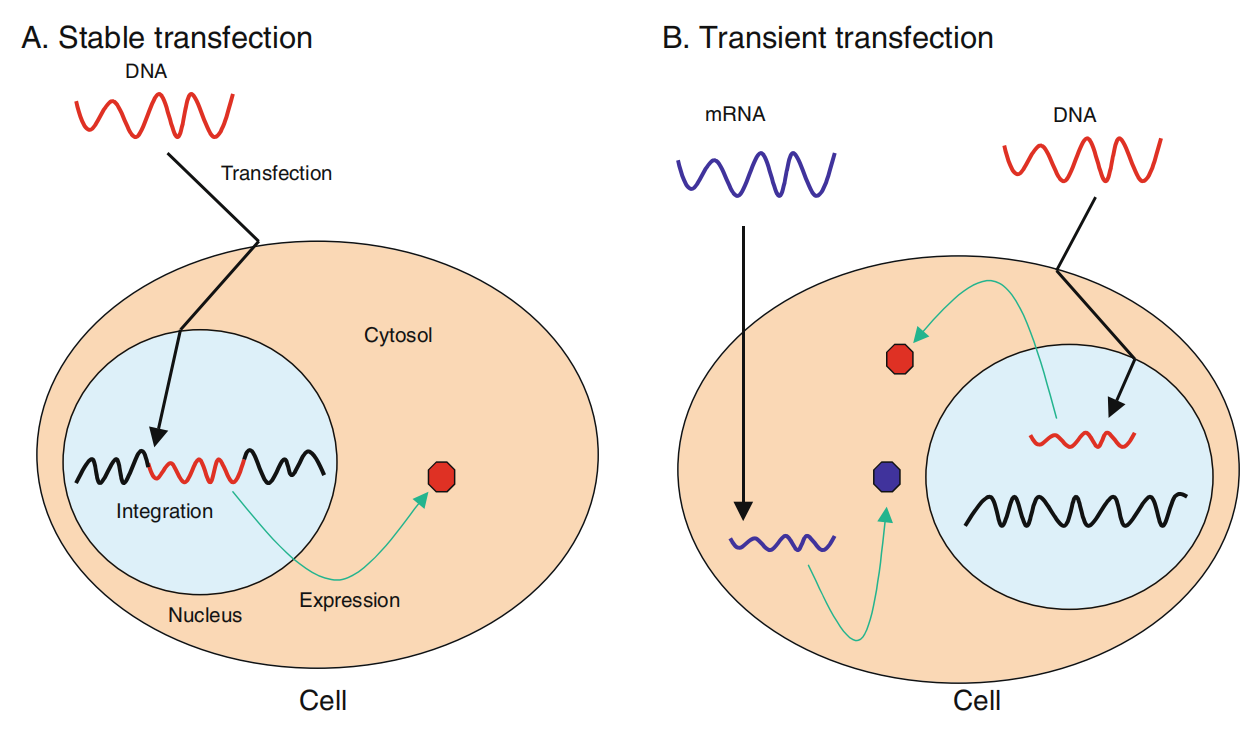
(Data source: Kim TK, et al. Anal Bioanal Chem. 2010)
Transfection methods for mammalian expression systems
Transfection is the process of introducing exogenous genes into host cells. Common transfection methods include viral, physical, and chemical methods. Choosing the right transfection method can significantly improve transfection efficiency and target protein expression.

Our platform advantages
Mabnus Bio have decades of experience and expertise in transient and stable expression in eukaryotic mammalian cells. We have developed a suite of proprietary vectors for our preferred host cell types (HEK293 and CHO cells), paired with optimized serum-free culture systems, to further enhance yields through enhanced expression and purification strategies, further improving the cost-effectiveness of recombinant protein production.
Case Showcase
More than 30 different CD series recombinant proteins were expressed in the same batch with high throughput, and customers verified that they were all functionally active. The high success rate and high yield won praise from customers.


Customized services
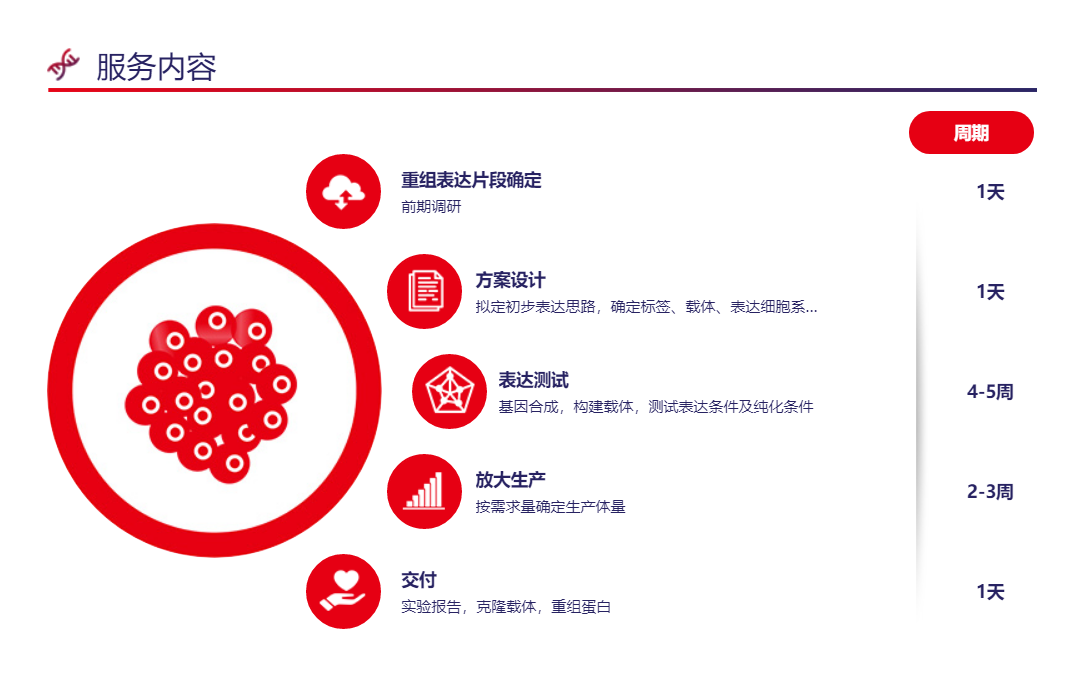
Detailed protein characterization (based on comprehensive evaluation of protein properties, literature, and structural information), codon optimization and construction into specially modified high-expression vectors, selection of high-viability mammalian suspension cell expression hosts for protein expression, and activity verification of recombinant proteins using relevant ligands and reference antibodies.