Interleukin-13 receptor subunit α-1 (IL13RA1), also known as CD213a1, IL-13Rα1, and cancer/testis antigen 19 (CT19), has a low affinity for interleukin-13 (IL13). Upon binding with IL4RA, it can form a functional receptor for IL13. It also serves as a substitute accessory protein for the γ chain of the common cytokine receptor for interleukin-4 (IL4) signaling, but cannot replace the function of IL2RG in enhancing interleukin-2 (IL2) binding activity. Aberrant expression and functional activation of IL13RA1 are closely associated with various diseases, including asthma, chronic obstructive pulmonary disease, atopic dermatitis, and primary mediastinal large B-cell lymphoma, making it an important candidate target for the treatment of inflammatory diseases and tumors.
IL13RA1 expression distribution
IL-13R A1 can be expressed in a variety of cell types, including monocytes, macrophages, fibroblasts, B cells, basophils, eosinophils, endothelial cells, and smooth muscle cells.
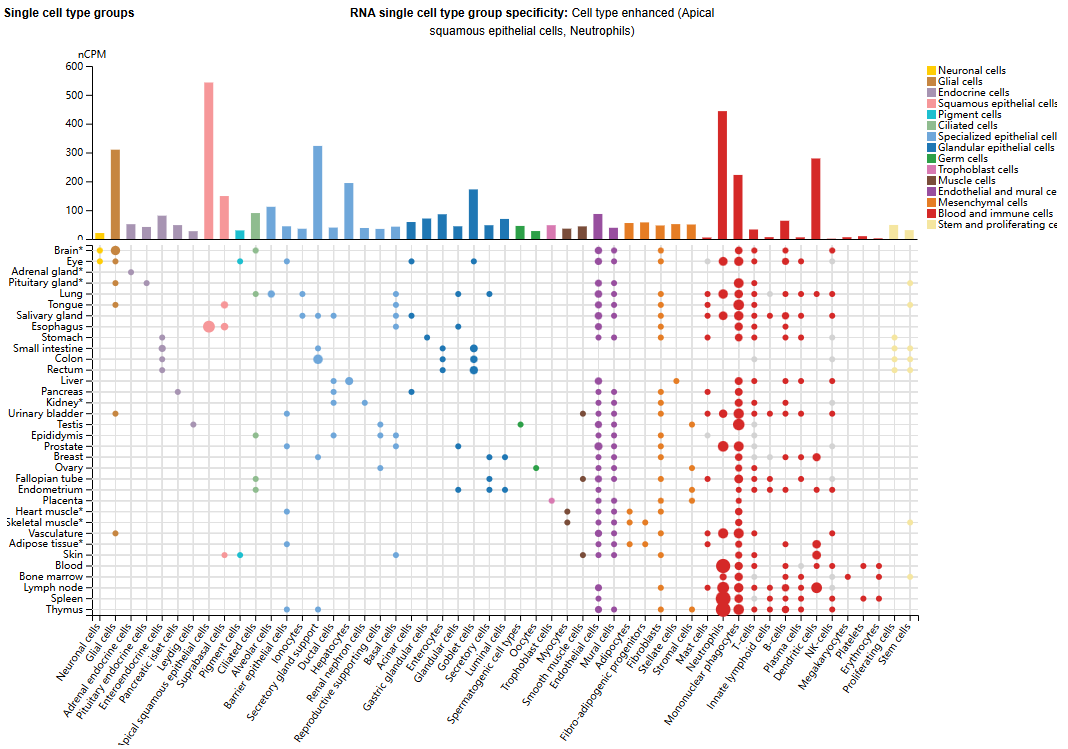
(Data source: uniprot)
The structure of IL13RA1 and its receptor
IL13RA1 belongs to the class I cytokine receptor superfamily. It is a single-channel type I membrane protein composed of 427 amino acids, mainly consisting of an extracellular region, a transmembrane region, and an intracellular region.
Extracellular region: Composed of three fibronectin type III domains (D1, D2, D3), with D2 and D3 forming two cytokine receptor homologous modules (CRHs), a hallmark structure of the class I cytokine receptor family. The D1 domain is crucial for the specific binding of IL-13Rα1 to IL-13, but does not affect IL-4 binding. Key binding residues include Leu-319 and Tyr-321 in the CRH region.
Intracellular region: It has a relatively long cytoplasmic tail (in stark contrast to the extremely short cytoplasmic tail of IL-13Rα2). The intracellular region contains the Box-1 motif near the transmembrane domain, which is essential for JAK kinase binding and activation; it also contains two tyrosine residues near the C-terminus, which can serve as docking sites for signaling molecules.
Characteristic motif: Contains the WSXWS motif, which is essential for the correct folding of proteins, efficient intracellular transport, and cell surface receptor binding.
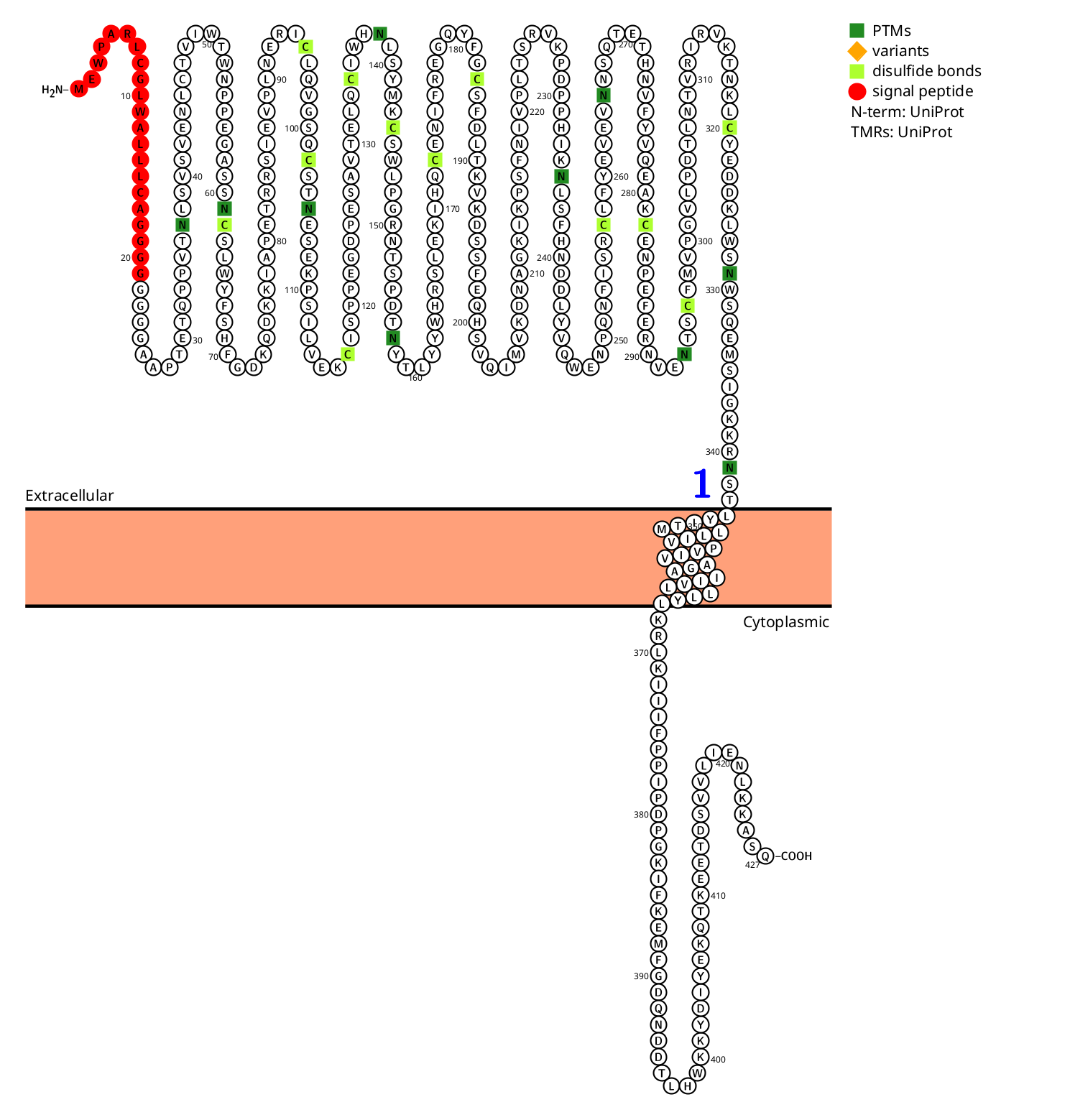
(Data source: protter)
IL13RA1 signaling pathway and regulation
IL-13Rα1 is a low-affinity IL-13 receptor. In normal cells, IL-13 binds to IL-13Rα1 with low affinity, and subsequently, IL-13Rα1 forms the IL-13Rα1/IL-4Rα heterodimer with IL-4Rα. The binding of IL-13 cytokines by IL-13Rα1/IL-4Rα stimulates intracellular signaling of STAT-6, leading to receptor-mediated endocytosis (RME) and STAT6 translocation to the nucleus. IL-13Rα2 is a monomeric, high-affinity interleukin-13 (IL-13) receptor that is overexpressed in approximately 78% of glioblastomas (GBM). IL-13Rα2 is absent or expressed at extremely low levels in normal brain tissue. Anti-IL13Rα2 vNAR binds to IL13Rα2 on the surface of GBM cells, subsequently causing IL13Rα2 to undergo receptor-mediated endocytosis and inhibiting the binding of IL-13 to IL13Rα2. Therefore, IL-13 can still bind normally to IL13Rα1/IL4Rα, further activating the JAK-STAT6 pathway; this leads to the restoration of this signaling pathway, which inhibits the abnormal, uncontrolled proliferation of glioblastoma cells and ultimately causes apoptosis in these cells.

(Data source: Manzanares-Guzmán A, et al. Antibodies (Basel). 2024)
Targeted therapy for IL13RA1
Eblasakimab blocks the type 2 receptor by targeting IL-13Rα1, thereby inhibiting the signaling of pro-inflammatory cytokines IL-4 and IL-13. IL-4 and IL-13 are key drivers of inflammation in atopic dermatitis (AD) and important targets for AD treatment. Eblasakimab is currently in early-stage trials for the treatment of Alzheimer's disease. A phase 1b multiple-dose escalation study and a randomized, double-blind, placebo-controlled phase 2b study in adults have been completed.
In a double-blind, multi-dose escalation phase 1b study, Eblasakimab demonstrated significant improvements in EASI percentage change (%CFBL) at week 8, the proportion of patients reaching EASI 50 and EASI 75, and PP-NRS %CFBL compared to placebo. The group receiving 600 mg Eblasakimab weekly showed a significantly greater decrease in EASI score at the end of week 8 than the placebo group.

(Data source: Veverka KA, et al. J Am Acad Dermatol. 2024)