Adrenomedullin (ADM) is a peptide hormone and a potent vasodilator. In normal tissues, ADM plays a crucial role in regulating blood pressure, angiogenesis, and immune regulation. ADM also plays an important role in regulating immune escape and angiogenesis in the tumor microenvironment, promoting tumor cell proliferation, resisting apoptosis, adapting to hypoxic environments, and participating in the process of chemotherapy resistance. Targeting ADM has the potential to inhibit tumor growth and overcome drug resistance.
ADM expression distribution
ADM is widely distributed throughout the body, including the cardiovascular system, lungs, kidneys, central nervous system, and gastrointestinal tract. Under normal physiological conditions, ADM is mainly expressed in endothelial cells, smooth muscle cells, and various epithelial cells, maintaining basal vascular tone, tissue perfusion, and cellular homeostasis.
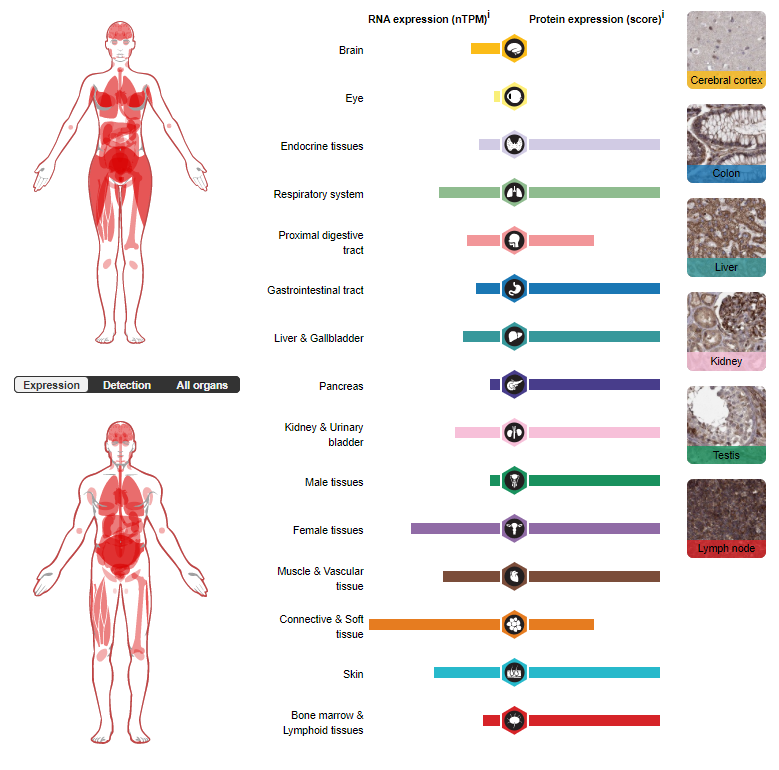
(Data source: uniprot)
Structure and receptors of ADM
The ADM gene is located on human chromosome 11. Its precursor is a secretory protein composed of 185 amino acids. Through enzymatic processing, it is eventually converted into a biologically active mature molecule by C-terminal amidation, forming a polypeptide hormone composed of 52 amino acids. The biological effects of ADM are mediated by binding to a receptor complex composed of a glucagon receptor-like receptor (CRLR) and specific receptor activity regulatory proteins (RAMPs).

The main physiological functions of ADM include vasodilation, regulation of endothelial barrier function, immune regulation, and regulation of fluid and electrolyte balance.
Vasodilation: By activating adenylate cyclase to increase cAMP and by activating endothelial nitric oxide synthase through the PI3K/AKT pathway to increase NO, vascular smooth muscle relaxes and blood pressure is reduced.
Maintaining endothelial barrier function: Through the cAMP-PKA/Epac-Rap1 signaling pathway, it enhances tight junctions and adhesion junctions between endothelial cells (such as upregulating VE-cadherin), reduces vascular leakage, and has anti-inflammatory and anti-apoptotic effects.
Immune regulation: Promotes macrophage polarization from the pro-inflammatory M1 type to the anti-inflammatory M2 type. Inhibits the production of pro-inflammatory cytokines such as TNF-α and IL-1β.
Regulation of water and electrolyte balance: In the central nervous system and adrenal glands, it participates in the regulation of fluid balance by inhibiting the secretion of adrenocorticotropic hormone and aldosterone, thereby reducing sodium reabsorption.

(Data source: Li H, et al. Int J Mol Sci. 2025)
The role of ADM in tumors
ADM is abnormally overexpressed in various tumor cell lines and solid tumors, playing a crucial role in promoting tumor angiogenesis and stimulating cell proliferation. ADM directly promotes tumor cell proliferation, inhibits apoptosis, and enhances their invasion and migration abilities by activating multiple signaling pathways, including PI3K/AKT and MAPK/ERK. ADM regulates the immune response by affecting the function of tumor-infiltrating immune cells, thereby promoting tumor-mediated immune surveillance and tumor growth. Under hypoxic conditions, ADM is significantly upregulated via the hypoxia-inducible factor-1 (HIF-1) pathway, indicating that ADM plays a key role in tumor adaptation to hypoxic environments. ADM drives tumor angiogenesis, not only by upregulating factors such as VEGF to stimulate new blood vessels but also by participating in the "normalization" of vascular structure, providing blood supply to the tumor, and promoting chemotherapy resistance.

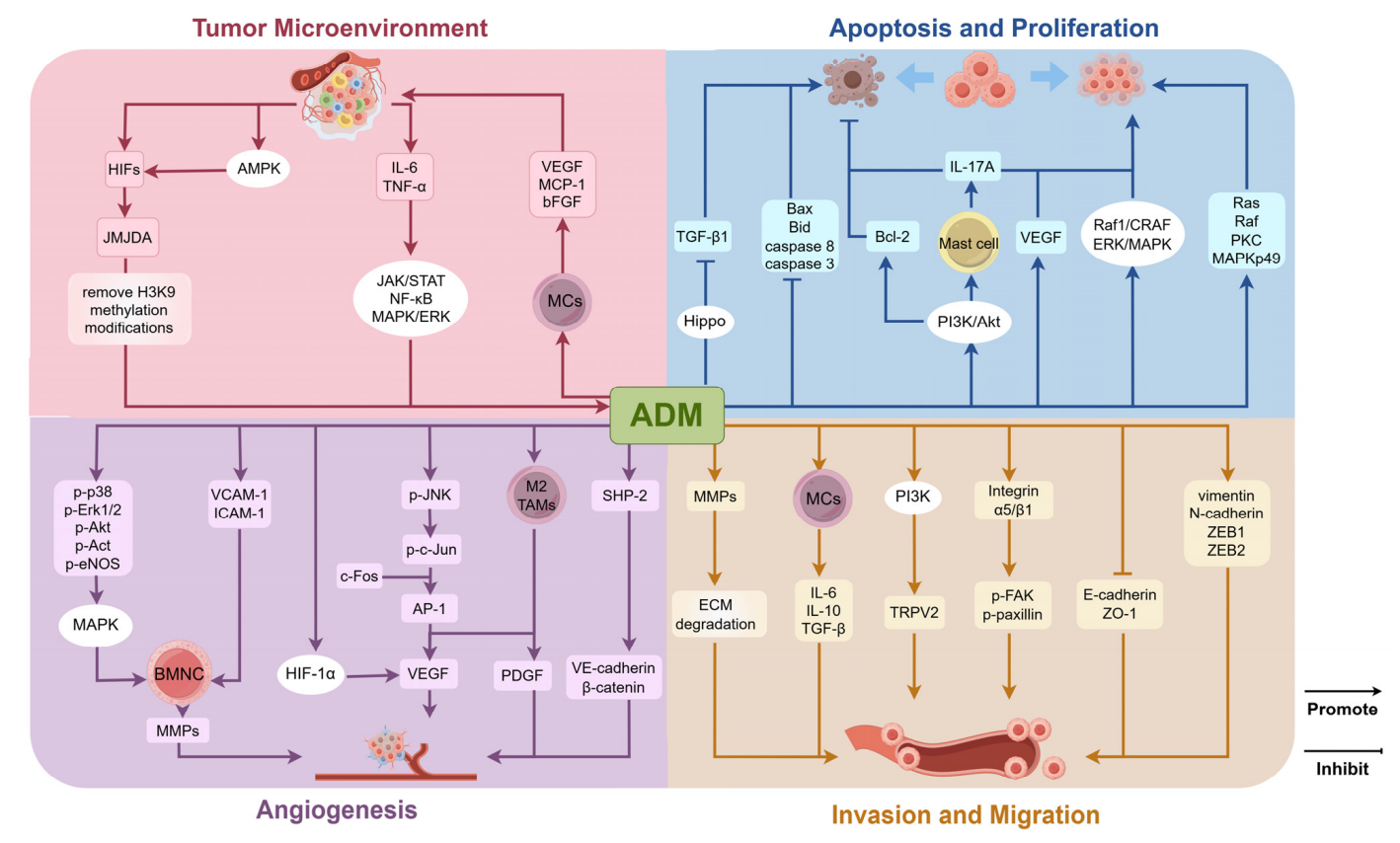
(Data source: Li H, et al. Int J Mol Sci. 2025)
ADM Targeted Therapy
Enibarcimab (Adrecizumab) is a first-in-class antibody developed by Adrenomed in a clinical-stage trial. Enibarcimab targets the vascular protective peptide ADM , a crucial substance regulating vascular integrity, for the treatment of life-threatening conditions associated with increased vascular leakage, congestion, and shock. Its current lead indication is septic shock. In sepsis, more ADM is produced to counteract the loss of endothelial barrier function; however, as the endothelial barrier becomes more permeable due to systemic immune dysregulation, more ADM enters the extravascular space, acting on vascular smooth muscle cells (VSMCs) and potentially inducing relaxation, thereby contributing to shock and organ failure. The binding of Enibarcimab to ADM results in a rapid and sustained increase in circulating ADM concentration. Large ADM-Enibarcimab monoclonal antibody complexes function normally and remain in circulation. Therefore, ADM continues to act on the endothelium, promoting endothelial barrier stability by restoring endothelial cell connections that normally regulate molecular transport and leakage. Two Phase I clinical trials (NCT02991508, NCT03083171) and one Phase II patient proof-of-concept clinical trial (AdrenOSS-2; NCT03085758) have been conducted in healthy volunteers.

(Data source: Adrenomed official website)