An abundant fibrotic stroma is a hallmark of most solid tumors, and stromal activation promotes tumorigenesis, therapeutic resistance, and metastatic dissemination of cancer cells. Therefore, targeting the tumor stroma in combination with standard therapies has become a promising therapeutic strategy in recent years. Leucine-rich repeat protein 15 (LRRC15) is involved in cell-cell and cell-matrix interactions . Its overexpression in mesenchymal-derived tumors (such as sarcomas, glioblastomas, and melanomas) and in cancer-associated fibroblasts within the tumor microenvironment of breast, head and neck, lung, and pancreatic tumors makes it a promising anticancer target. Effective targeting of LRRC15 using specific antibody-drug conjugates (ADCs) has the potential to improve the prognosis of patients with LRRC15-positive (LRRC15+) cancers of mesenchymal origin or with stromal desmoplasia. Furthermore, LRRC15 expression can serve as a predictive biomarker for preclinical evaluation of cancer patients to support personalized clinical outcomes.

(Data source: Ray U, et al. Cancer Res. 2022)
Expression distribution of LRRC15
LRRC15 is primarily expressed in lymphatic endothelial cells. Normal tissue expression of LRRC15 is localized to areas that constitute the innate immune barrier, such as the placenta, skin, activated fibroblasts within wounds, and lymphoid tissues (such as the spleen). LRRC15 may play a role in innate immunity.
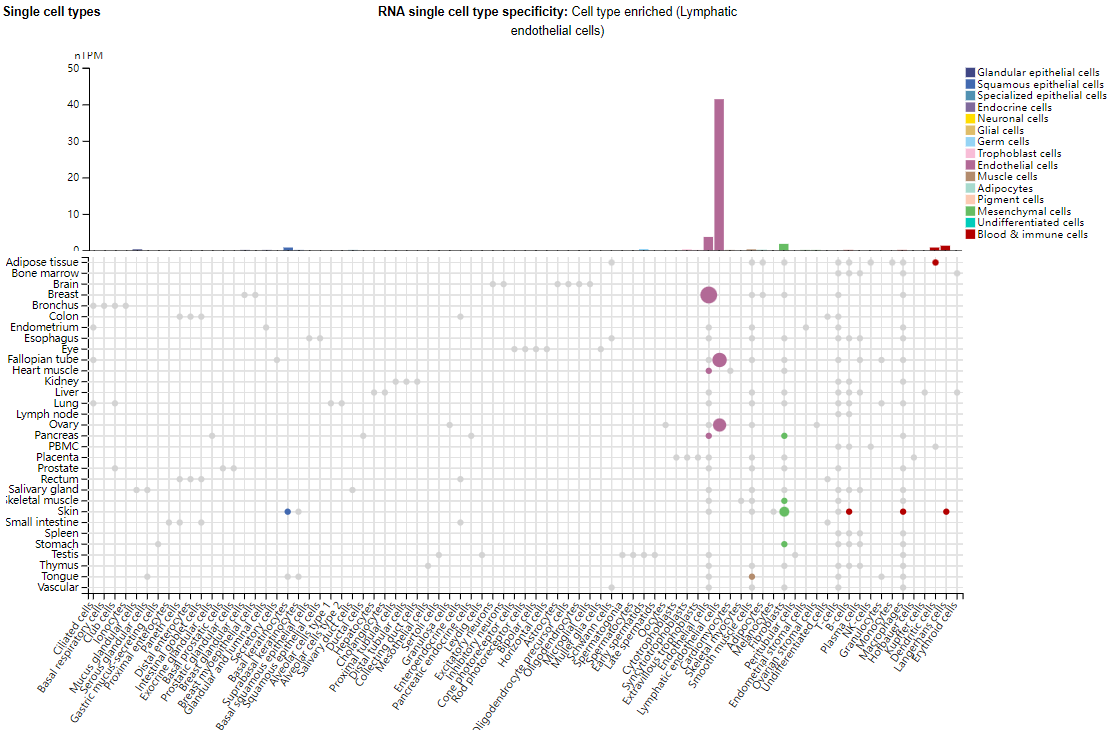
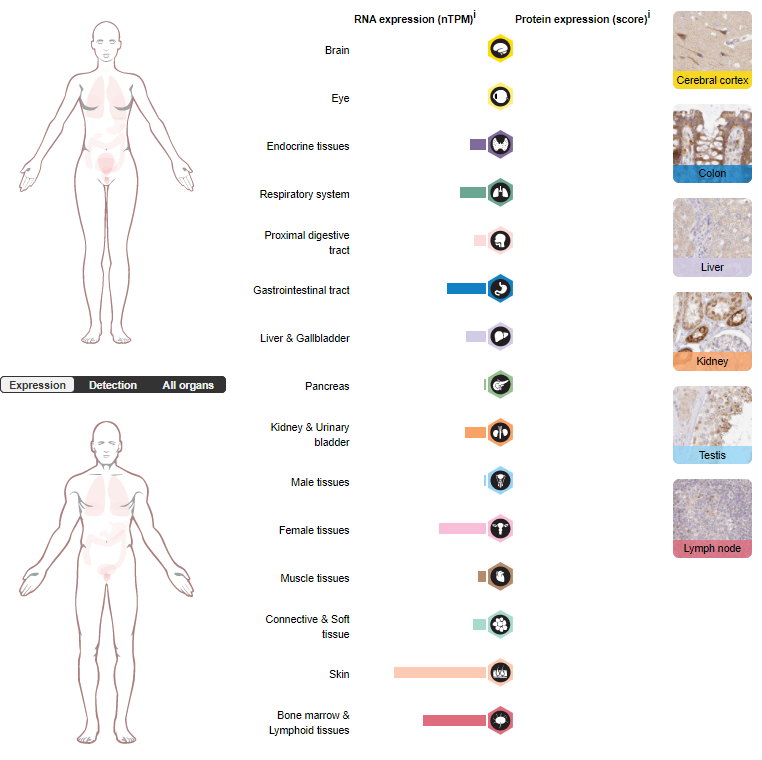
(Data source: uniprot)
Structure of LRRC15
LRRC15 is a transmembrane protein located on chromosome 3q29 and belongs to the LRR superfamily. LRRC15 contains 15 LRR sequences. The structural arrangement of LRR motifs within repeat stretches of varying lengths creates an adaptive framework for several protein-protein interactions. These LRR sequences form a horseshoe-shaped structure, with the concave side composed of parallel β-sheets and the convex side composed of various secondary structures, such as α-helices. The N- terminus consists of a conserved 11-residue leucine-rich sequence . Proteins with LRR domains are often involved in a variety of protein-protein interactions, including cell adhesion, receptor-ligand binding, and target recognition.
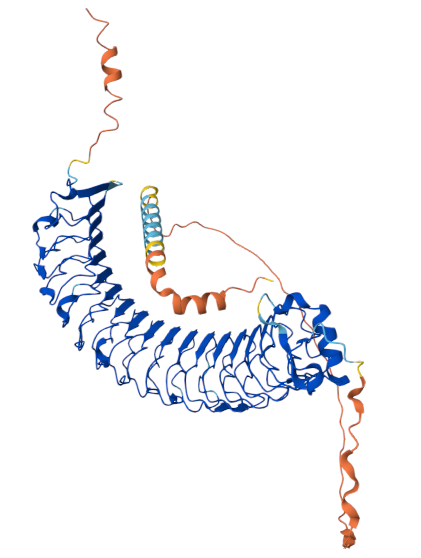
(Data source: Alphafold)
The role of LRRC15 in cancer
LRRC15 is highly expressed in cancer-associated fibroblasts ( CAFs ) within the stroma of many solid tumors and is directly expressed in mesenchymal tumors such as glioblastoma, sarcoma, and melanoma. LRRC15 promotes metastasis by interacting with fibronectin and β1 integrin, leading to activation of focal adhesion kinase signaling. LRRC15 has recently been shown to promote migration and invasion of triple-negative breast cancer ( TNBC ) tumors by regulating the Wnt/β-catenin signaling pathway. High LRRC15 expression in CAFs of TNBC cell lines is associated with increased cytoplasmic and nuclear β-catenin, which drives cancer cell migration and invasion. Mechanistically, LRRC15 expression reduces the expression of Axin1, a member of the destruction complex that promotes β-catenin degradation, leading to elevated β-catenin levels. LRRC15 expression in CAFs promotes the expression of matrix metalloproteinases (MMPs) in TNBC cell lines, further mediating migration and invasion. However, the effect of LRRC15 on MMP expression may be context-dependent, as LRRC15 expression in astrocytes is not associated with MMP overexpression.

(Data source: Ray U, et al. Cancer Res. 2022)
Targeted therapy of LRRC15
Targeted therapies currently under development for LRRC15 are antibody-drug conjugates (ADCs). AB BV-085 ( samrotamab vedotin ) is a humanized anti-LRRC15 IgG1 antibody being developed by AbbVie . AB BV-085 has completed a Phase I first-in-human safety study in sarcomas and other advanced solid tumors (NCT02565758). A non-randomized, multicenter, Phase I, open-label, dose-escalation study was conducted to determine the pharmacokinetics and safety of ABBV-085 and to evaluate the proposed Phase II dose as monotherapy or in combination with standard of care in patients with advanced solid tumors, including sarcomas, head and neck squamous cell carcinoma, and breast cancer. ABBV-085 therapy was reported to be generally well tolerated, with a manageable safety profile, and showed encouraging signs of anti-tumor activity in refractory sarcomas. Although there is no latest progress on ABBV-085 at present, the preliminary clinical results of ABBV-085 have demonstrated the feasibility of the new target LRRC15 as a treatment for solid tumors.
ZL-6201, a LRRC15-targeted ADC currently in preclinical development, is being developed by Zai Lab and MediLink Therapeutics. The drug is expected to submit an IND (Investigational New Drug) application in 2025, having demonstrated encouraging data in preclinical studies.