CD154, also known as CD40 ligand (CD40L), is a transmembrane glycoprotein with a trimeric structure. It belongs to the tumor necrosis factor (TNF) family and is primarily expressed by activated T lymphocytes and activated platelets. As a key co-stimulatory molecule in the immune system, CD154 plays a central role in the initiation, regulation, and effector phases of adaptive immune responses through its interaction with the receptor CD40. With the clinical validation of second-generation drugs and breakthroughs in gene therapy, this classic target, CD154, holds promise for playing an irreplaceable role in the precision treatment of autoimmune diseases, tumors, and immunodeficiency diseases.
Basic Structure of CD154
CD154 belongs to the tumor necrosis factor (TNF) family, which includes molecules such as TNF, CD27 ligand, CD30 ligand, Fas ligand, lymphotoxin, and Ox40 ligand. These molecules are interconnected through structural homology, chromosomal localization, and overlapping biological functions. The CD154 gene is located in the q26.3±q27.1 region of the X chromosome and encodes 261 amino acids (aa). The gene consists of five exons and four introns. The extracellular C-terminus is rich in cysteine, the transmembrane region contains 24 amino acids, the intracellular N-terminus contains 22 amino acids, and the intracellular terminal lacks a signal peptide. CD154 exists in three forms: 31 kDa, 18 kDa, and 14 kDa. Crystallography analysis has shown that the soluble extracellular terminal exists as a trimer. It has been confirmed that the trimer structure is a prerequisite for its function, and the introduction of a leucine zipper motif can significantly improve the biological activity of soluble CD154.
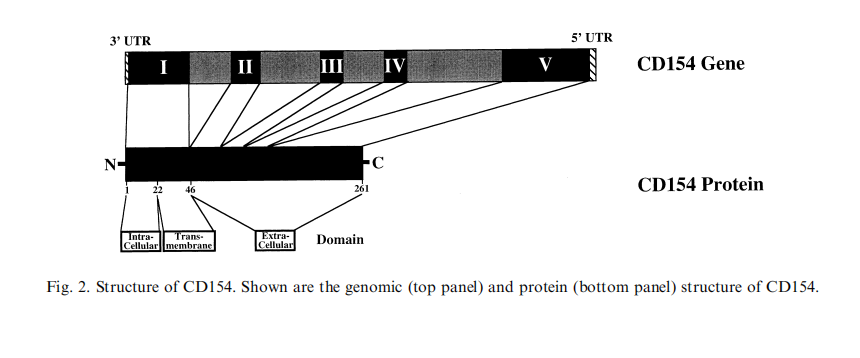
(Data source: Schönbeck U, et al. Int J Biochem Cell Biol. 2000)
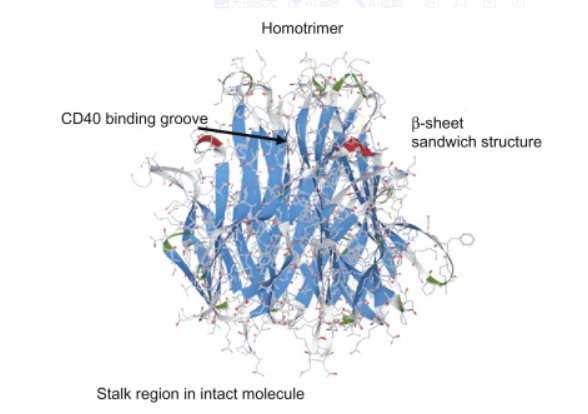
(Data source: Kidney Transplantation–Principles and Practice (Seventh Edition), 2014)
CD154 expression distribution
CD154 is a transmembrane glycoprotein with a trimeric structure, belonging to the tumor necrosis factor (TNF) family. It was initially described as being present on the surface of activated CD4 + T lymphocytes and interacting with CD40 on B lymphocytes. While CD40 is expressed on many immune and non-immune cells, CD154 expression is inducible and is primarily expressed by activated T lymphocytes and activated platelets.
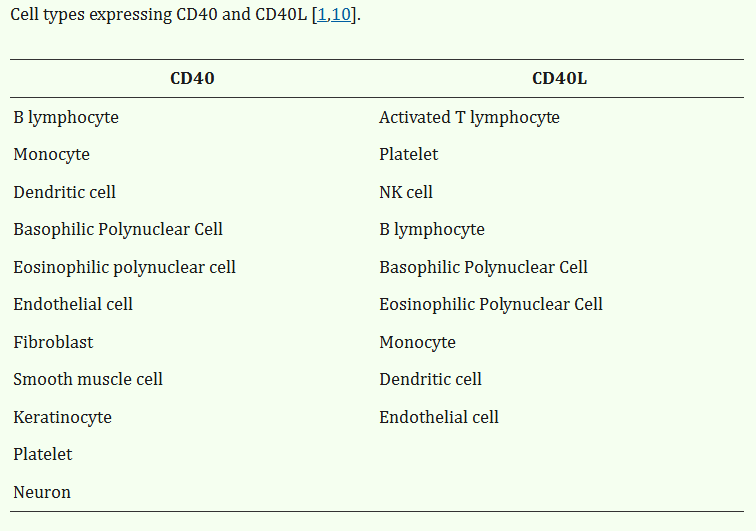
(Data source: McVey JC, et al. Clin Cancer Res. 2025)
CD154 's core functions
CD154, as a key co-stimulatory molecule in the immune system, plays a central role in the initiation, regulation, and effector phases of adaptive immune responses through its interaction with the receptor CD40.
1. Classic signaling pathways: After CD154 binds to CD40, it mainly activates the NF-κB and MAPK signaling pathways in T cells, thereby regulating the production of various cytokines and cell functions.
2. Activation of antigen-presenting cells (APCs): CD40 signaling can promote the maturation of APCs such as dendritic cells (DCs) and macrophages, upregulate their surface co-stimulatory molecules (such as CD80/86), and enhance antigen presentation capabilities.
3. Involvement in T cell responses: By promoting the secretion of cytokines (such as IL-2), CD154 can assist CD8+ T cells in differentiating into highly efficient cytotoxic T lymphocytes (CTLs), which is crucial for clearing viral infections and tumor cells.

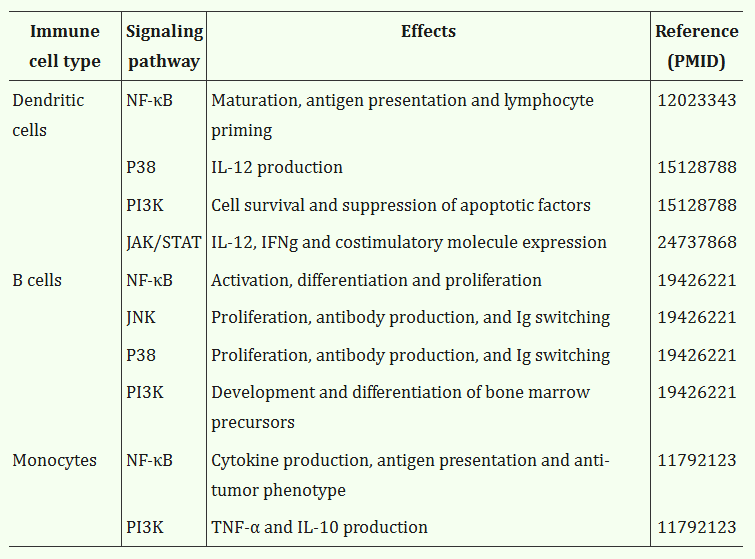
(Data source: McVey JC, et al. Clin Cancer Res. 2025)
Application Prospects of CD154
1. Targeted therapy: Dapilolizumab pegol, an Fc-free PEGylated anti-CD40L antibody fragment, significantly improved the 48-week response rate in SLE patients during a phase III clinical trial, making it the most advanced drug to date; Frexalimab, an anti-CD40L antibody developed by Sanofi, achieved promising data in a phase II trial for multiple sclerosis (MS) and has been approved in China with phase III clinical trials initiated; KPL-404: a humanized anti-CD40 antibody, demonstrated good safety and durable pharmacodynamics in a phase I clinical trial.
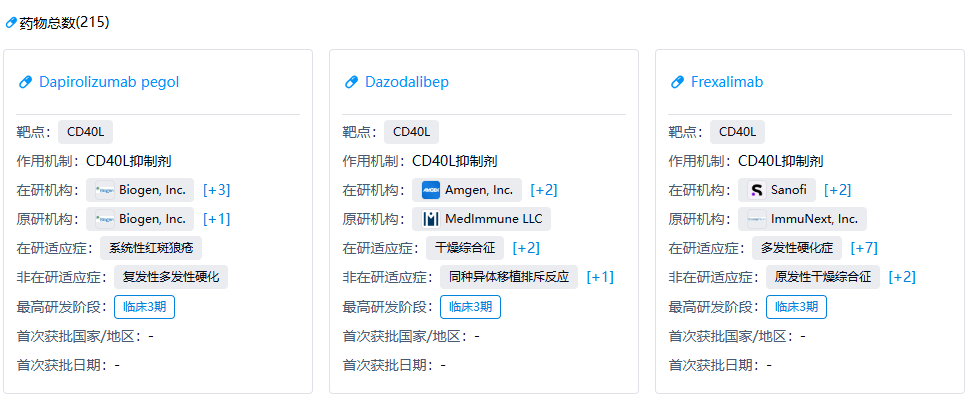
(Data source: Synapse)
2. Diagnostic and prognostic biomarkers: Autoimmune diseases: CD154/CD40L levels in patients with systemic lupus erythematosus (SLE) are positively correlated with disease activity and can help predict disease relapse; in patients with rheumatoid arthritis (RA), CD154/CD40L positive platelet microparticle levels are also correlated with disease activity.
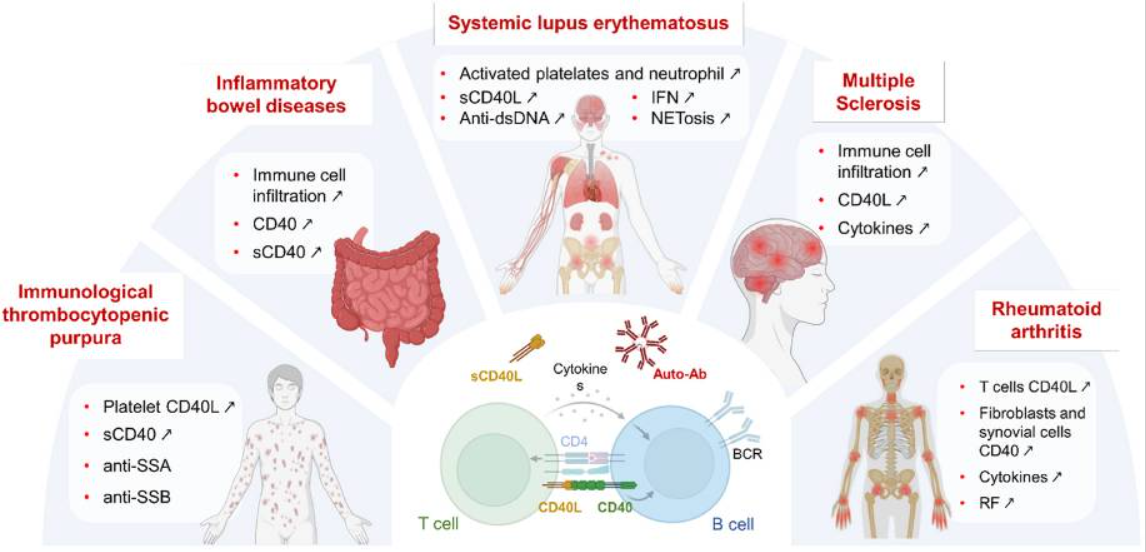
(Data source: Mabrouk M, et al. J Transl Autoimmun. 2025)
3. Vaccine Development: In research on classical swine fever virus (CSFV) vaccines in pigs, the E2-CD154/CD40L chimeric protein, administered via sublingual immunization, can induce strong systemic IgG and IgA antibodies as well as neutralizing antibodies, effectively preventing viral replication. Similarly, duck CD154 (DuCD154) has been shown to significantly enhance antibody responses to duck hepatitis B virus (DHBV) DNA vaccines, providing a reference for the development of therapeutic vaccines for diseases such as hepatitis B in humans.