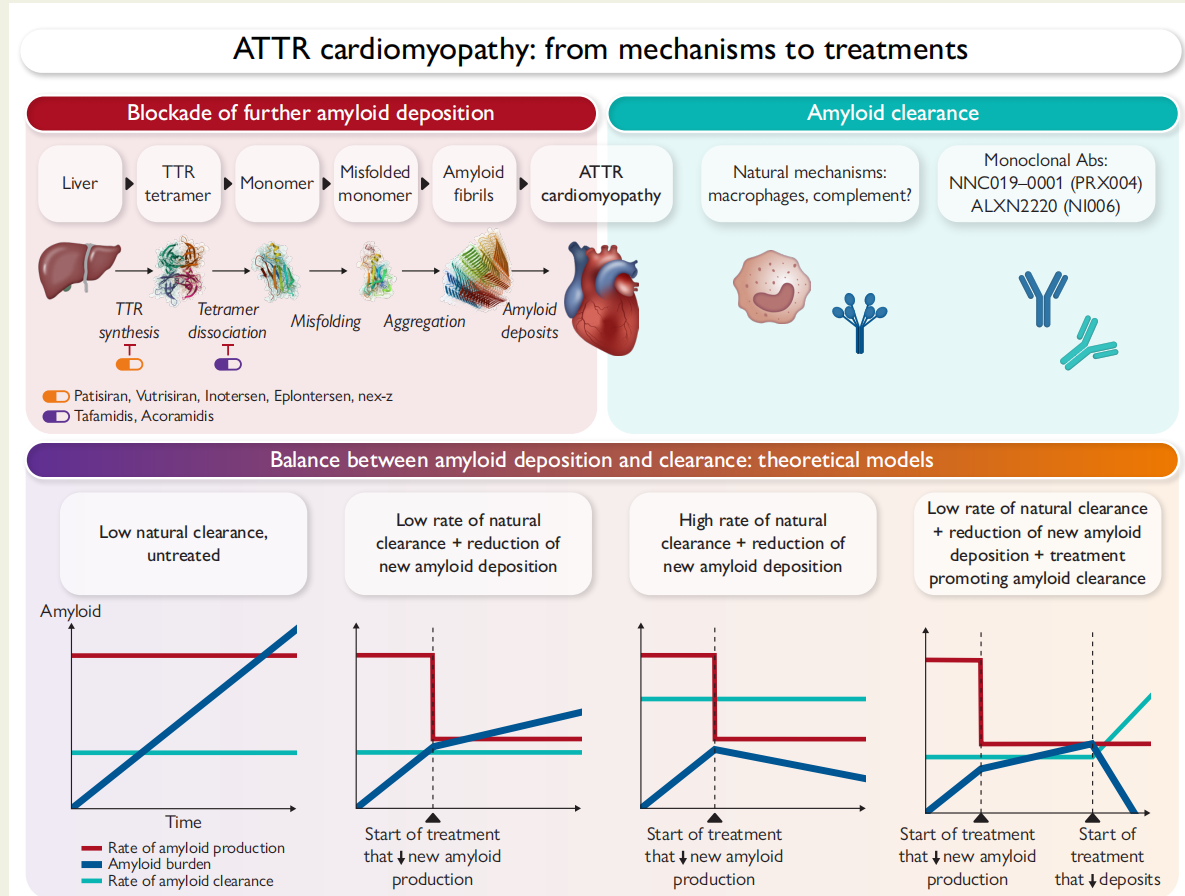
Transthyretin (TTR) is a tetrameric protein that transports hormones in plasma and the brain, primarily expressed in hepatocytes. TTR is a positive indicator of nutritional status and negatively correlated with inflammation. TTR is a neuroprotective factor and an inhibitor of oxidative stress. The core pathology of TTR amyloidosis lies in the loss of tetrameric kinetic stability. The rate-limiting step is the dissociation of the tetramer into monomers, which subsequently misfold and self-assemble into various aggregate structures, including amyloid fibrils. These insoluble fibrils deposit in the extracellular matrix, forming amyloid plaques. These deposits pathologically infiltrate tissues such as the heart and peripheral nerves, causing mechanical compression, disrupting normal tissue structure, and leading to transthyretin amyloid cardiomyopathy (ATTR-CM).
(Data source: Fontana M, et al. Eur Heart J. 2026)
TTR structure
The TTR gene is located on chromosome 18q12.1. The TTR monomer consists of 127 amino acids and has an immunoglobulin-like β-sandwich structure. Its core comprises two layers of four antiparallel β-chains connected by a flexible loop. A separate short α-helix exists between the E and F chains. A short (approximately 10 aa) fragment at the N-terminus is disordered. TTR cycles as a tetramer, composed of four identical β-sheet-rich monomeric subunits arranged to form a hydrophobic central pocket with two binding sites. Two TTR subunits form a dimer through the pairing of the 'H' β-chain, which connects to the hydrophobic core of the adjacent β-sandwich. The peripheral chains of each β-sandwich fold are 'closed' by a structured loop connecting the D and E chains. A pair of dimers forms a tetramer through four contact points between the AB and GH cycles of opposing subunits, constituting two T4 binding sites.


(Data source: Basanta B, et al. Nat Struct Mol Biol. 2025)
The role of TTR in disease
The ability of TTRs to perform their physiological functions depends on the stability of their tetrameric structure. For example, in ATTRs, conformational changes in TTRs result from kinetic or thermodynamic instabilities driven by heritable amyloidosis variants, age-related factors, or epigenetics.
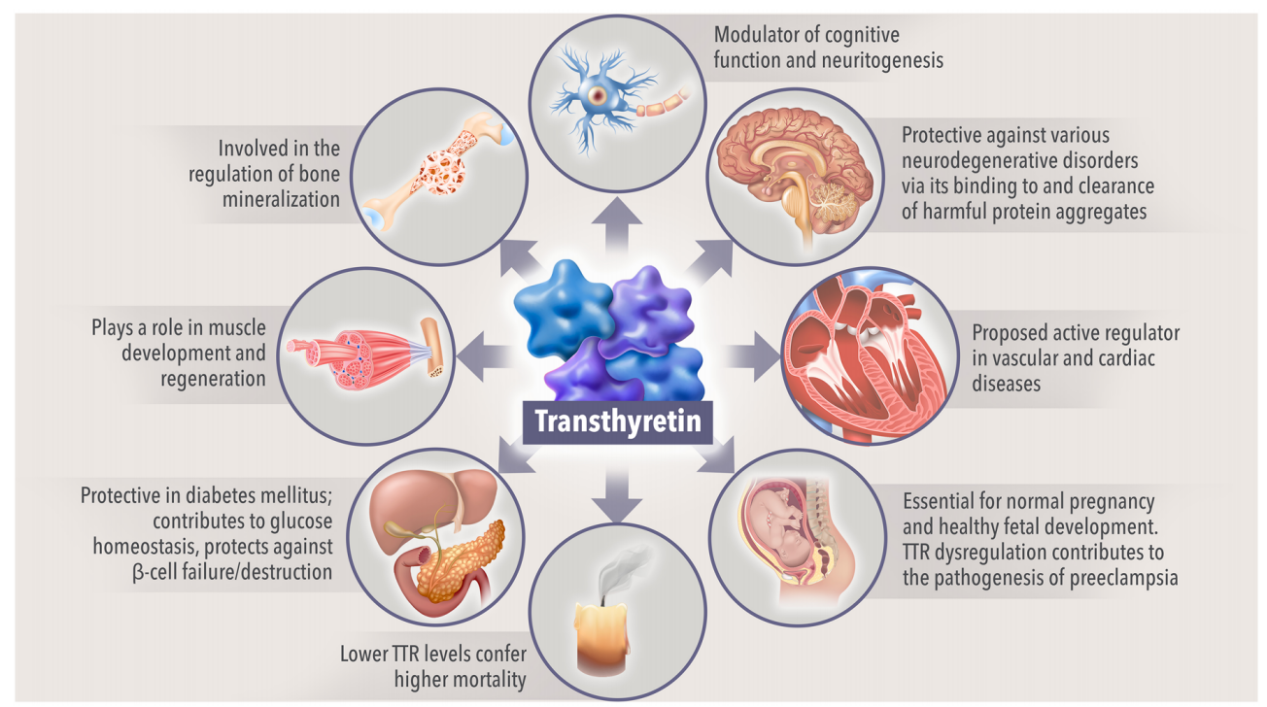
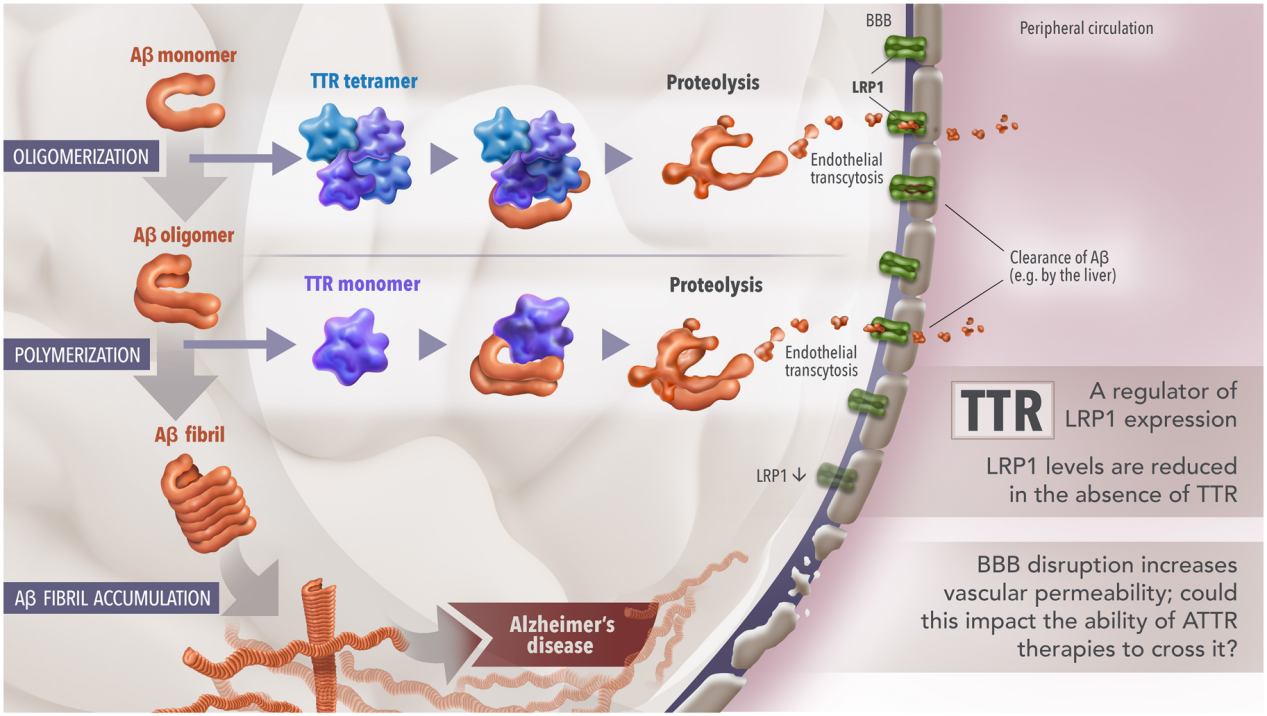
Trans tert-methyltransferase (TTR) possesses neuroprotective properties and, given its role in stimulating neurite growth and promoting neurogenesis, may be considered a neurotrophic factor. The neuroprotective effects of TTR are particularly evident in Alzheimer's disease (AD). In vitro, TTR binding to Aβ both inhibits fibrosis and degrades existing fibers by hydrolyzing Aβ into shorter non-amyloid fragments. Stable TTR tetramers bind to Aβ monomers, preventing their oligomerization. In addition to directly inhibiting Aβ aggregation, tetrameric TTR promotes Aβ clearance from the brain via transmembrane low-density lipoprotein receptor-associated protein 1 (LRP1). TTR monomers (or unstable tetramers) bind to Aβ oligomers, thereby inhibiting their polymerization into fibers.
Transurethral reductase (TTR) is associated with several neurodegenerative diseases, such as Parkinson's disease, a Lewy body disorder. Lewy bodies, which appear in dopaminergic neurons of the substantia nigra, are insoluble protein inclusion bodies primarily composed of α-synuclein; their oligomers are neurotoxic. In vitro experiments have shown that TTR can promote the degradation of misfolded α-synuclein in specific conformations into non-aggregating fragments, suggesting a direct neuroprotective effect of TTR in Lewy body disorders.
In human retinal microvascular endothelial cell cultures, TTR mitigates the damaging effects of high glucose concentrations on cell proliferation, migration, and angiogenesis by inhibiting the VEGFA/PI3K/AKT pathway. In mice, TTR deficiency leads to elevated plasma glucose concentrations, decreased expression of influx glucose transporters GLUT1, GLUT3, and GLUT4, increased expression of efflux glucose transporter GLUT2, decreased levels of the glycolytic enzyme pyruvate kinase M, and impaired mitochondrial activity. In in vitro islet formulations, TTR tetramers play a role in glucose-induced insulin release by enhancing the depolarization of voltage-gated Ca2+ channels and provide protection against apolipoprotein CIII-induced β-cell apoptosis. TTR monomers do not affect glucose-induced insulin release or apolipoprotein CIII-induced β-cell apoptosis.

(Data source: Gertz MA, et al. Ann Med. 2025)
Targeted therapy for TTR
ATTR-CM is an infiltrative cardiomyopathy caused by the deposition of misfolded TTR proteins in the myocardium, the therapeutic prospects for ATTR-CM are rapidly developing. Several disease-modifying therapies (DMTs) have already been approved, with others expected to be available soon. Current DMT strategies include stabilizing TTRs to inhibit misfolding or reducing the production of hepatic TTRs, while antibodies that can promote the clearance of amyloid fibrillation are being developed.

(Data source: Griffin JM, et al. JACC Heart Fail. 2025)
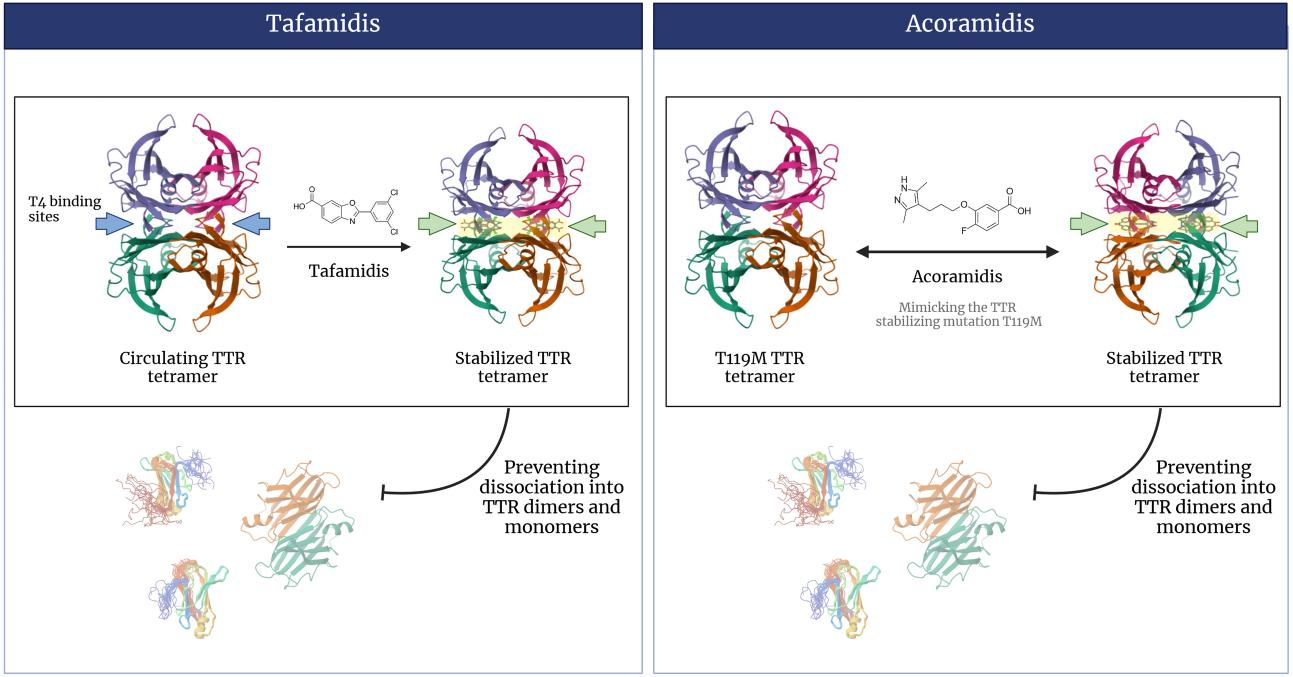
Small molecule drugs that stabilize transthyretin (TTR) (such as Tafamidis and Acoramidis) specifically bind to the thyroxine binding sites of the TTR tetramer. Tafamidis stabilizes this weak dimer-dimer interface by binding to two T4 sites, thereby inhibiting tetramer dissociation. Slowing down the rate at which transthyretin tetramers dissociate into their constituent monomers is a key step in the formation of amyloidosis.
(Data source: Fontana M, et al. Eur Heart J. 2026)
ALXN2220 (NI006) is a humanized monoclonal IgG1 antibody that binds to the linear epitope WEPFA, accessible only on misfolded TTR and ATTR deposits, thereby triggering phagocytosis of ATTR aggregates by human macrophages and accelerating fibrin clearance. Patients treated with ALXN2220/NI006 at least every 4 weeks for up to 1 year showed reduced extracellular volume, indicating a decrease in amyloid burden. Conversely, patients receiving placebo did not show these improvements before starting active therapy in the extension phase. Additional analyses suggest that high doses of ALXN2220/NI006 may be associated with improvements in cardiac biomarkers such as NT-proBNP and troponin T, which are associated with disease severity and prognosis in ATTR-CM. ALXN2220 is currently under investigation in a phase III trial (NCT06183931).
Coramitug(NNC6019-0001, PRX004) is a humanized monoclonal antibody that targets misfolded monomeric and aggregated forms of TTR, promoting antibody-mediated phagocytosis and amyloid clearance. A phase 2 trial initiated in 2022 aimed to evaluate the efficacy and safety of NNC6019-0001 in patients with ATTR-CM.
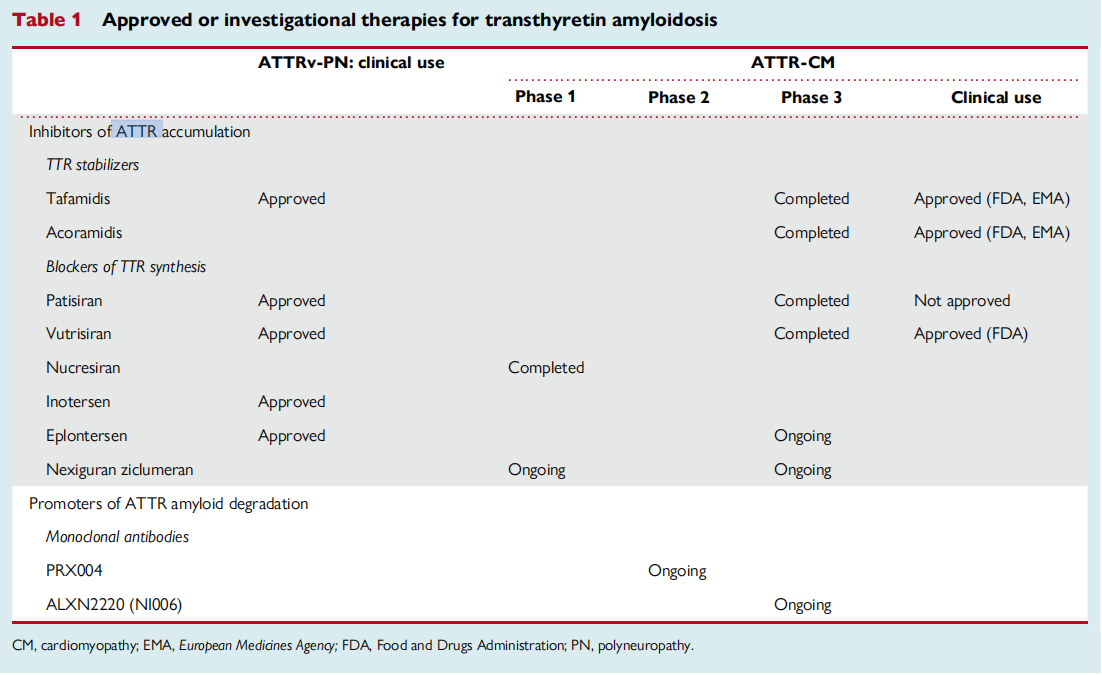
(Data source: Fontana M, et al. Eur Heart J. 2026)