Ganglioside GD2 is a glycosphingolipid and a member of the ganglioside subfamily. It is primarily expressed on the surface of neuroectodermal tumor cells, such as neuroblastoma, melanoma, and small cell lung cancer, but is also present in cancer-associated stem cells (e.g., breast, bladder, and glioblastoma). It is a tumor-associated antigen (TAA) and is considered a promising target for the treatment of aggressive pediatric central nervous system (CNS) tumors.
Structure and biosynthesis of Ganglioside GD2
GD2 is a diganglioside containing two neuraminic acid residues and five monosaccharides linked to a ceramide. The cellular synthesis of GD2 is a complex and highly regulated process. GD2 biosynthesis begins at the sphingolipid tail in the endoplasmic reticulum, followed by glycosylation in the Golgi apparatus and transport to the cell membrane. GD2 is a B-series disialic acid ganglioside, produced from the precursor GD3 by the enzyme GD2 synthase (B4GALNT1). The rate-limiting enzyme GD3 synthase (ST8SIA1) converts the precursor GM3 to GD3.
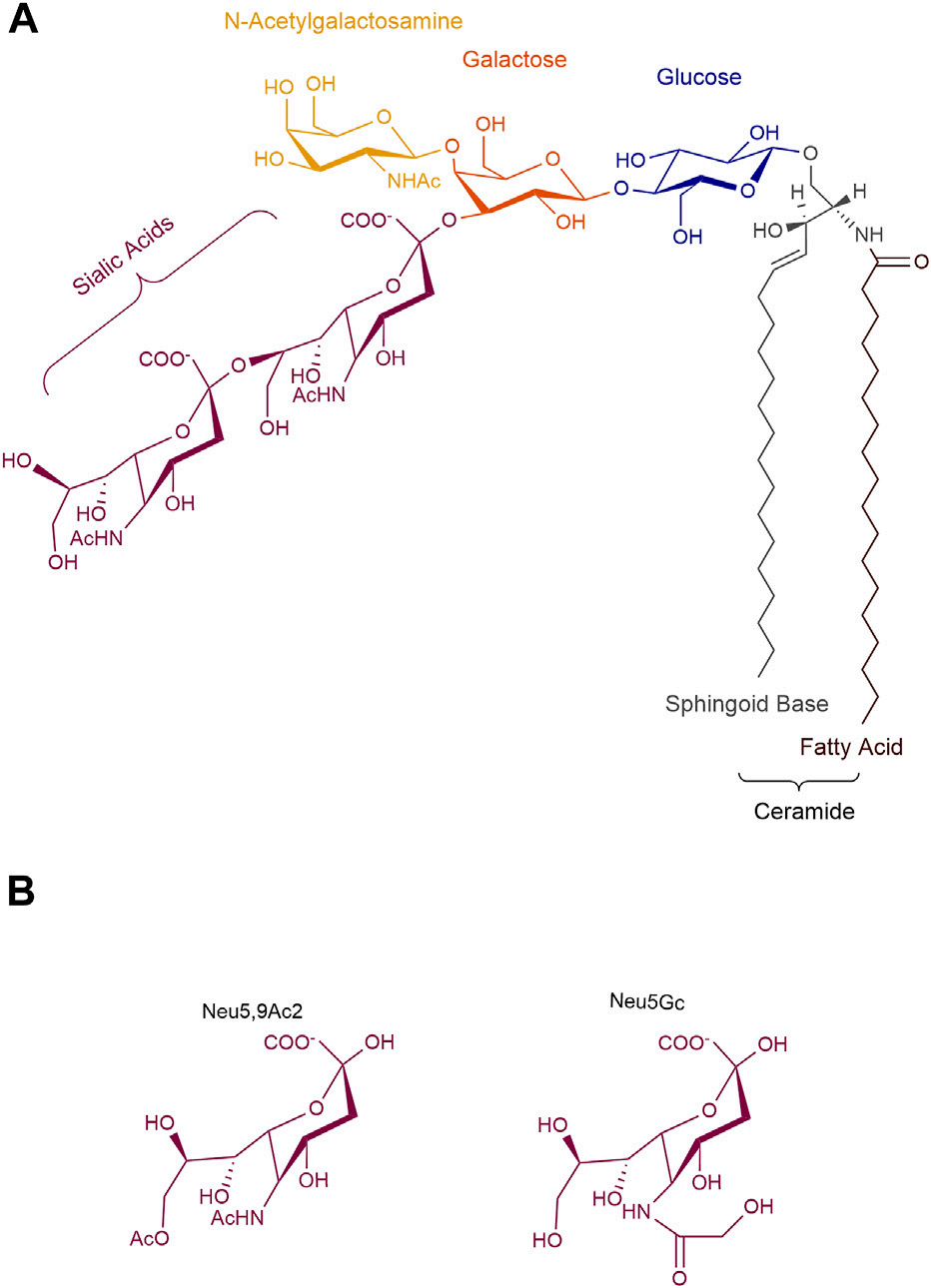
(Data source: Machy P, et al. Front Pharmacol. 2023)
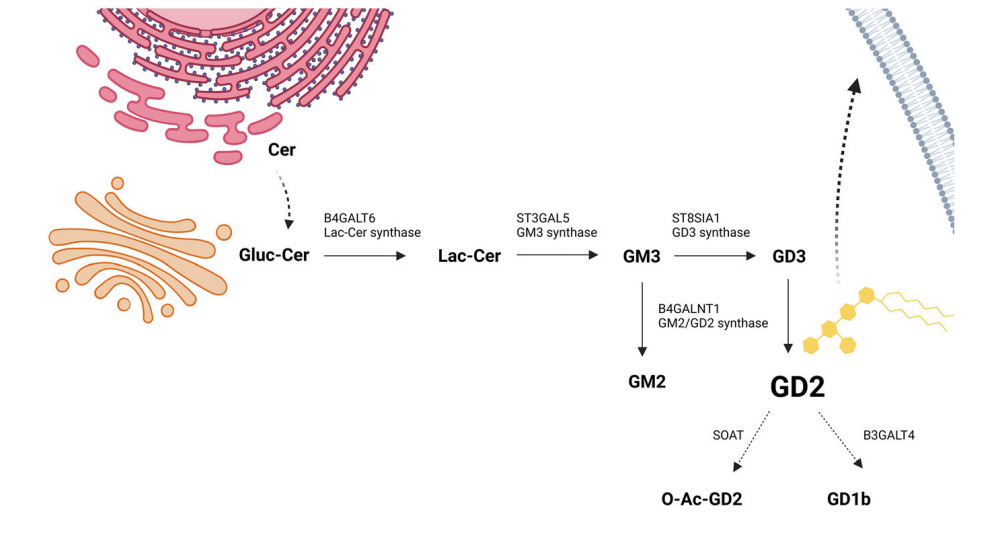

(Data source: Fernández-Rilo AC, et al. NPJ Precis Oncol. 2025)
The role of Ganglioside GD2 in tumors
GD2 plays a crucial role in tumorigenesis; its function, high expression, and ability to remodel the tumor microenvironment (TME) may be associated with malignant phenotypes. GD2 can promote the proliferation, invasion, motility, and metastasis of various tumor cell types, acting on the FAK pathway in breast cancer or tyrosine kinase receptors and osteosarcoma through phosphorylation induced by hepatocyte growth factor (HGF) receptors and the c-Met pathway. ASC amino acid transporter 2 (ASCT2) promotes the malignant phenotype of small cell lung cancer by enhancing glutamine uptake, thereby enhancing cell proliferation and migration through phosphorylation via the mTOR1 pathway. GD2 plays a key role in the adhesion, growth, proliferation, and invasion of melanoma cells through its interaction with integrin β1. GD2 can maintain an immunosuppressive TME by inhibiting NK cell function through binding to Siglec-7. Furthermore, GD2 also inhibits the functional activity of T cells and dendritic cells while promoting the recruitment of MDSCs (myeloid-derived suppressor cells) and Tregs (regulatory T cells) into the TME. Anti-GD2 monoclonal antibody therapy inhibits the mTOR/MAPK signaling pathway in breast cancer cells, thereby suppressing tumor migration and growth, and competitively binds GD2 with Siglec-7.
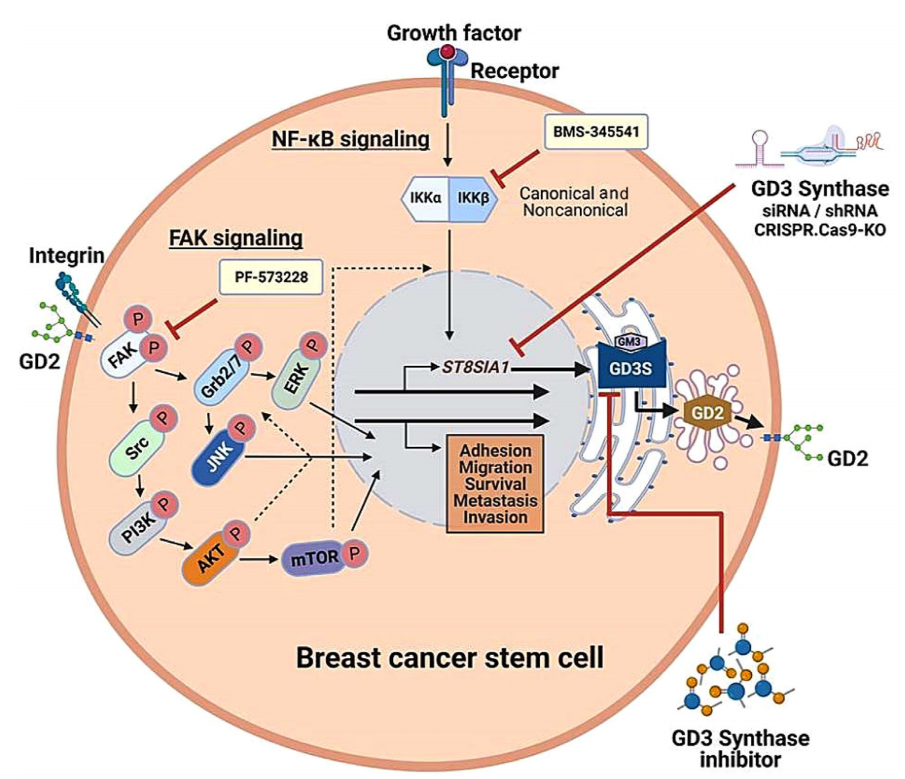
(Data source: Shao C, et al. Ann NY Acad Sci. 2022)
Ganglioside GD2 targeted therapy
Since the 1980s, anti-GD2 monoclonal antibodies (mAbs) have been actively studied as diagnostic and therapeutic agents in cancer immunotherapy. Uncoupled antibodies recognize tumor-associated antigens (TAAs) and bind to surface receptors on tumor and immune cells, including immune-active tumor microenvironment cells, exerting antitumor effects through a variety of mechanisms, depending on the type of receptor, including ADCC/ADCP, CDC, and direct cytotoxicity.

(Data source: Philippova J, et al. Front Immunol. 2024)
Dinutuximab (Unituxin) is a monoclonal antibody targeting Ganglioside GD2, developed by United Therapeutics Corporation and approved by the FDA in 2015. Studies of dinutuximab as monotherapy have not shown any therapeutic benefit, except for reduced immunogenicity. However, the clinical application of these antibody formulations is hampered by several limiting factors. Clinically, toxicities associated with GD2 expression in normal tissues and neurological adverse reactions targeting the tumor site are frequently observed. Furthermore, resistance or relapse is common in patients with GD2-positive cancers after anti-GD2 therapy. Dinutuximab is usually used in combination with other drugs such as IL-2, GM-CSF, and isotretinoin. The Pediatric Oncology Group reported that the combination of dinutuximab with GM-CSF, IL-2, and isotretinoin (ANBL0032) improved survival rates compared to standard isotretinoin therapy, prompting the FDA and EMA to approve this combination for maintenance therapy after ASCT in pediatric patients with high-risk neuroblastoma.
Naxitamab (DANYELZA®, Naxitamab-gqgk, hu3F8) is a humanized (IgG1) anti-GD2 monoclonal antibody developed by Memorial Sloan Kettering Cancer Center (its commercial use has been licensed to Y-mAbs Biotechnology) for the treatment of neuroblastoma, osteosarcoma, and other GD2-positive cancers. Naxitamab received accelerated approval from the U.S. Food and Drug Administration for use as a therapeutic agent (in combination with granulocyte-macrophage colony-stimulating factor) in pediatric patients at least one year of age and in adult patients with relapsed or refractory high-risk neuroblastoma (in bone or bone marrow) who have achieved partial, mild, or stable disease response to prior therapy.

(Data source: https://danyelzahcp.com/mechanism-of-action/)
Nivatrotamab (Hu3F8-BsAb) is a bispecific antibody targeting GD2 and CD3, developed by Memorial Sloan-Kettering Cancer Center and currently in Phase 1/2 clinical trials. It is designed as a non-IgG anti-GD2 BsAb, Hu3F8-BsAb, by tandemly fusing a single-chain variable fragment of Hu3F8 with the anti-CD3 antibody HuOKT3-scFv, and generating Hu3F8-scBA via a 15-residue linker (GGGGS) 3. It effectively inhibits the growth of humanized mouse tumors and exhibits high safety. Mechanistic studies have shown that, in addition to T cells, monocytes also play an important role in maintaining the invasion, survival, or proliferation of T cells in the tumor stroma, and significantly contribute to the excellent anti-tumor effect of Hu3F8-BsAb.

(Data source: Rashidijahanabad Z , et al. Semin Immunol. 2020)