Ganglioside GD3 is an acidic glycosphingolipid containing two sialic acids, highly expressed in human embryonic neural stem cells but not in the normal adult brain. It is highly expressed in neuroectodermal-derived tumors (such as melanoma and neuroblastoma) and gliomas, thus representing a promising target for cancer therapy.
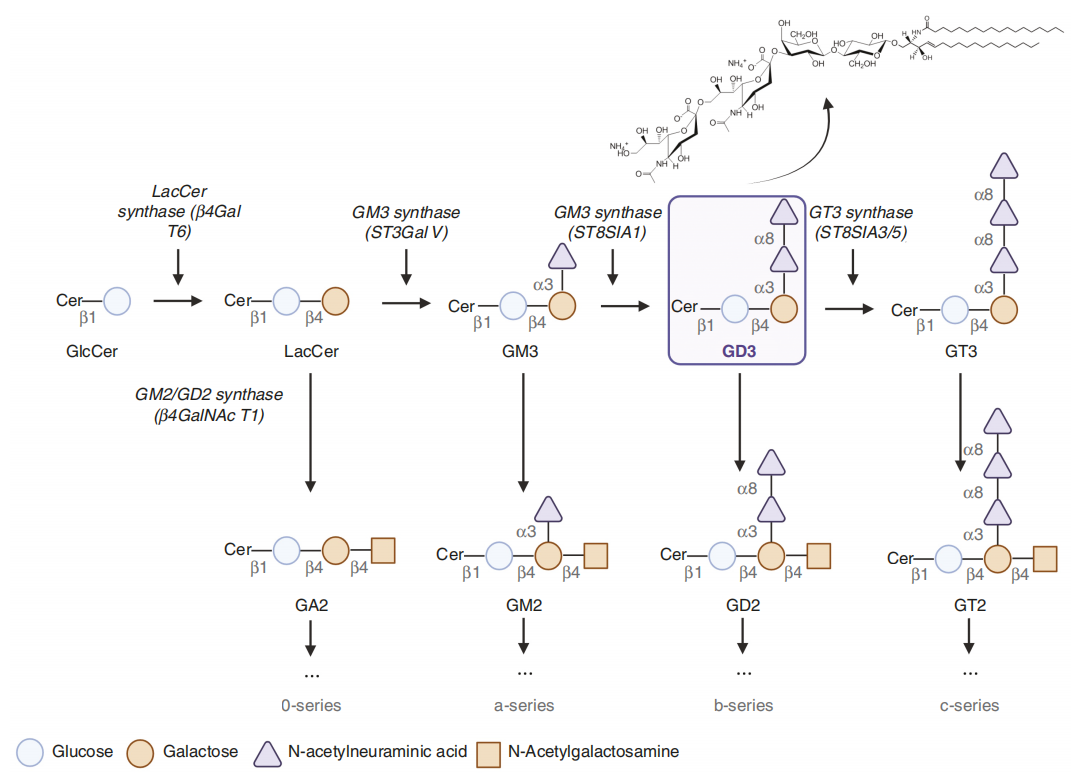
(Data source: Hein V, et al. Neurooncol Adv. 2024)
The role of GD3 in tumors
GD3 and GD3S play roles in glioma cell proliferation, stemness, migration, invasion, apoptosis, as well as tumor growth, cell cycle regulation, and the tumor microenvironment.
GD3 can form complexes with receptor tyrosine kinases (RTKs) on the cell membrane, such as PDGFRα (platelet-derived growth factor receptor α) and c-Met. GD3 recruits these receptors to lipid raft microdomains, promoting their ligand-independent activation, which in turn activates downstream pro-proliferative and anti-apoptotic pathways such as Src family kinases (e.g., YES, LYN), MAPK/ERK, and PI3K/AKT.
Enhanced invasion, migration, and angiogenesis: GD3 enhances tumor cell adhesion to the extracellular matrix (such as fibronectin and laminin) by regulating integrin activity. GD3 upregulates the expression of proteins such as MMP-9, degrades the basement membrane, and promotes tumor invasion. GD3-positive areas often overlap with highly vascularized areas. GD3 can stimulate tumor cells to release VEGF (vascular endothelial growth factor), promoting tumor angiogenesis.
Maintaining tumor stemness and treatment resistance: GD3 is a key biomarker for tumor stem cells, such as glioma stem cells. It maintains the self-renewal capacity of stem cells, leading to tumor resistance to radiotherapy and chemotherapy, and driving recurrence.

(Data source: Hein V, et al. Neurooncol Adv. 2024)
Immune Escape: Inhibition of NK Cell Function: According to recent research, GD3 on the surface of senescent cells and tumor cells can bind to the inhibitory receptor SIGLEC-7 on the surface of natural killer (NK) cells. This binding acts as an "immune checkpoint," transmitting inhibitory signals and blocking the degranulation process of NK cells, thereby inhibiting the killing function of NK cells and allowing tumor cells to evade immune surveillance. Treatment targeting GD3 has a protective effect in age-related diseases.

(Data source: Majewska J , et al. Nat Aging. 2025)
GD3-targeted therapy
Therapies targeting gangliosides GD3 and GD3S have been developed for nearly 30 years. Various treatment strategies have been developed, used alone or in combination, including direct inhibition with monoclonal antibodies or stimulation of the immune response through vaccines.

(Data source: Hein V, et al. Neurooncol Adv. 2024)
KW-2871 (ecromeximab) is an IgG1 monoclonal antibody targeting ganglioside GD3, designed to reduce immunogenicity. Clinical trials showed some safety in melanoma patients, but no significant survival benefit was observed when used in combination with interferon therapy, and development has been paused.
MV-Sarc is a vaccine that targets ganglioside GD3 for the treatment of sarcoma and is currently in Phase 2 clinical trials.
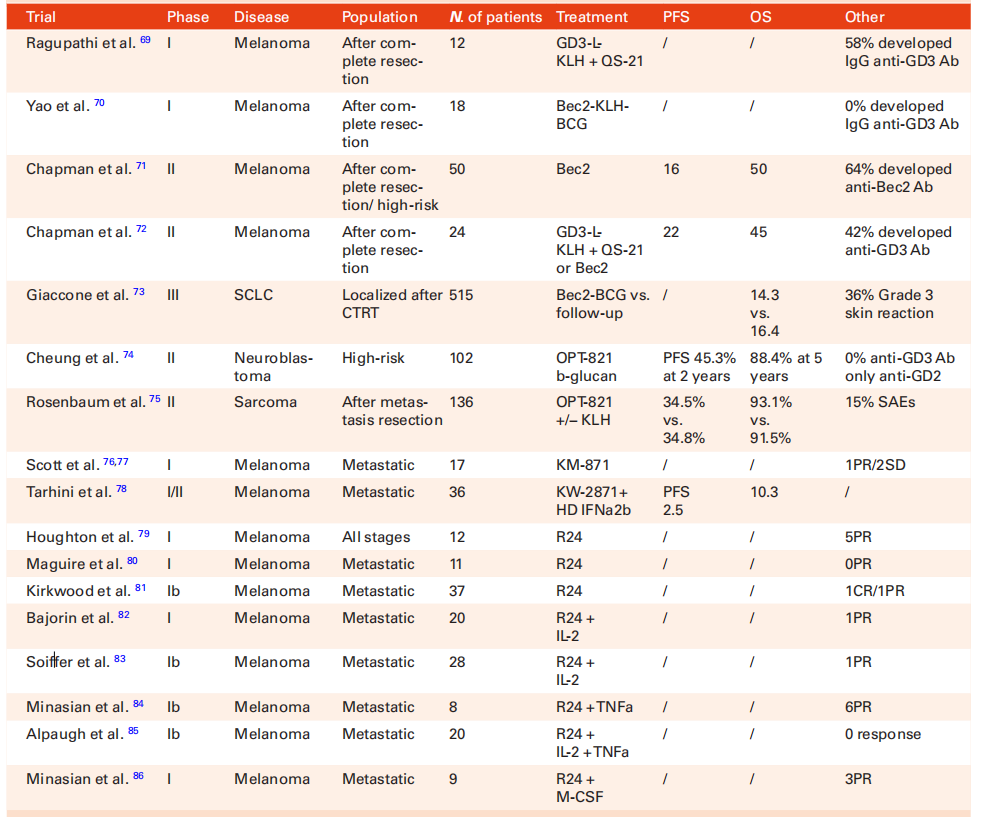
(Data source: Hein V, et al. Neurooncol Adv. 2024)