FCRL5 belongs to the Fc receptor-like family and is the largest member of this family. FCRL5 is a type I transmembrane glycoprotein expressed exclusively on B cells, with the highest expression levels in naive B cells, memory B cells, and plasma cells. As a B cell-specific receptor, it plays a crucial role in tumors and autoimmune diseases. Its high expression and targetability provide important directions for the development of novel diagnostic tools and therapies.
Basic structure of FCRL5
FCRL5 is the largest member of the Fc receptor-like family, located on chromosome 1 (1q23.1), encoding 977 amino acids (aa). The initial hydrophobic region consisting of the first 15 amino acid residues is called the signal peptide (SSP). The region from 16 aa to 977 aa is the main chain of the gene, containing an N-glycosylation site linked to asparagine and multiple disulfide bond sites. The extracellular region of the FCRL5 protein, from 16 aa to 851 aa, contains nine extracellular Ig-like domains (D1-D9), which are the most prominent structural feature of FCRL5. Each domain is stabilized within its fold by intrachain disulfide bonds. These nine domains form a slender molecular configuration. The N-terminal D1 domain is a key region for recognizing and binding ligands (mainly aggregated IgG). Domains 852aa to 872aa are transmembrane regions that anchor the entire molecule to the cell membrane. Domains 873aa to 977aa are intracellular regions that possess both the immune receptor tyrosine activation motif (ITAM) and the inhibitory motif (ITIM), giving them the ability to regulate signals bidirectionally.
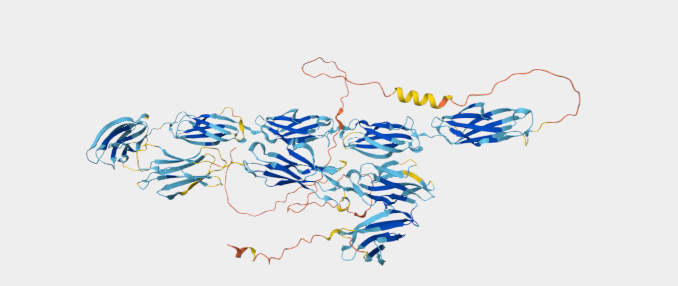
(Data source: AlphaFold)
FCRL5 core functions
The core of FCRL5's biological function lies in its role as a co-receptor for the B cell receptor (BCR), which bidirectionally regulates B cell activation, proliferation, and antibody secretion through ITAM/ITIM, thereby playing a crucial role in humoral immune responses and immune tolerance.
1. Inhibitory function: When B cell receptors are activated, tyrosine residues of the intracellular ITIM motif of FCRL5 are phosphorylated, recruiting and activating protein tyrosine phosphatase SHP-1, which dephosphorylates key molecules in the BCR signaling complex, thereby inhibiting downstream BCR signaling.
2. Enhancement of sexual function: FCRL5 can synergistically stimulate the co-receptor CR2 to enhance BCR signaling. In mouse models, FCRL5 overexpression has been found to promote B cell differentiation into plasma cells and enhance humoral immune responses.
3. IgG receptor function: The FCRL5 protein can bind two IgG molecules simultaneously in a unique affinity-dependent manner, thereby sensing the density of IgG in immune complexes and mediating the internalization of IgG immune complexes, ensuring that they are activated only in strong immune responses and avoiding unnecessary activation.
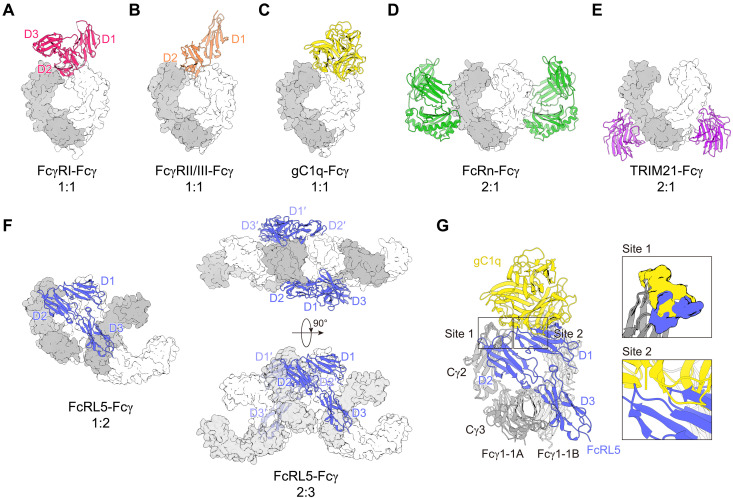
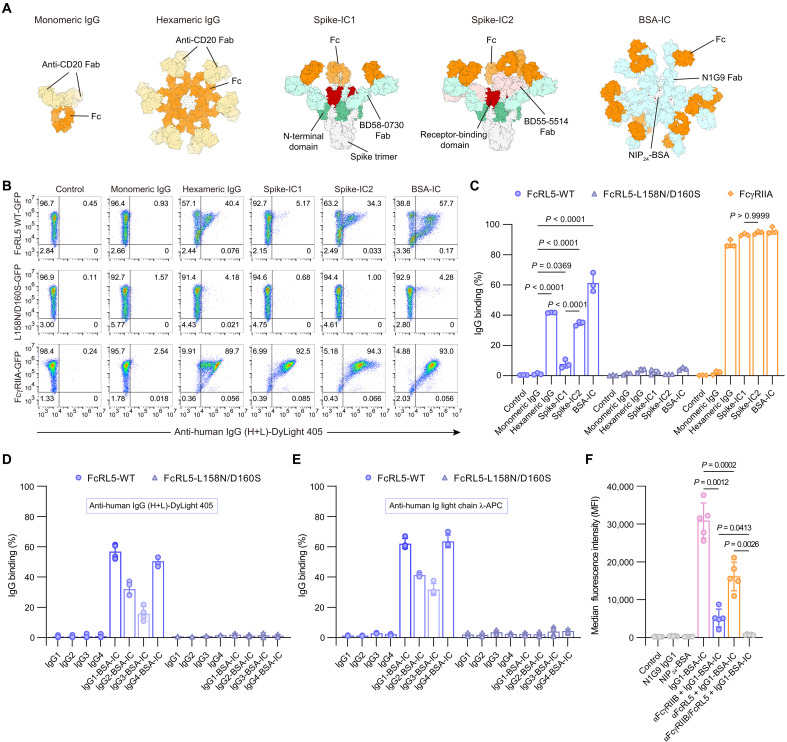
(Data source: Chen S, et al. Sci Adv. 2026)
Application Prospects of FCRL5
1. Targeted CAR-T Cell Therapy: Multiple preclinical studies have shown that CAR-T cell therapy targeting FCRL5 can effectively inhibit the proliferation of multiple myeloma cells, exhibiting a strong anti-tumor effect. Furthermore, research indicates that combined use with IL-15 can further enhance its cytotoxicity and persistence in vivo, improving its therapeutic potential. FCRL5-CAR-T therapy shows promising application prospects, especially for myeloma patients carrying 1q21 chromosome amplification.
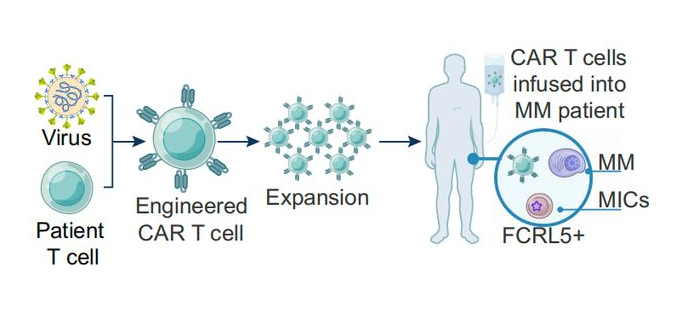
(Data source: Guo J, et al. Sci Transl Med. 2025)
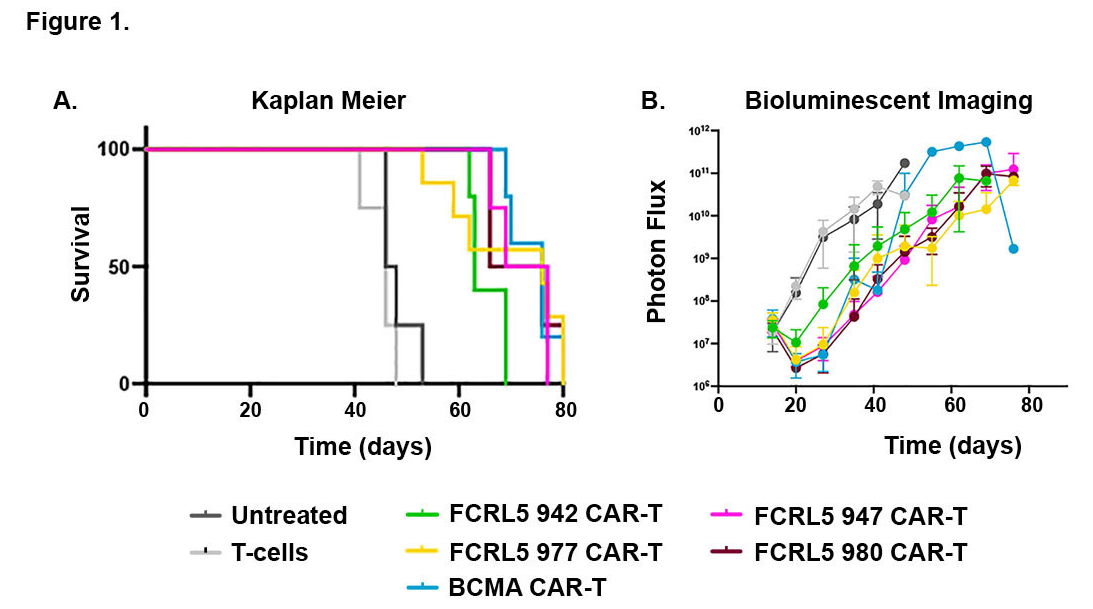
(Data source: Julie O, et al. Blood, 2023)
2. Diagnostic and Prognostic Biomarkers: FCRL5 can serve as a novel cerebrospinal fluid (CSF) biomarker for multiple sclerosis (MS). Its expression level can differentiate MS from other inflammatory neurological diseases (OIND) and predict the risk of new lesions on MRI. In diseases such as rheumatoid arthritis (RA), the basal expression level of FCRL5 on B cells before treatment can serve as a biomarker for predicting the response to rituximab (a B-cell-targeting therapeutic agent).
3. Biological reagents: FCRL5 recombinant protein can be used as an immunogen to develop targeted therapeutic antibodies. In addition, it can be used in experiments such as ELISA, SPR, and flow cytometry for immune experiments, drug screening, and signaling pathway research.