Hepatocyte Growth Factor (HGF) HGF is a pleiotropic glycoprotein cytokine secreted by interstitial cells (such as fibroblasts and hepatic stellate cells). Its precursor molecule is a single-chain inactive precursor protein that needs to be hydrolyzed by proteases to form a biologically active dimer structure. HGF is a secreted protein mainly located in the extracellular matrix, and it plays an important protective and repairing role in tissue repair, regeneration, embryonic development, and various acute and chronic organ injuries.
Basic structure of HGF
The HGF gene, located on chromosome 7 (7q21.1), is transcribed into multiple transcripts, at least one of which encodes the inactive pro pro HGF. Following a cleavage process between Arg494 and Val495, pro pro HGF is converted to pro HGF. The α-chain of pro HGF consists of an N-terminal hairpin loop (HL) with four kringle domains (K1-K4), while the β-chain consists of a serine protease homologous domain (SPH) lacking proteolytic activity. The precursor form is secreted from mesenchymal cells and activated by proteolytic cleavage at the Arg-Val site. The active HGF is a heterodimer consisting of 697 or 692 amino acids, composed of the α-chain and β-chain. The four kringle domains form the α-chain, while the serine protease-like structure forms the β-chain (composed of an α-chain (heavy chain, approximately 69 kDa) and a β-chain (light chain, approximately 34 kDa) linked by disulfide bonds).
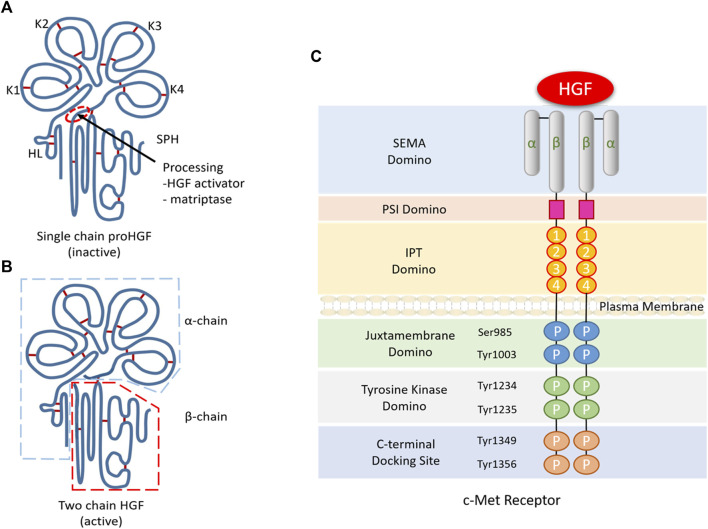
(Data source: Hamilton E, et al. Gynecol Oncol. 2020)
Biological functions of HGF
Hepatocyte growth factor (HGF) is a versatile cytokine that plays a key role in various physiological and pathological processes from embryonic development to tissue regeneration by primarily binding to the c-Met receptor on the cell membrane and triggering a series of intracellular signaling pathways.
1. Promotes tissue regeneration
This is HGF's most classic function. After damage to various organs such as the liver, kidneys, lungs, and skin, HGF expression is rapidly upregulated, promoting tissue regeneration and repair by promoting the proliferation and migration of epithelial and endothelial cells in the damaged tissue.
2. Anti-fibrotic process
HGF is also a powerful anti-fibrotic factor. It mainly exerts its anti-fibrotic effect in various organs through mechanisms such as antagonizing the signaling of the pro-fibrotic factor TGF-β1, promoting the degradation of extracellular matrix such as collagen, and directly inhibiting the fibrotic process through multiple pathways.
3. Anti-apoptosis
HGF is a potent anti-apoptotic factor that can activate multiple key signaling pathways, such as PI3K/Akt, through its receptor c-Met, thereby protecting various cell types (such as endothelial cells and hepatocytes) from damage-induced apoptosis and maintaining cell survival.
4. Promotes angiogenesis
HGF promotes the proliferation, migration, and lumen formation of vascular endothelial cells, making it an important pro-angiogenic factor in vivo. On one hand, HGF directly binds to c-Met receptors on the surface of vascular endothelial cells, initiating a signaling cascade that directly promotes vascular endothelial cell proliferation, migration, and anti-apoptosis. On the other hand, HGF can also indirectly promote angiogenesis by upregulating VEGF expression and regulating matrix remodeling.
The role of HGF in diseases
In various acute and chronic organ injuries, HGF plays an important protective and repair role through mechanisms such as promoting cell proliferation, inhibiting apoptosis, anti-fibrosis, and promoting angiogenesis.
1. In liver diseases, it can significantly alleviate cirrhosis and promote the recovery of liver function. In a rat model of bile duct ligation (BDL), continuous intravenous injection of HGF increased the number of active liver fibrosis and fibrosis-associated stellate cells and significantly promoted hepatocyte proliferation in BDL rats.
2. Studies on chronic renal failure have found that a decrease in endogenous HGF and an increase in TGF-βincrease susceptibility to chronic renal failure. Furthermore, exogenous HGF supplementation has preventative and therapeutic effects on acute and chronic renal failure in experimental animals. This suggests that HGF enhances the intrinsic regenerative capacity of the kidneys and may be a potential treatment strategy for patients with kidney disease.
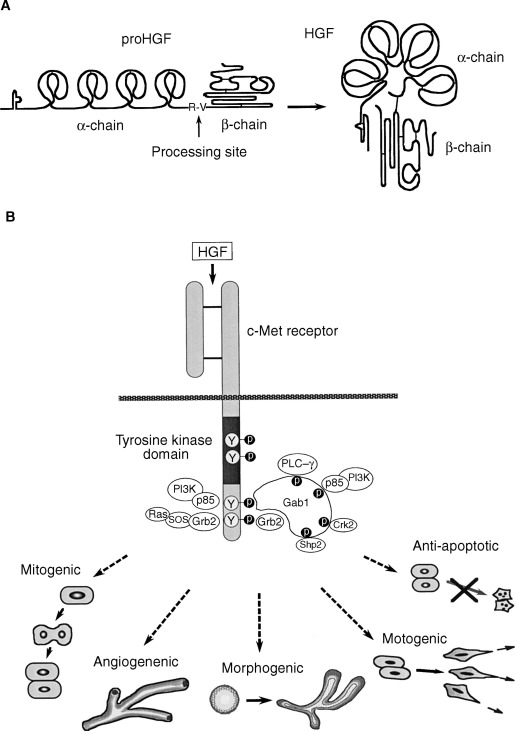
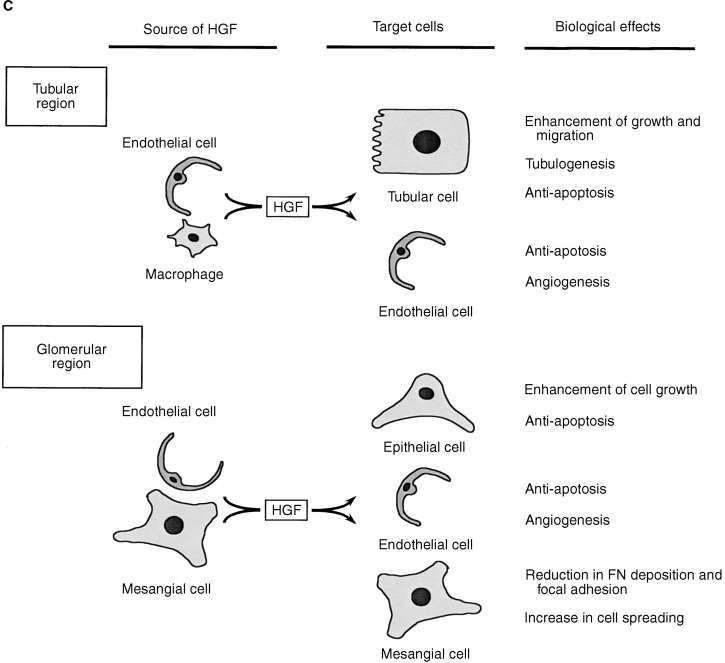
(Data source: Matsumoto K, et al. Kidney Int. 2001)
3. In cardiovascular diseases, it can be used in combination with other factors to significantly enhance angiogenesis and improve cardiac function. Myocardial infarction (MI) is a major cause of heart failure. Current treatment methods are very limited. Studies have found that hepatocyte growth factor (HGF) expressed by transgenic mesenchymal stromal cells (MSCs) can exhibit a synergistic therapeutic effect when combined with granulocyte colony-stimulating factor (G-CSF), inducing endothelial cell proliferation and significantly enhancing angiogenesis.
4. In studies on lung diseases, it was found that transfection of exogenous HGF gene into MCT-induced pulmonary hypertension rats resulted in a significant reduction in tunica media thickening in the lungs and a significant decrease in the percentage of tunica media thickening in the pulmonary arteries after transfection, compared with the control group. This indicates that in the MCT-induced pulmonary hypertension rat model, HGF can induce normal tissue repair and prevent fibrotic remodeling.
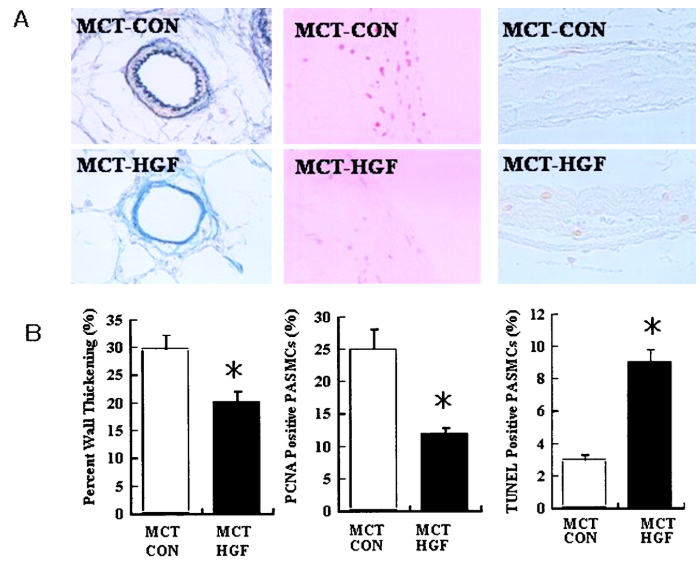
(Data source: Ono M, et al. Circulation. 2004)