LTA is a lymphotoxin, also known as tumor necrosis factor-β(TNF-β), a member of the tumor necrosis factor ligand superfamily. Lymphotoxins are produced by lymphocytes and are cytotoxic to a wide range of tumor cells both in vivo and in vitro. LTα is a cytokine transiently expressed on activated B cells and T cells (Th1, Th17) and is involved in the pathogenesis of rheumatoid arthritis (RA).

(Data source: uniprot)
Structure and receptor of LTA
LTA is a secreted protein composed of 205 amino acids. LTA achieves membrane localization by non-covalently binding to the LT-β subunit. Its tertiary structure exhibits a typical "donut" topological conformation of the TNF family and possesses a highly conserved receptor binding site.

(Data source: Alphafold)
Tumor necrosis factor (TNF) and lymphotoxin α (LTα) exist in soluble homotrimers and interact with TNF receptors (TNFR1 and TNFR2). Another ligand for TNF receptors (TNFRs) is the lymphotoxin α subunit homotrimer (LTα3). The LTα homotrimer also binds to the herpes virus entry medium (HVEM) , as well as another member of the TNF superfamily, TNFSF14.
The LTα homotrimer exists only in its soluble form, but it may also function as a membrane-bound molecule by forming heterotrimeric complexes with LTβ (primarily LTα1β2, followed by LTα2β1). Transmembrane LTαβ heterotrimers and LIGHT signaling are transmitted through different LTβR (lymphotoxin beta-receptors), while tmTNF primarily interacts with p75TNFR2.
The primary function of TNF is immune regulation. TNF activates multiple signaling cascades through its receptors, leading to the induction of inflammation, cell death, or cell survival, and is associated with cancer development and progression. LTαβ–LTβR signaling is a key pathway in lymph node and Peyer's patch (PP) formation.

(Data source: Gubernatorova EO, et al. Cancers (Basel). 2021)
Regulation of LTA in Disease
Lymphocytes, macrophages, and fibroblasts are all present in the affected joints of patients with rheumatoid arthritis (RA). Lymphocytes produce LTα, which acts in parallel with TNF and activates NF-κB and other cytokines in synovial fibroblasts, leading to their proliferation and the secretion of pro-inflammatory cytokines. LTα can also activate chondrocyte NF-κB and pro-inflammatory cascades, resulting in the loss of characteristic cartilage matrix components in RA joints. The accumulation of T cells and stromal cells produces organized lymphoid structures called TLOs, which aggregate to form germinal center-like structures. TLOs have been found in the synovium of RA patients and are associated with severe joint inflammation.
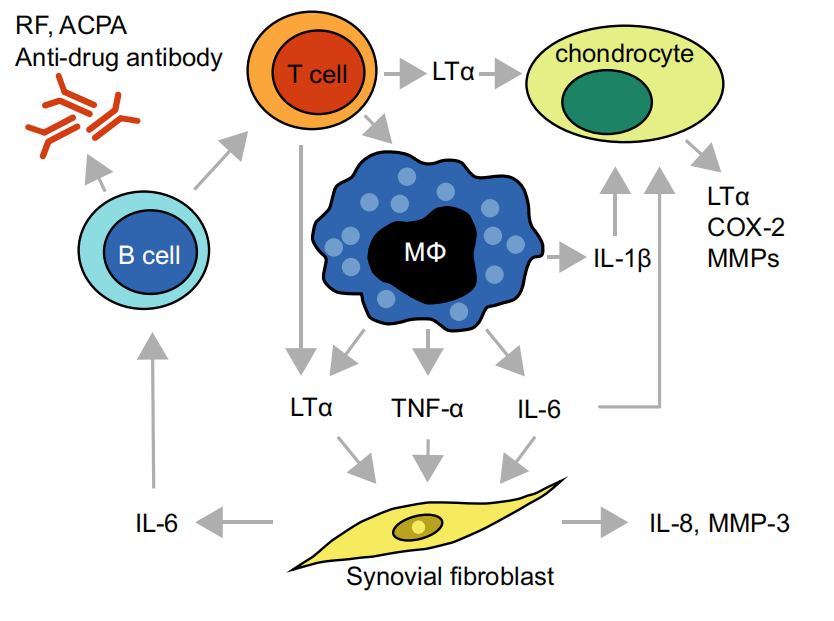
(Data source: Hirose T, et al. Inflamm Res. 2018)
LTA is a pathogenic factor that activates both classical and non-classical NF-κB through autocrine and paracrine processes in classical Hodgkin lymphoma (cHL) cell lines. In addition to inducing NF-κB, LTA also promotes the JAK2/STAT6 signaling pathway. LTA and its receptor TNFRSF14 are transcribedly activated by non-classical NF-κB, forming a continuous feedback loop. Furthermore, LTA affects the expression of cytokines, receptors, immune checkpoint ligands, and adhesion molecules, including CSF2, CD40, PD-L1/PD-L2, and VCAM1. Comparison with single-cell gene activity profiles of human hematopoietic cells indicates that LTA-induced genes are confined to the lymphoid lineage and primarily to the myeloid lineage. Therefore, LTA maintains the autocrine activation of NF-κB, influences the activation of multiple signaling pathways, and drives the expression of genes crucial for microenvironment interactions and lineage blurring. These data provide a solid theoretical basis for targeting LTA as a therapeutic strategy for cHL patients.
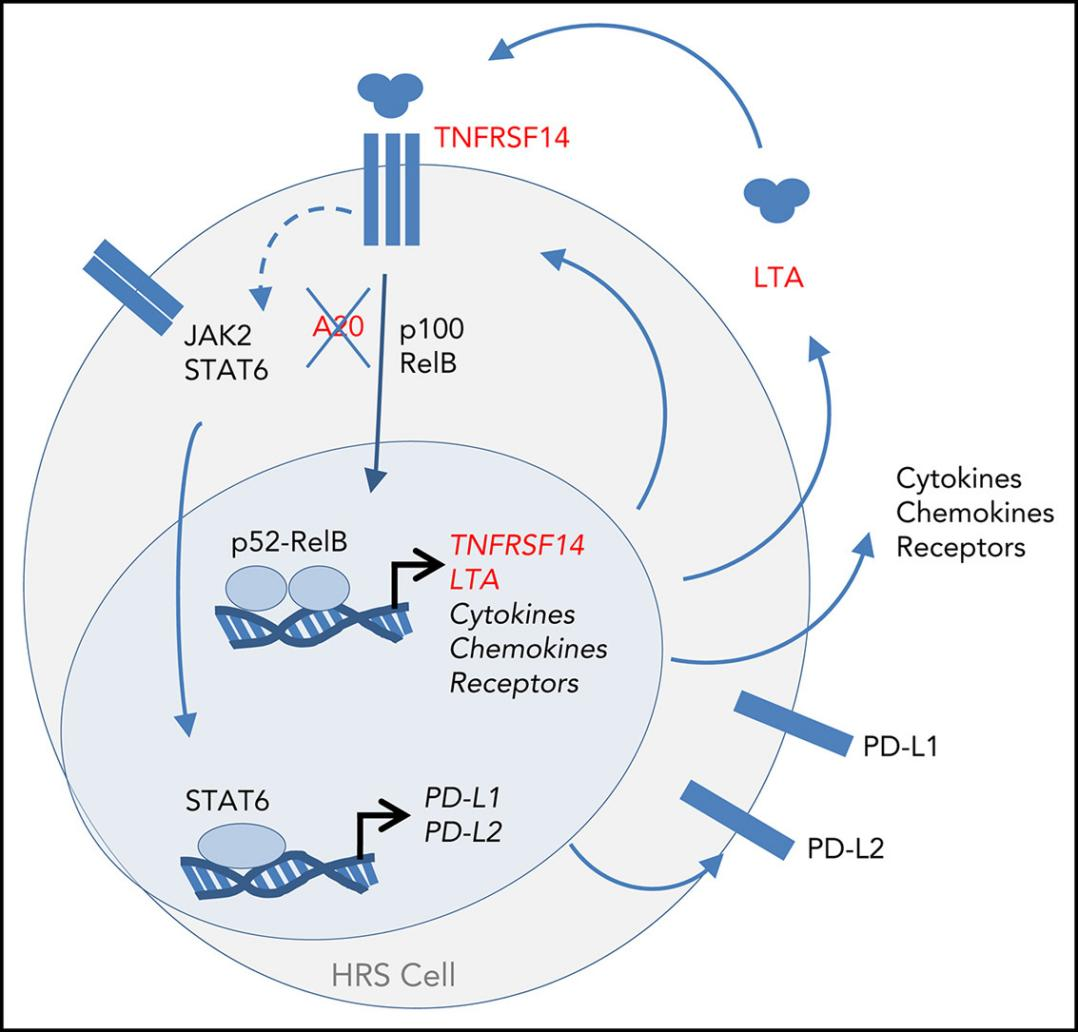
(Data source: von Hoff L, et al. Blood. 2019)
Targeted therapy for LTA
Pateclizumab is a monoclonal antibody targeting the atherosclerotic arthritis (LTA) and is used to treat rheumatoid arthritis. It is an immunomodulator developed by Genentech/Roche, and its most recent stage of development is Phase 2 clinical trials.
Etanercept is an Fc fusion protein containing two recombinant TNF-R2 soluble receptors fused to the Fc portion of human IgG1. It is approved for the treatment of ankylosing spondylitis, plaque psoriasis, polyarticular juvenile idiopathic arthritis, psoriatic arthritis, and rheumatoid arthritis (RA).