Glycoprotein-A repetitions predominant (GARP), also known as LRRC32, is a potential docking receptor for transforming growth factor β1 (LTGF-β1) and is expressed on the surface of platelets and various cell types. GARP binds to LTGF-β1 to form the GARP-LTGF-β1 complex, thereby promoting the secretion and activation of mature TGF-β1, becoming one of the important pathways for the maturation and release of TGF-β1.

(Data source: Metelli A, et al. J Hematol Oncol. 2018)
LRRC32 expression distribution
LRRC32 is mainly expressed in trophoblast cells, endothelial cells, stellate cells, and parietal cells. It is highly expressed on the surface of activated regulatory T cells (Tregs) and is a key molecule controlling the immunosuppressive function of Tregs.

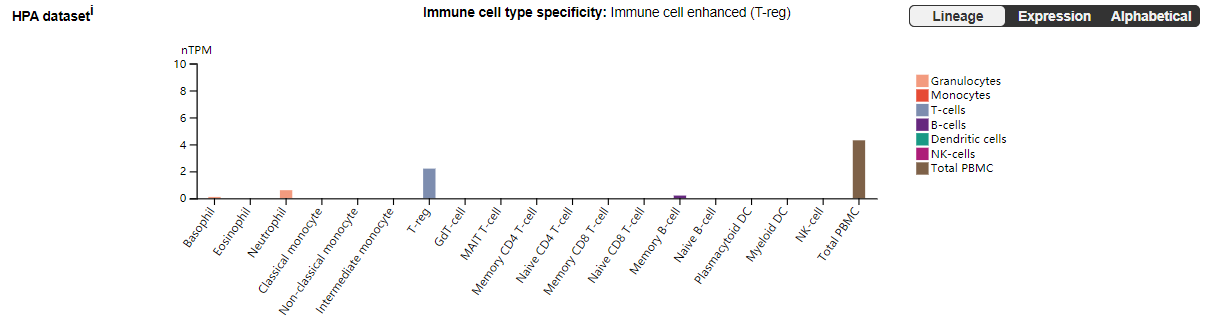
(Data source: uniprot)
LRRC32 structure
GARP is a type I transmembrane protein with a molecular weight of 72 kDa, consisting of 662 amino acids. Its structure comprises three regions: an extracellular domain rich in leucine repeats; a hydrophobic transmembrane domain; and a cytoplasmic tail consisting of 15 amino acid residues. The extracellular portion of GARP contains 20 LRR motifs, divided into two groups by a proline-rich region, and a C-terminal LRR. Two cysteine residues (positions 192 and 331, the 7th and 12th LRRs, respectively) are responsible for the two disulfide bonds of GARP and LAP in LTGF-β.
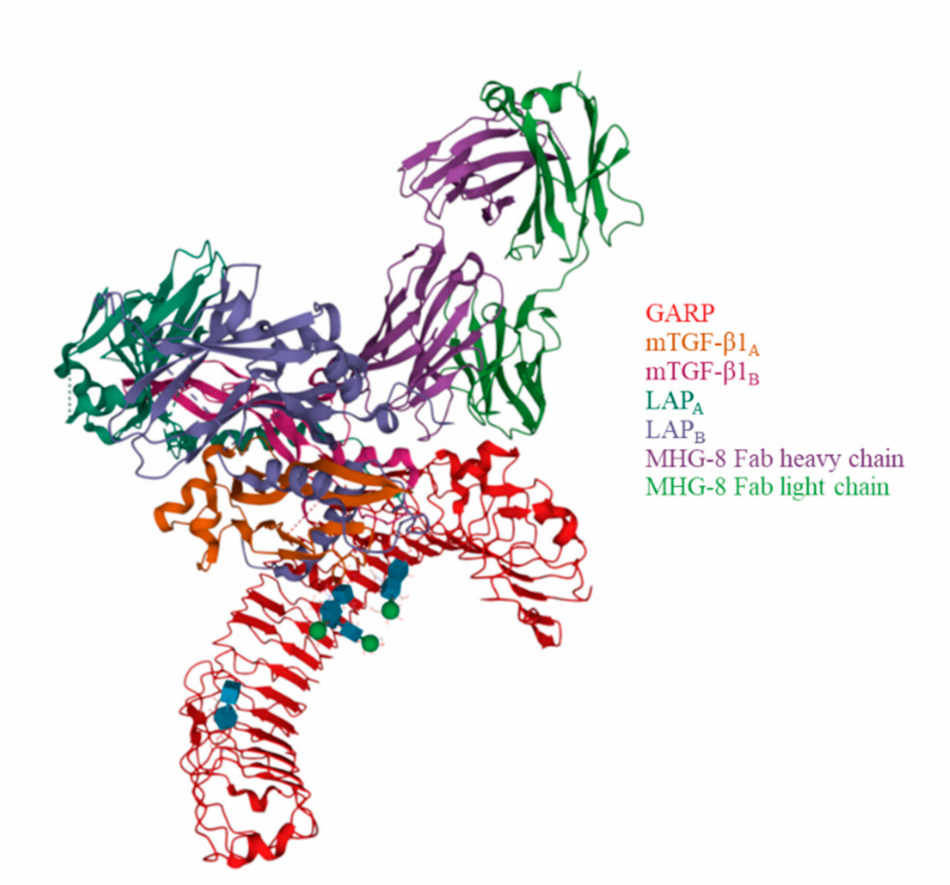
(Data source: Bouchard A, et al. Biology (Basel). 2021)
LRRC32 Functions
GARP, acting as a receptor, binds with high affinity to biologically inactive latent transforming growth factor β (LTGF-β), forming a GARP/LTGF-β complex. The release of active TGF-β mainly occurs in two ways: protease-independent and protease-dependent.
Protease-independent: The αVβ8 integrin on the surface of Treg binds to the GARP/LTGF-β complex and releases biologically active TGF-β directly through a conformational change.
Protease-dependent: Integrins recruit metalloproteinases or serine proteases to cleave LAP from the complex, thereby releasing TGF-β.
GARP on the cell membrane can be cleaved by proteases to form soluble GARP (sGARP). The entire GARP/LTGF-β complex can also be released into the extracellular environment through the action of proteases.

(Data source: Zimmer N, et al. Front Immunol. 2022)
Targeted therapy for LRRC32
Livmoniplimab (ABBV-151) is a monoclonal antibody designed to bind to the GARP-TGF-β1 complex and is currently being used to treat solid tumors, including non-small cell lung cancer (NSCLC) and hepatocellular carcinoma (HCC). Developed in collaboration with Abbive and Argento, Livmoniplimab binds to the GARP-TGF-β1 complex (Tregs) on the surface of regulatory T cells. Upon binding to the GARP-TGF-β1 complex, Livmoniplimab inhibits the release of active TGF-β1. Inhibition of the TGF-β1 signaling pathway may enhance the response to PD-1 antibodies by helping to restore the activation, proliferation, and invasion of intratumoral effector CD8+ T cells. ABBV-151 and ABBV-181 are undergoing clinical trials to evaluate their inhibitory effects on signaling pathways known to drive tumor growth and progression. ABBV-181 is an anti-PD1 humanized monoclonal antibody being developed for use in combination with other Abbive products for the treatment of solid tumors and hematologic malignancies.
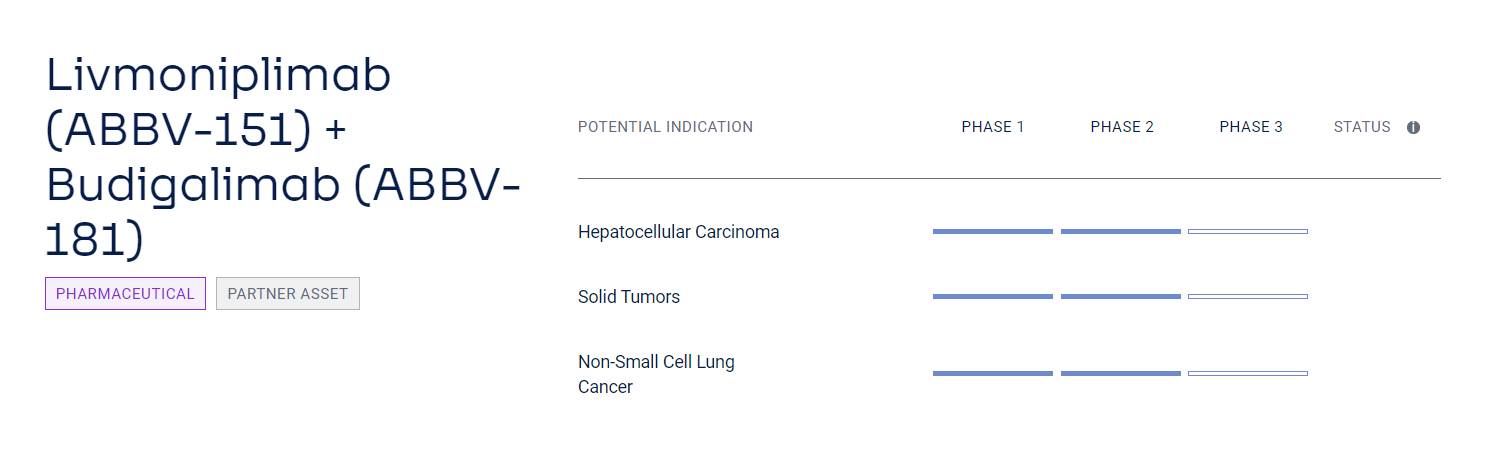
(Data source: abbive official website)
HLX6018 is an innovative anti -GARP/TGF-β1 monoclonal antibody developed by Henlius Biotech. HLX6018 specifically binds to the GARP/TGF-β1 complex on the surface of cells and platelets, thereby blocking GARP-mediated TGF-β1 maturation and release, and subsequently inhibiting TGF-β1-mediated activation, proliferation, and ECM secretion of fibroblasts, achieving the therapeutic goal of fibrosis-related diseases. It has been approved by the National Medical Products Administration (NMPA) in China to conduct clinical trials for the treatment of idiopathic pulmonary fibrosis and is Henlius Biotech's first innovative product in the field of chronic inflammatory diseases. Currently, no other products targeting the same target have been approved for marketing globally.
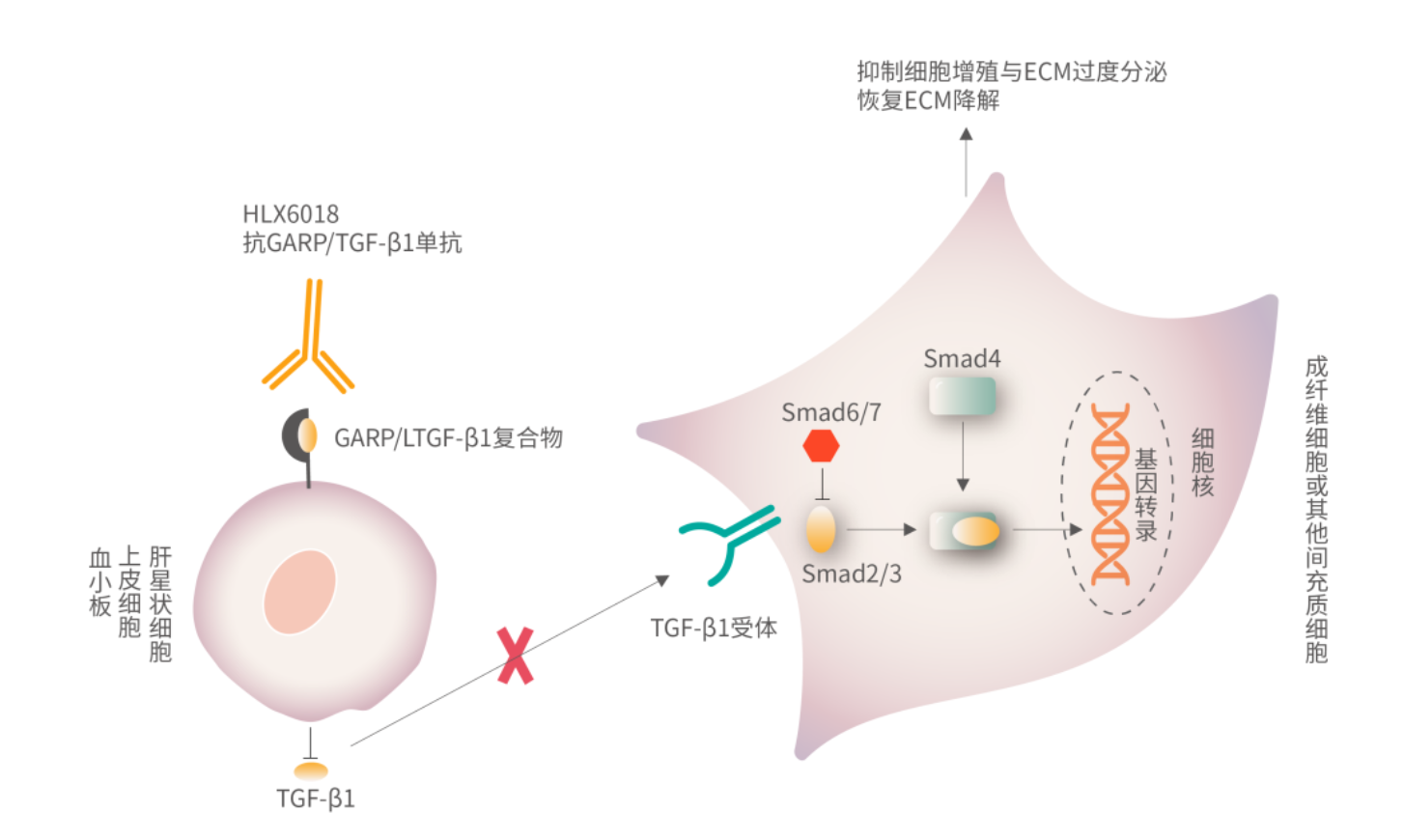
(Data source: Henlius Biotech official website)
DS-1055 is a monoclonal antibody targeting LRRC32, developed by Daiichi Sankyo Co., Ltd. It targets GARP cells and aims to enhance the immune response by reducing the activity of regulatory T cells. A Phase I clinical trial in patients with unresectable multiple solid tumors is evaluating its safety, tolerability, and efficacy by gradually increasing the dosage of DS-1055 to determine the maximum tolerated dose and recommended dose for further trials.