Six-transmembrane epithelial antigen of the prostate (STEAP1) belongs to the STEAP family, which consists of four members: STEAP1, STEAP2, STEAP3, and STEAP4. First discovered in advanced prostate cancer, STEAP1 is a cell surface protein that acts as a transporter and is essential for intercellular communication between tumor cells and adjacent stromal cells, promoting tumor growth. Expressed on the cell surface of prostate cancer and a variety of other human cancers, it is considered a promising therapeutic target in cancer.
Expression of STEAP1
STEAP1 is mainly expressed in glandular epithelial cells and specialized epithelial cells, and is also expressed in cancer cells, such as prostate cancer, bladder cancer, colorectal cancer, lung cancer, ovarian cancer, breast cancer and Ewing sarcoma. The expression pattern varies in different cancers.
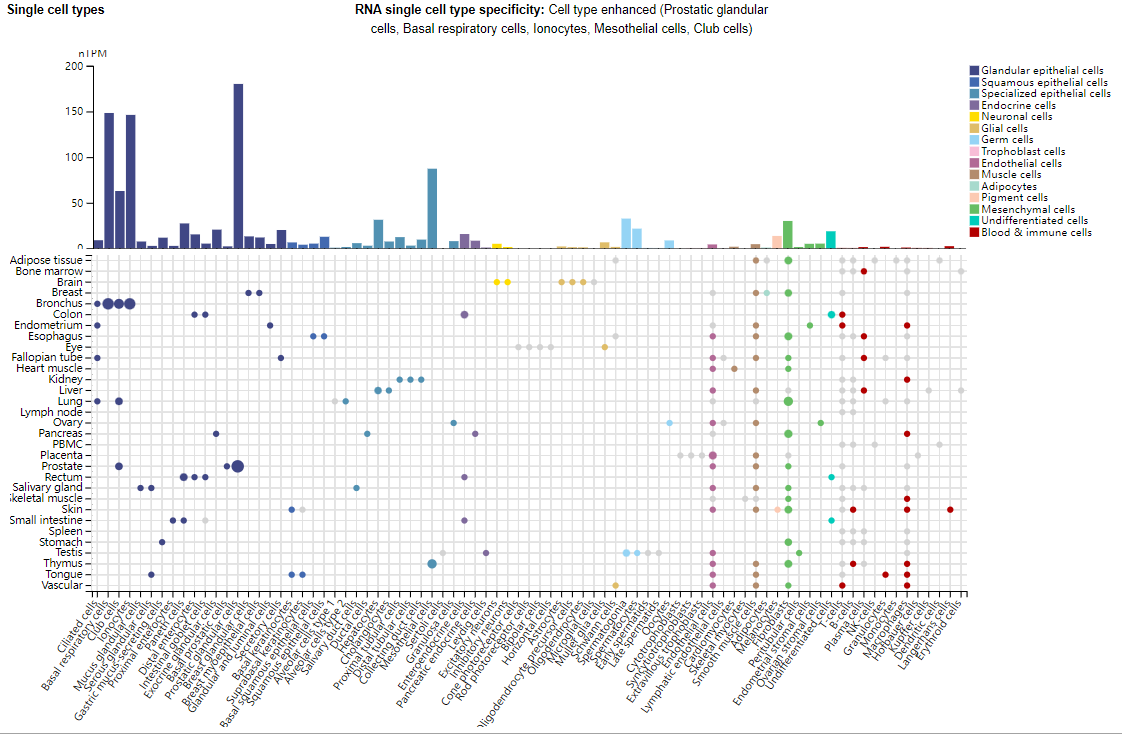
(Data source: uniprot)
Structure of STEAP1
STEAP1 is a six-transmembrane protein located on chromosome 7q21.13. It consists of 339 amino acids, with its COOH- and N-termini located in the cytoplasm. Unlike other STEAP members, STEAP1 lacks an intracellular NADPH-binding domain at its N-terminus and exhibits cellular ferric reductase activity. STEAP1 exhibits cellular ferric reductase activity by fusion with the intracellular NADPH-binding domain of STEAP4.

(Data source: Uniprot)
The role of STEAP1 in cancer
The role of STEAP1 in cancer is multifaceted, and it exhibits different functions and effects in different types of cancer. It may have a carcinogenic effect or may also inhibit the occurrence of cancer in some cancers.
Oncogenic role of STEAP1:
Prostate cancer: High levels of STEAP1 expression are positively correlated with poor prognosis in prostate cancer, suggesting that STEAP1 is involved in tumor development and progression. Knockdown of STEAP1 induces apoptosis and inhibits proliferation in prostate cancer cells.
Liver cancer: Silencing STEAP1 can inhibit c-Myc expression in liver cancer, thereby arresting cancer cells in the G1 phase and suppressing cell proliferation.
Colorectal Cancer: STEAP1 is overexpressed in colorectal cancer (CRC) cells. STEAP1 levels are associated with oxidative stress and elevated reactive oxygen species (ROS), which regulate redox-sensitive and pro-invasive genes to promote tumor proliferation and invasive behavior. STEAP1 knockdown inhibits oxidative stress and ROS levels in CRC by regulating the NRF2 pathway, leading to intrinsic apoptosis in several CRC cell lines.
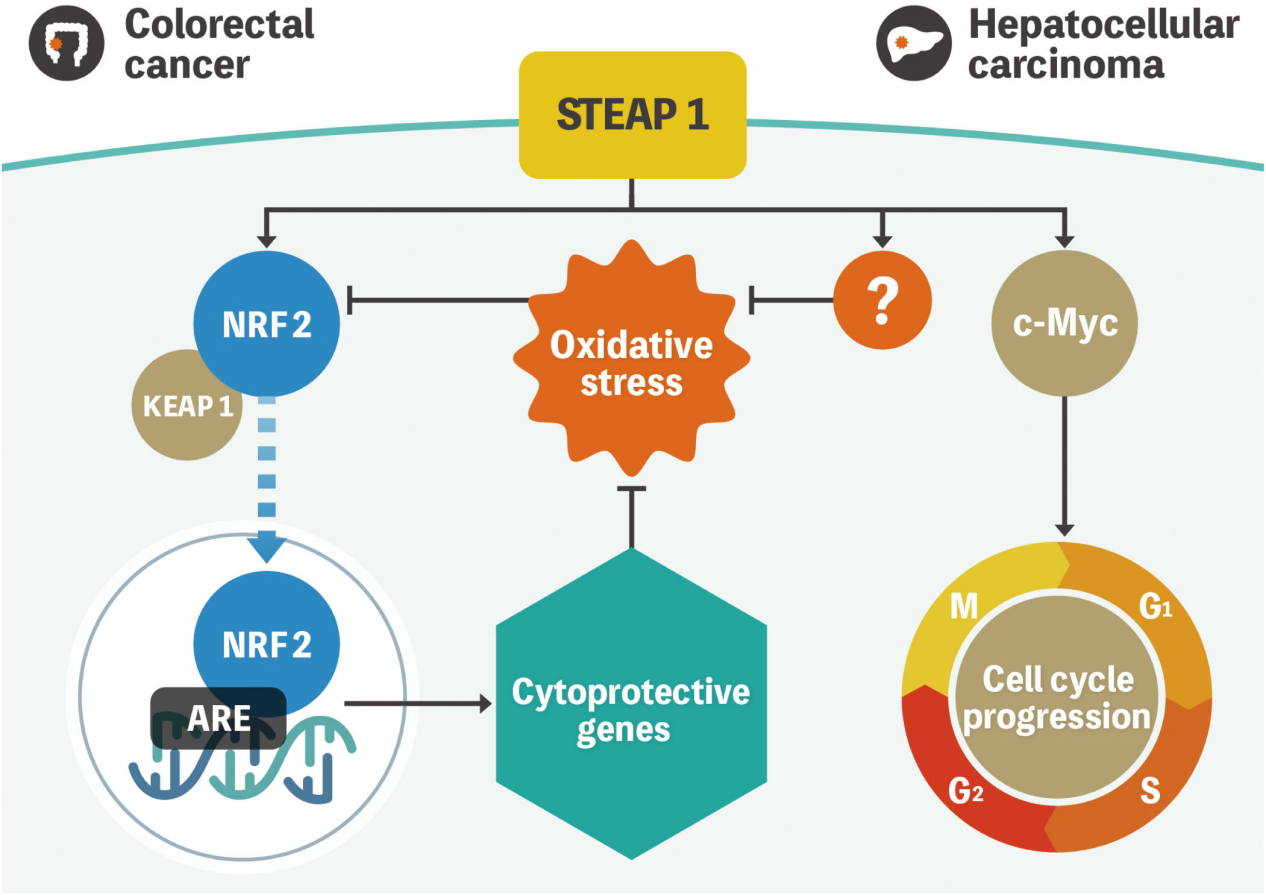
(Data source: Nakamura H, Arihara Y, Takada K. Front Oncol. 2023)
Gastric cancer: STEAP1 has been shown to promote peritoneal metastasis in gastric cancer, and upregulation of STEAP1 can promote tumor proliferation, migration, invasion and tumorigenicity.
Lung cancer: STEAP1 affects endothelial cell migration and angiogenesis in lung cancer. Knockout of STEAP1 can inhibit tumor cell proliferation, migration and invasion through the JAK2/STAT3 signaling pathway.
Ovarian cancer: Downregulation of STEAP1 inhibits the invasion, migration, proliferation, clonogenicity, and EMT process of human ovarian cancer cells as well as the growth of xenografts in vivo, but promotes cell apoptosis.
Ewing sarcoma (EWS): Overexpression of STEAP1 in EWS cells is induced by the EWS::FLI fusion gene, a transcription factor that binds to the STEAP1 promoter region, resulting in enhanced cell proliferation and invasion. Knockout of STEAP1 reduces ROS levels and inhibits Ewing sarcoma proliferation, non-adherent colony formation, in vitro invasion, and in vivo metastasis. However, high membrane STEAP1 expression is associated with improved overall survival (OS) in EWS patients, which may be related to increased sensitivity to chemotherapeutic agents such as doxorubicin and etoposide. In certain cases, increased STEAP1 expression may be associated with sensitivity to chemotherapeutic agents, thereby inhibiting tumor growth.
Tumor suppressor role of STEAP1
Breast Cancer: STEAP1 exerts a tumor suppressor effect in breast cancer cells. STEAP1 expression is downregulated in breast cancer tissue compared to normal cells, and low STEAP1 expression is associated with poor prognosis in breast cancer patients. STEAP1 suppresses EMT in breast cancer cells by upregulating CDH1 and downregulating EMT-related genes. Interventions that inhibit STEAP1 may be used as anti-metastatic agents for breast cancer.

(Data source: Chen WJ, et al. Front Cell Dev Biol. 2021)
Targeted therapy of STEAP1
STEAP1 has attracted much attention as a new cancer treatment target. The function of STEAP1 depends on the type of cancer. Currently, commonly used targeted therapies include antibody therapy and CAR-T cell therapy.
Antibody therapy
Among the STEAP1-targeted therapies currently under investigation is xaluritamig (AMG 509), a novel bispecific antibody developed by Amgen for the treatment of patients with metastatic castration-resistant prostate cancer (mCRPC). It binds to STEAP1 via two fragment antigen-binding domains (Fab) and to the CD3 receptor via a single-chain variable fragment (scFv), thereby allowing T cells to activate and kill STEAP1-expressing tumor cells. Xaluritamig has shown promising safety and efficacy in patients with mCRPC. Future research will include establishing its safety and efficacy in larger cohorts and potentially combining xaluritamig with other agents with different mechanisms of action. Xaluritamig is currently being studied in a Phase I study in patients with mCRPC, both as monotherapy and in combination with an ARPI (androgen receptor pathway inhibitor) (NCT04221542).

(Data source: Hage Chehade C, et al. Cancer Discov. 2024)
ABBV-969 is an antibody-drug conjugate (ADC) developed by ABBV. It targets prostate-specific membrane antigen (PSMA) and STEAP1 and carries a topoisomerase 1 inhibitor (Top1i) payload. It is being studied in metastatic castration-resistant prostate cancer (mCRPC).
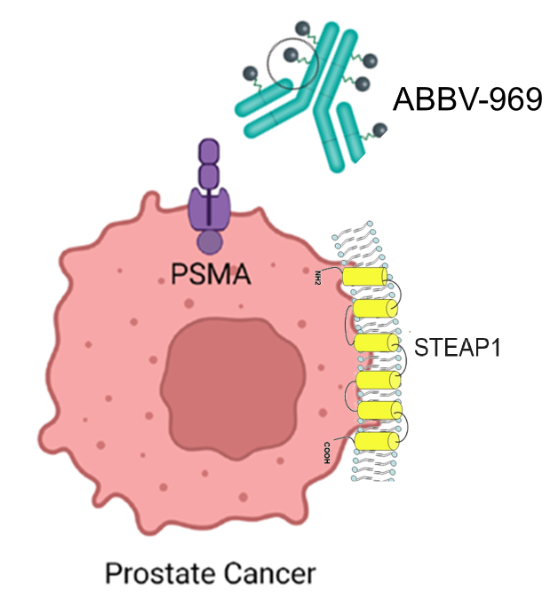
(Data source: abbvie official website)
ADRX-0405, a STEAP1-targeting antibody-drug conjugate developed by Adcentrx Therapeutics for the treatment of advanced solid tumors, is currently in the clinical development approval phase. This advanced technology, utilizing Adcentrx's proprietary i-Conjugation® platform, ensures a highly stable ADC containing a topoisomerase inhibitor payload at a drug-to-antibody ratio of eight (DAR8). Preclinical studies of ADRX-0405 have demonstrated favorable pharmacokinetics, safety, and significant efficacy in multiple tumor models.
CAR-T cell therapy
John K. Lee of the Fred Hutchinson Cancer Center reported in Nature Communications that a CAR-T cell therapy targeting STEAP1 and IL-12 was developed. This approach, combining tumor-localized interleukin-12 (IL-12) therapy in the form of a collagen-binding domain-IL-12 (CBD-IL-12) fusion protein with STEAP1-targeted CAR T cell therapy, enhances anti-tumor efficacy by remodeling immunosuppressive prostate tumors and counteracting STEAP1 antigen escape through the engagement of host immunity and epitope spreading. Preclinical results showed that this therapeutic amplification modestly reduced tumor size and slightly improved survival in mouse models, while also enhancing anti-tumor immune cell responses.
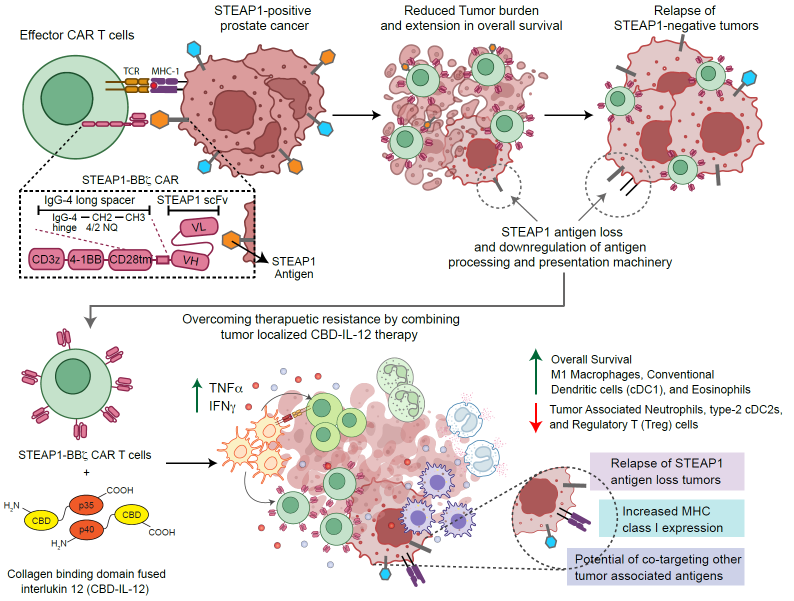
(Data source: https://www.fredhutch.org/en/news/spotlight/2023/06/ccg-bhatia-natcommun.html)