Interleukin 18 (IL18), a member of the IL-1 cytokine family, is a proinflammatory cytokine that induces IFNγ production and plays a crucial role in inflammation. It is primarily involved in epithelial barrier repair and immune responses involving Th1 cells and natural killer (NK) cells. IL18 forms a signaling complex with the IL18 receptor α(Rα)and β(Rβ) chains on the plasma membrane, thereby inducing the production of multiple inflammatory cytokines.
IL18 expression distribution
IL18 is mainly expressed in macrophages, but is also expressed in granulocytes and Kupffer cells. In addition, IL18 is constitutively expressed in non-hematopoietic cells, such as intestinal epithelial cells, keratinocytes, and endothelial cells.
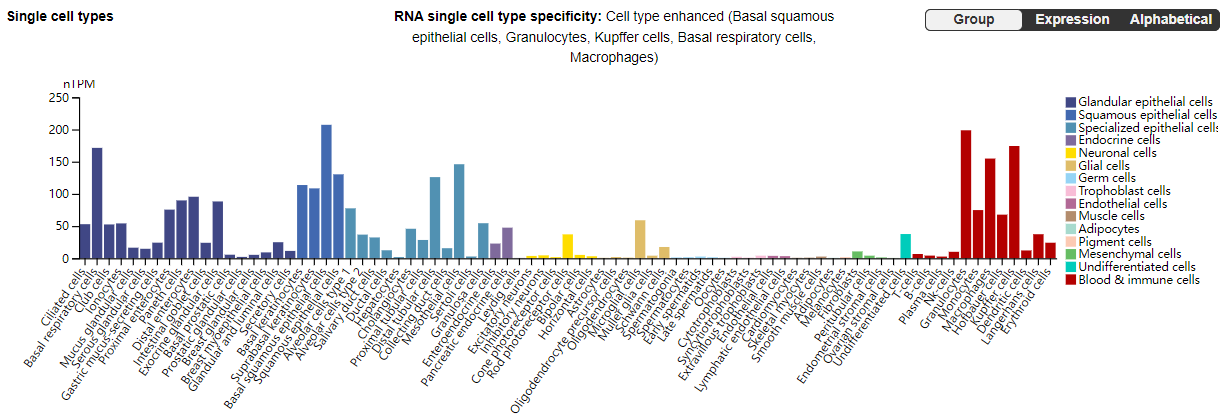
(Data source: uniprot)
Structure of IL18
IL18 initially exists as an inactive precursor form, called pro- IL18. Unlike many other secreted proteins, it lacks a signal peptide at its N-terminus but instead possesses a leader sequence . This pro-form is biologically inactive and requires inflammasome-activated caspases (such as caspase-1) for cleavage. This cleavage occurs at the N-terminus of pro- IL18 , removing the leader sequence and converting it to its mature form. The mature form of IL18 possesses a β-trefoil domain, a common feature of IL-1 family cytokines. This structure is composed of 12 β-strands forming a distinctive cloverleaf shape.

(Data source: Clancy DM, Andries J, Savvides SN. Immunity. 2024)
Biological functions of IL18:
IL18 is a multifunctional cytokine that plays an important role in maintaining immune homeostasis, inducing inflammatory responses, and regulating the functions of specific immune cells.
Stimulating IFNγ Production: IL18 can signal through a heterodimeric cell surface receptor composed of the IL18 receptor ( IL18R ) α and β chains (encoded by IL18R1 and IL18RAP, respectively). Receptor binding triggers autophosphorylation of the TIR domain, recruiting the adaptor proteins TRAM and MYD88, activating the MAPK and NF-κB pathways, and inducing the production of other cytokines, such as IFNγ. IFNγ can alter immune cell activity and promote anti-pathogen immune responses.
Regulation of NK cell activity: IL18 can enhance the cytotoxic activity of NK cells and the production of IFN-γ , improving their ability to kill tumor cells and virus-infected cells.
Maintaining immune homeostasis: IL18 maintains immune homeostasis by binding to IL18 -binding protein ( IL18 BP), inhibiting its activity. IL18 BP is a high-affinity "decoy receptor" that neutralizes a large portion of circulating IL18 , rendering it biologically inactive. This strong interaction prevents excessive IL18 activation, thereby maintaining immune balance.
Dual role in tumors: IL18 can promote CD8+ T cell exhaustion, but on the other hand, it may also prevent and delay exhaustion by enhancing T cell effector function and enhance its anti-tumor activity.

(Data source: Landy E, et al. Nat Rev Rheumatol. 2024)
Role in T Lymphocyte Activation: IL18 works synergistically with IL-12 to enhance the differentiation of CD4+ T cells into Th1 cells. These cells produce large amounts of IFN-γ, contributing to cell-mediated immune responses and anti-infective defenses. In certain circumstances, IL18 may promote Th2 cell responses. These cells produce IL-4, IL-5, and IL-13, which contribute to humoral immunity and anti-helminth immune responses. IL18 works synergistically with other cytokines, such as IL-23, to promote the differentiation of CD4+ T cells into Th17 cells, which play a role in inflammatory and autoimmune diseases.

(Data source: Shimizu M, et al. Front Immunol. 2022)
Clinical value of IL18:
IL18 as a biomarker: IL18 is a highly specific biomarker that can be used to diagnose certain autoinflammatory diseases, such as systemic juvenile idiopathic arthritis (sJIA) and PSTPIP1-related diseases, which are referred to as "IL18opathies." In sJIA and other autoinflammatory diseases, significantly elevated IL18 levels may herald the development of macrophage activation syndrome (MAS).
IL18 and Disease: IL18 is implicated in a variety of diseases, including autoinflammatory disorders such as periodic fever, aphthous ulcers, pharyngitis, and adenitis syndrome (PFAPA); autoimmune diseases such as inflammatory bowel disease (IBD); and tumor development. In chronic inflammatory diseases such as rheumatoid arthritis, inflammatory bowel disease, and systemic lupus erythematosus, IL18 levels are often elevated, contributing to disease progression.

(Data source: Landy E, et al. Nat Rev Rheumatol. 2024)
Targeted therapy of IL18
Due to its critical role in numerous pathological processes, IL-18 has emerged as a potential target for therapeutic intervention. Blocking its activation and/or release, mimicking IL-18 BP, neutralizing free IL-18, blocking IL-18 receptors, or blocking downstream effector cytokines (such as IFNγ) are promising approaches. Currently, several antibody drugs targeting IL-18 are in clinical development.
Tadekinig alfa is a recombinant interleukin-18 binding protein (rh IL18 BP) that binds to IL18 with high affinity. In patients with certain inflammatory diseases, the IL18/IL18 BP balance is disrupted, leading to elevated levels of free and active IL18, which in turn contributes to pathological inflammation. AB2 Bio's exogenous recombinant human IL18 BP restores the IL18/ IL18 BP balance, clearing free IL18 and thereby reducing the inflammatory response. It is currently being studied for the treatment of various conditions, including adult-onset Still's disease, lymphoproliferative disorders, immune system disorders, and macrophage activation syndrome.
MAS-825 is a bispecific IL-1β/IL-18 monoclonal antibody being developed by Novartis AG for the treatment of coronary artery disease and other autoinflammatory conditions such as enterocolitis and hidradenitis suppurativa. It is currently in Phase 2 clinical trials.
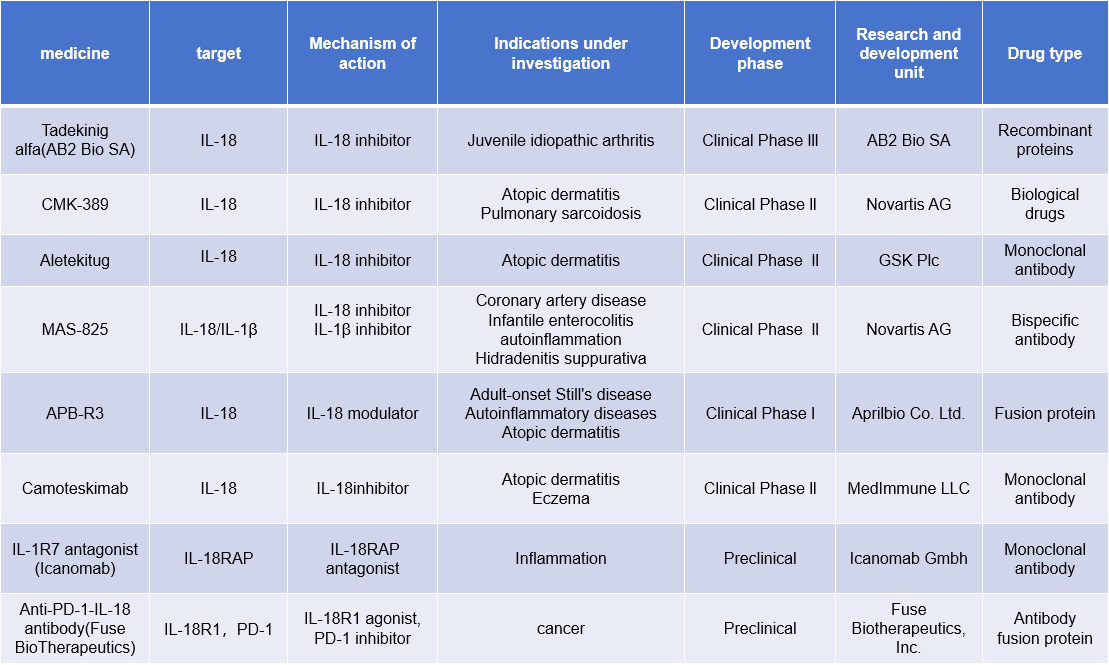
(Data source: New Drug Intelligence Database)