Tyrosine protein kinase receptor (AXL/UFO) is a member of the TAM receptor family. It transduces signals from the extracellular matrix to the cytoplasm by binding to the growth factor GAS6, thereby regulating many physiological processes, including cell survival, cell proliferation, migration, and differentiation. It is frequently overexpressed in various cancers and plays a crucial role in various tumor-promoting pathways, making it a therapeutic target for malignant tumors.
AXL expression distribution
AXL is mainly expressed in monocytes, parietal cells, and stromal cells. In tumors, AXL is overexpressed in a variety of malignant tumors, including renal cell carcinoma, lung cancer, prostate cancer, esophageal cancer, head and neck cancer, adrenocortical carcinoma, and breast cancer.

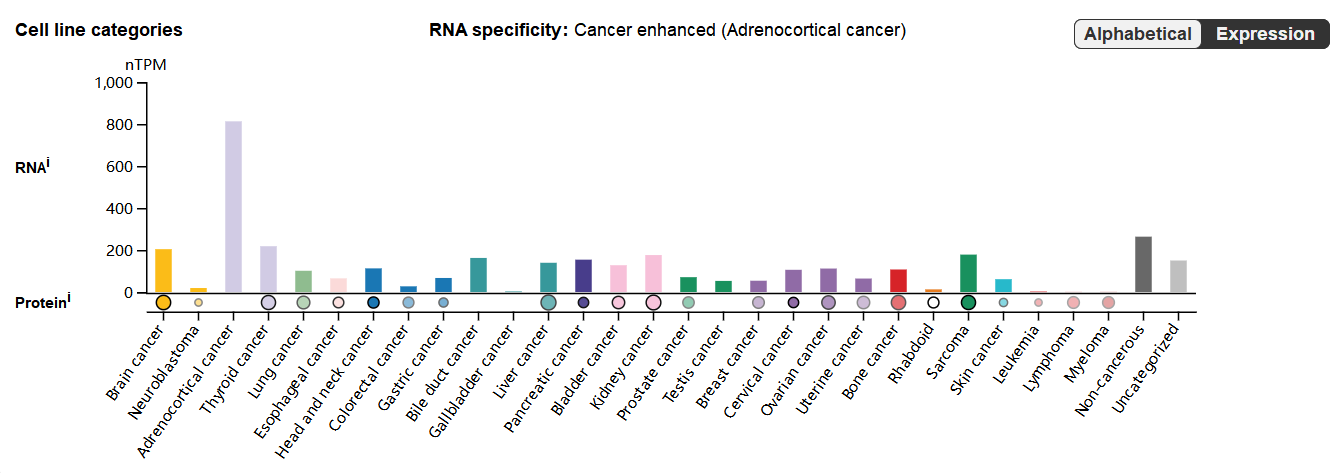
(Data source: uniprot)
Structure and ligands of AXL
The AXL gene is located at 19q13.2, near the BCL3 proto-oncogene. It consists of 20 exons and encodes a multi-domain protein of 894 amino acids. AXL is a 140 kDa single-pass transmembrane receptor containing extracellular, transmembrane, and intracellular domains. The extracellular domain of AXL contains two immunoglobulin (Ig)-like repeat sequences and two fibronectin type III (FNIII)-like repeat sequences, structurally resembling neural cell adhesion molecules. AXL primarily binds to its ligand GAS6 via an Ig motif and is regulated by FNIII.
Intracellular domains are crucial for autophosphorylation and subsequent kinase activity . Upon binding to ligand growth arrest-specific protein 6 (GAS6), AXL dimers and is activated via phosphorylation of specific tyrosine residues. This phosphorylation event is essential for recruiting key adaptors and effector molecules, initiating downstream AXL signaling pathways.
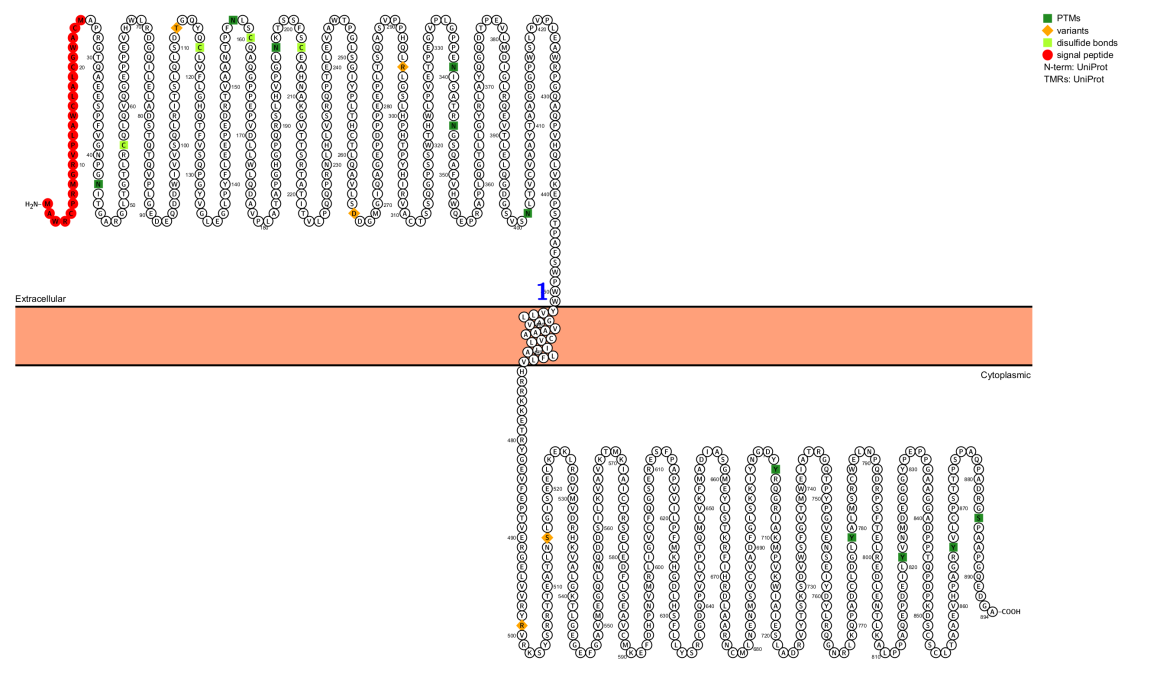
(Data source: uniprot)

(Data source: Yadav M, et al. Signal Transduct Target Ther. 2025)
Biological functions of AXL and its role in cancer
AXL is activated upon binding to its ligand GAS6, triggering downstream signaling pathways that promote cancer cell proliferation, survival, migration, invasion, epithelial-mesenchymal transition (EMT), angiogenesis, stem cell maintenance, and immunosuppression or evasion.
The role of AXL in cell proliferation and survival: The AXL signaling pathway plays an important role in promoting cell proliferation through multiple downstream pathways such as PI3K/Akt, JAK/STAT, NF-κβ, RAS/RAF/MEK/ERK.
The role of AXL in cell migration and invasion: AXL overexpression is closely associated with increased cell migration and invasion in various cancer types. AXL activation primarily promotes the expression of important factors such as Akt and MMP9 through the NF-κβ and Brg-1 signaling pathways . AXL activation stimulates the PI3K/Akt pathway, mediating cancer cell invasion by increasing the expression of proteases such as MMP2 and MMP9.
The role of AXL in epithelial-mesenchymal transition (EMT): Activation of AXL initiates a reversible transition from an epithelial to a mesenchymal phenotype, enhancing cell invasiveness and metastatic potential. AXL has been identified as a phenotypic marker for non-small cell lung cancer (NSCLC) cell lines and breast cancer stem cells.
The role of AXL in angiogenesis: AXL is not only crucial for cancer cell proliferation and survival, but also for vascular integrity and angiogenesis. They regulate various growth factors, such as VEGF, FGF, and PDGF. The GAS6/AXL/S100A10 axis has been found to promote plasminogen activator production, endothelial cell migration, and angiogenesis in clear cell renal cell carcinoma (ccRCC) cells, with AXL expression associated with resistance to anti-angiogenic therapies.
AXL Stemness: AXL is a key driver of cancer cell stemness, promoting self-renewal and contributing to the long-term maintenance of the tumor.

(Data source: Yadav M, et al. Signal Transduct Target Ther. 2025)
The role of AXL in immunosuppression: AXL induces immune evasion by upregulating BCL-2 and Twist, inhibiting inflammatory signaling, and reducing the production of pro-inflammatory cytokines and chemokines. AXL confers treatment resistance by activating the PI3K/Akt pathway and increasing the transcription of programmed cell death ligand 1 (PD-L1) in head and neck cancer cells. AXL-mediated tumor microenvironment remodeling leads to the downregulation of immune effector cells, such as NK cells, dendritic cells, and T cells, while promoting the recruitment of immunosuppressive cells, such as Tregs and MDSCs. AXL signaling results in a reduction of effector cytotoxic T cells and induces macrophages to shift from M1 polarization to M2 polarization, ultimately promoting tumor evasion and poor prognosis.
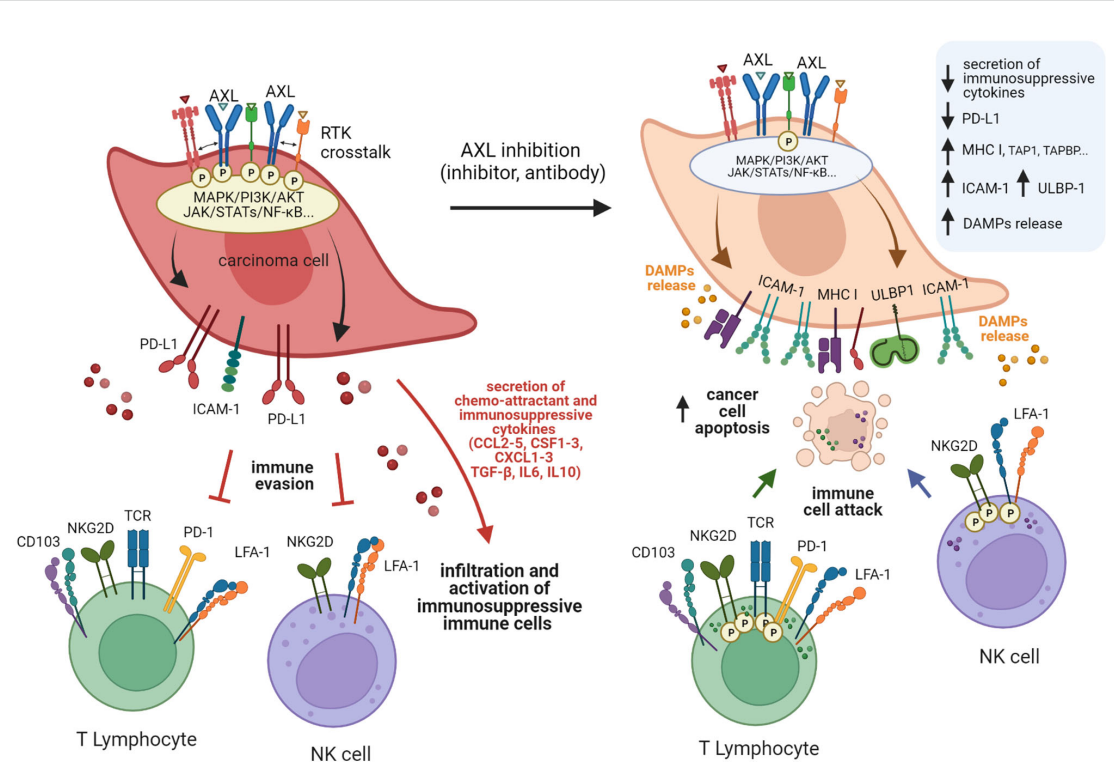
(Data source: Engelsen AST, et al. Front Immunol. 2022)
AXL-targeted therapy
The pleiotropic effects of AXL on cancer growth, metastasis, and drug resistance make it a promising target for anticancer therapy. Different types of AXL inhibitors are at different stages of development, including small molecule tyrosine kinase inhibitors (TKIs) that block AXL kinase activity, anti-AXL antibodies targeting the AXL receptor, and soluble AXL decoy receptors for neutralizing GAS6.
Mecbotamab vedotin (BA301) is an antibody-deconjugate targeting AXL, developed by Bioatla.
The median overall survival (OS) in 44 patients with refractory leiomyosarcoma, liposarcoma, and undifferentiated pleomorphic sarcoma treated with mecbotamab vedotin was 21.5 months . The safety profile observed with Mec-V monotherapy and in combination with anti-PD-1 antibodies was manageable and consistent with the conditional binding to the AXL target confined to the tumor microenvironment.
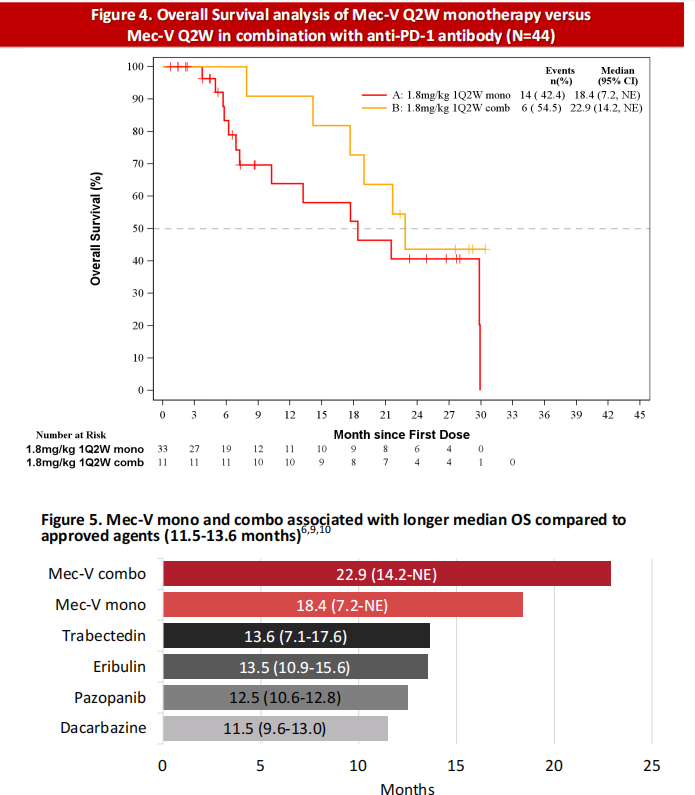
(Data source: Bioatla official website)
Batiraxcept is an Fc fusion protein that targets AXL and GAS6, inhibiting GAS6-induced phosphorylation of AXL or Src. It is used to treat recurrent ovarian cancer, platinum-resistant ovarian cancer, and pancreatic ductal adenocarcinoma, and is currently in phase 3 clinical trials.
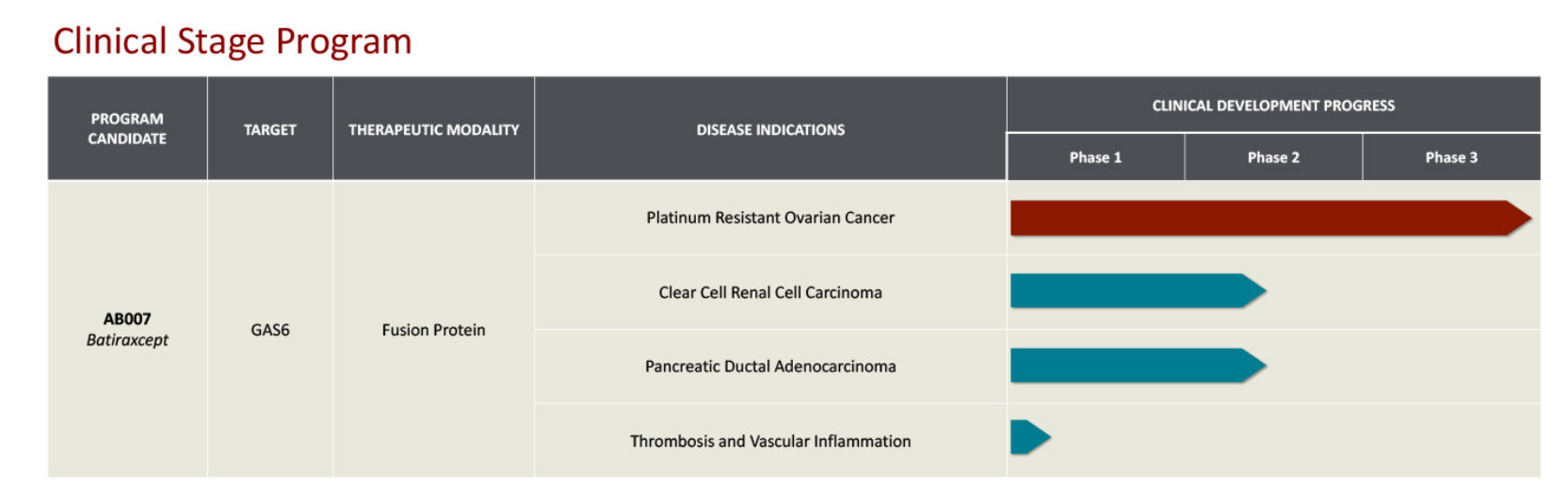
(Data source: AKSO official website)
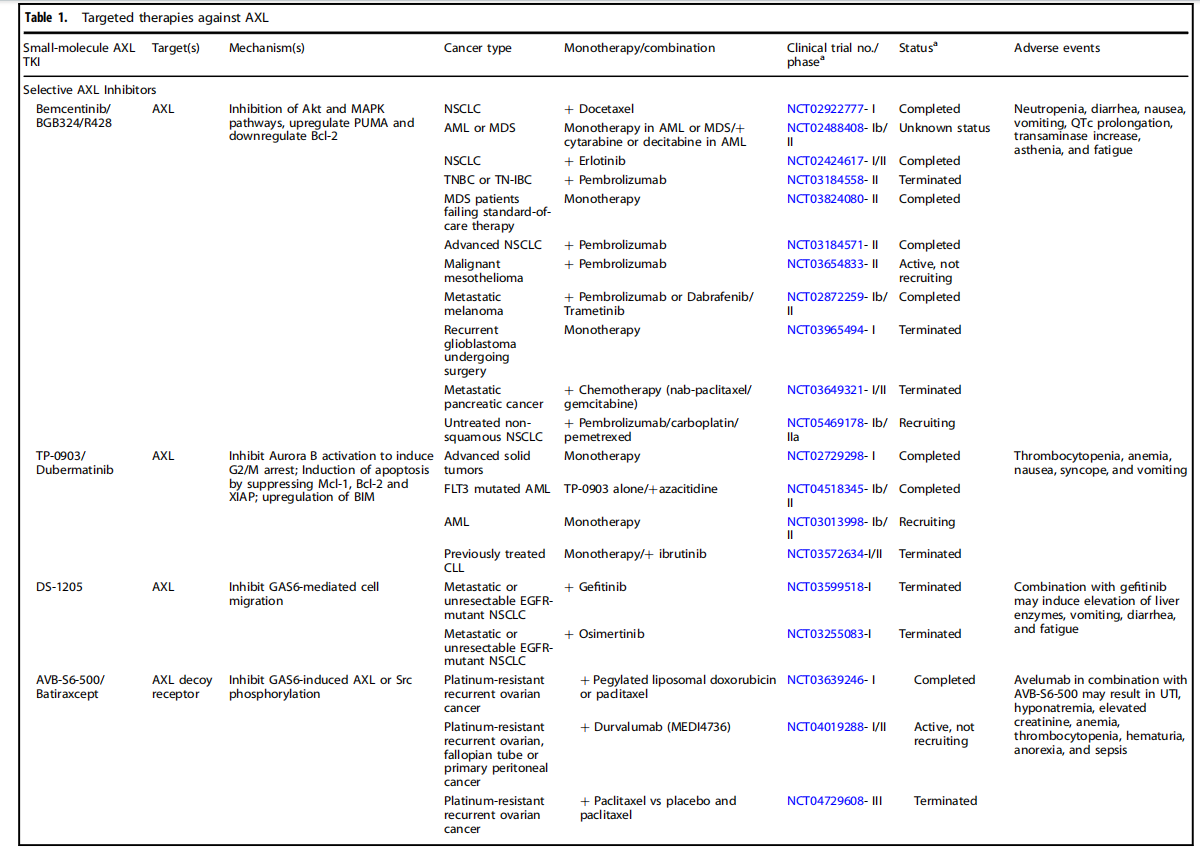
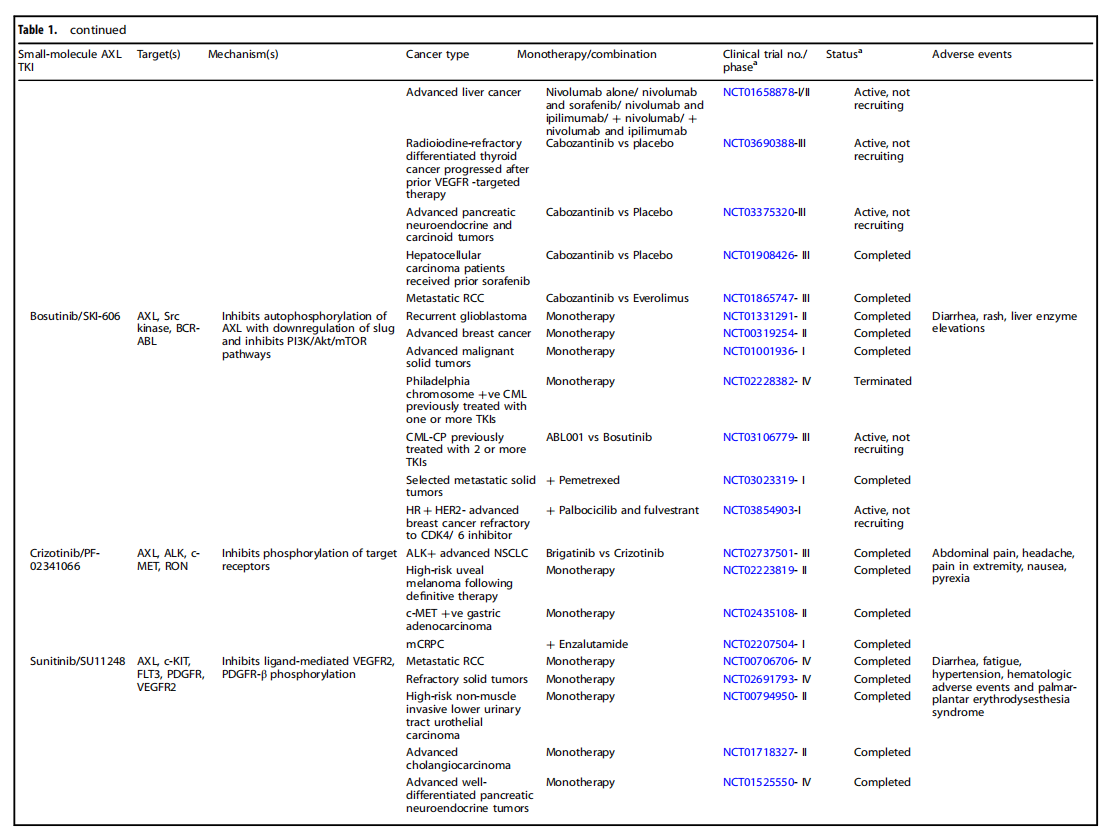

(Data source: Yadav M, et al. Signal Transduct Target Ther. 2025)