Background
Genetically engineered T cells expressing chimeric antigen receptors (CARs) are an emerging cancer immunotherapy. So far, the US Food and Drug Administration (FDA) has approved six CAR-T cell products for the treatment of B-cell leukemia or lymphoma subtypes. However, treating major solid tumors with CAR-T cells presents significant challenges and can only produce partial and transient responses. Potential mechanisms underlying the limited efficacy of CAR-T therapy against solid tumors include insufficient persistence of CAR-T cells, restricted tumor trafficking and infiltration, and the presence of an immunosuppressive tumor microenvironment.
On July 23, 2024, researchers from the National Cancer Institute published a study titled "rhIL-7-hyFc, a long-acting interleukin-7, improves the efficacy of CAR-T cell therapy in solid tumors" in the journal J Immunother Cancer. The study demonstrated that a novel immunotherapy approach combining long-acting interleukin-7 (rhIL-7-hyFc, NT-I7) with three CARs targeting tumor-associated antigens (glypican-3, glypican-2, and mesothelin) was effective against mouse models of liver, pediatric, ovarian, and pancreatic cancer. These findings highlight the potential of NT-I7 to improve the efficacy of CAR-T cell therapy and its feasibility as a clinical adjuvant therapy for patients with solid tumors.

IL-7 promotes CAR-T cell proliferation
NT-I7 is a fusion protein, a homodimeric IL-7 fused to the hyFc platform, consisting of the IgD CH2 region and the C-terminal region of the IgG4 domain. GPC3 CAR-T cells derived from human PBMCs from healthy donors were cultured with NT-I7 or IL-2. NT-I7 was found to be more effective than IL-2 in regulating CAR-T cell function, as it increased CAR-T cell proliferation, increased the percentage of CD4 + CAR-T cells, and decreased PD-1 and LAG-3 expression.


The differential effects of IL-2 and NT-I7 on CAR-T cell properties were attributed to the IL-7 moiety rather than products derived from the Fc fusion fragment or other engineered components, with the exception of the bivalent IL-7 in the NT-I7 molecule.
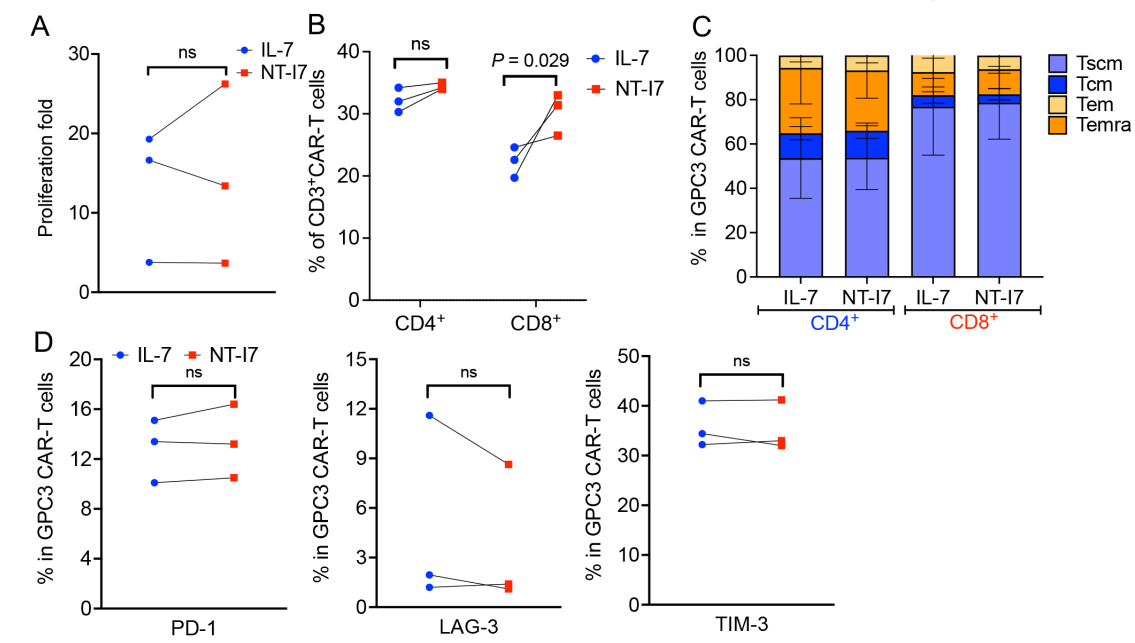
IL-7 interacts with its receptor IL-7R (CD127), activating pathways such as JAK/STAT, regulating lymphocyte survival, proliferation, and differentiation. Experiments have found that NT-I7 significantly enhances IL-7R expression on CAR-T cells. The STAT5 pathway is downstream of NT-I7 signaling on CAR-T cells.

NT-I7 enhances the cytotoxic activity of CAR-T cells in vitro
NT-I7 can enhance the efficacy of CAR-T without causing endotoxicity, and NT-I7 enhances the cytotoxicity of CAR-T cells against tumor cells in vitro.
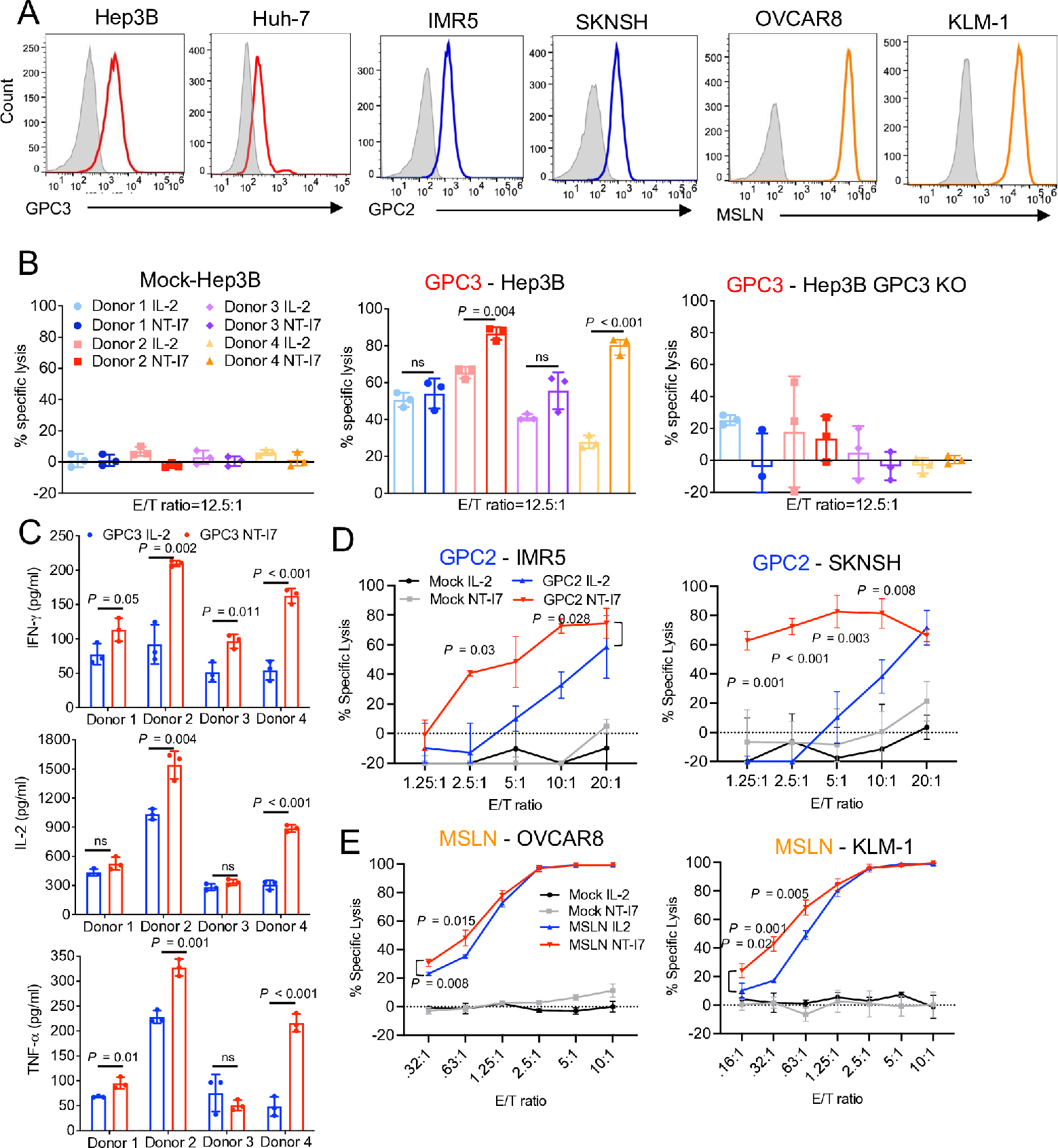
NT-I7 stimulates the anti-tumor activity of GPC3 CAR-T cells
Experiments found that NT-I7-stimulated GPC3 CAR-T cells accelerated tumor cell regression in mice with orthotopic HCC, and combined therapy enhanced anti-tumor activity. NT-I7 significantly reduced the expression of T cell exhaustion markers (PD-1 and LAG-3) on circulating GPC3 CAR-T cells. The study found that NT-I7 has a serum half-life of approximately 6.37 days.

NT-I7 has excellent anti-tumor activity
Lowering the dose of NT-I7 can improve the therapeutic effect of GPC3 CAR-T cells and reduce toxicity. The expression of GPC3 in tumor cells is low. Administration of 1 mg/kg NT-I7 is safe and can effectively enhance the efficacy of GPC3 CAR-T cells, thereby successfully inhibiting tumor growth in the Huh-7 sc mouse model.

NT-I7 enhances the efficacy of GPC3 CAR-T cells
NT-I7 promoted increased levels of infiltrating CAR-T cells, thereby contributing to enhanced anti-tumor activity. The anti-tumor effect of the combined therapy was dose-dependent, with even the lowest dose of GPC3 CAR-T cells combined with NT-I7 demonstrating the ability to inhibit tumor growth in vivo. Compared to the CD19 CAR-T control group, mice receiving the combination of GPC3 CAR-T cells and NT-I7 had significantly prolonged survival.

NT-I7 enhances the efficacy of anti- neuroblastoma drugs
In the IMR5 mouse model of neuroblastoma, GPC2 CAR-T cells administered alone had limited effect on tumor growth or survival. However, when combined with NT-I7, tumor regression was observed in four of five mice, extending their survival without weight loss. In the mouse circulation, GPC2 CAR-T combined with NT-I7 significantly increased the secretion of cytotoxic granule proteins (perforin, granzymes, and granulysin) compared to CAR-T cell treatment alone. These findings demonstrate that the combination of GPC2-targeted CAR-T cells and NT-I7 enhances anti-neuroblastoma activity by promoting T cell expansion and alleviating T cell exhaustion, thereby promoting the persistence of CAR-T cells in vivo.

NT-I7 enhances the therapeutic efficacy of MSLN-positive ovarian and pancreatic cancer
In recurrent ovarian cancer, treatment with NT-I7 controlled tumor growth without side effects. Combination therapy demonstrated superior efficacy compared to monotherapy in the KLM-1 pancreatic cancer model and prolonged survival without any weight loss. Overall, NT-I7 demonstrates significant potential in enhancing CAR-T cell persistence in MSLN-positive solid tumors.

Summarize
The study demonstrated that NT-I7 significantly enhanced CAR-T cell proliferation, persistence, cytotoxicity, and tumor infiltration, ultimately significantly improving anti-tumor activity and survival in mice. These new findings provide a theoretical basis for the combined therapy of NT-I7 and CAR-T cells in the treatment of various solid tumors in humans.